
In one sentence: After the sudden death of his identical twin, a grieving man forms a close bond with another bereaved twin, only for hidden truths to complicate their connection.
Dylan O’Brien has built a varied and interesting filmography and Twinless gives him another opportunity to show his range in a film that feels both familiar and slightly different.

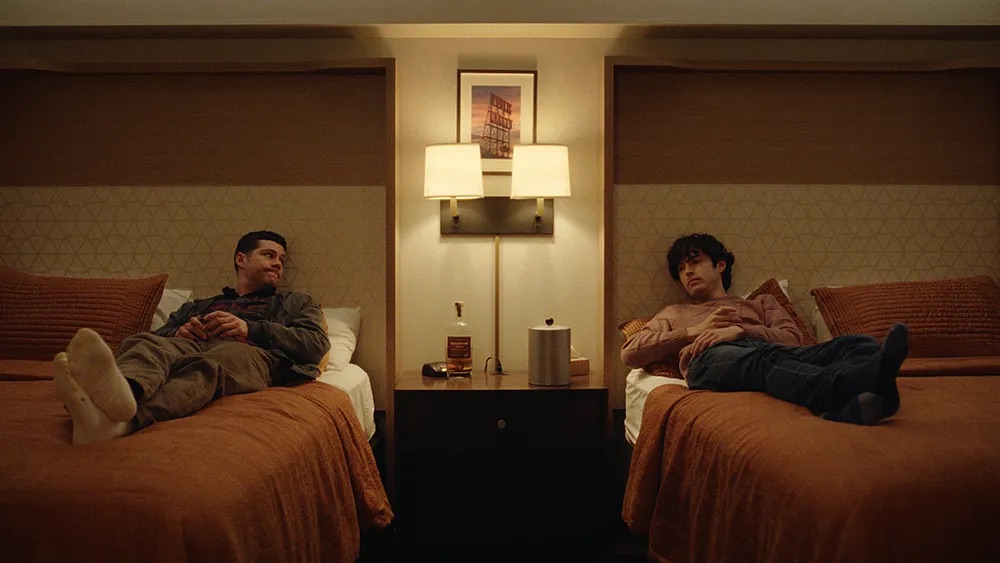
The film follows Roman (Dylan O’Brien) whose identical twin ,Rocky (also O’Brien), is killed in a sudden accident. Struggling with grief and clashing with his mother (Lauren Graham), Roman retreats to his brother’s apartment in an attempt to cope. Looking for connection, he joins a support group for people who have lost their twin where he meets Dennis (James Sweeney). The two quickly form a close co-dependent friendship, but as their bond deepens, truths begin to emerge that cast everything in a very different light.

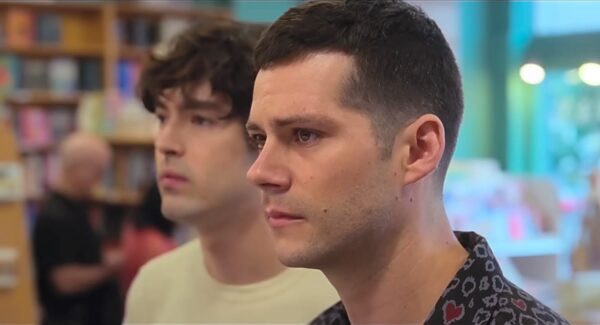
O’Brien delivers a strong performance, capturing a man who feels completely lost without his twin. Roman’s grief comes out through anger and unpredictability, and his shifting moods keep you on edge throughout. It is a performance that feels raw and grounded, reflecting someone who does not quite know how to process what they are going through. James Sweeney’s Dennis is a more complicated character. At first he seems likeable, but this perception gradually changes. As the film unfolds, his behaviour becomes harder to understand, shaped by a pattern of dishonesty that feels deliberate rather than forced. His interactions with others, including his colleague Marcie (Aisling Franciosi), add to this. Sweeney plays the role well, but it made me question whether Dennis is meant to be so unsympathetic or if there is perhaps something missing in the writing.
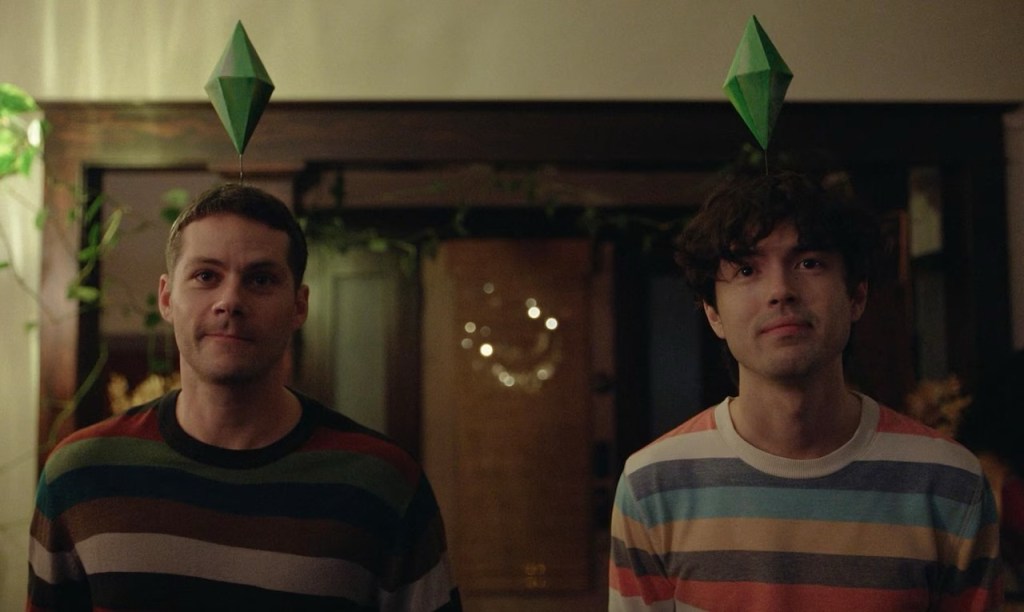
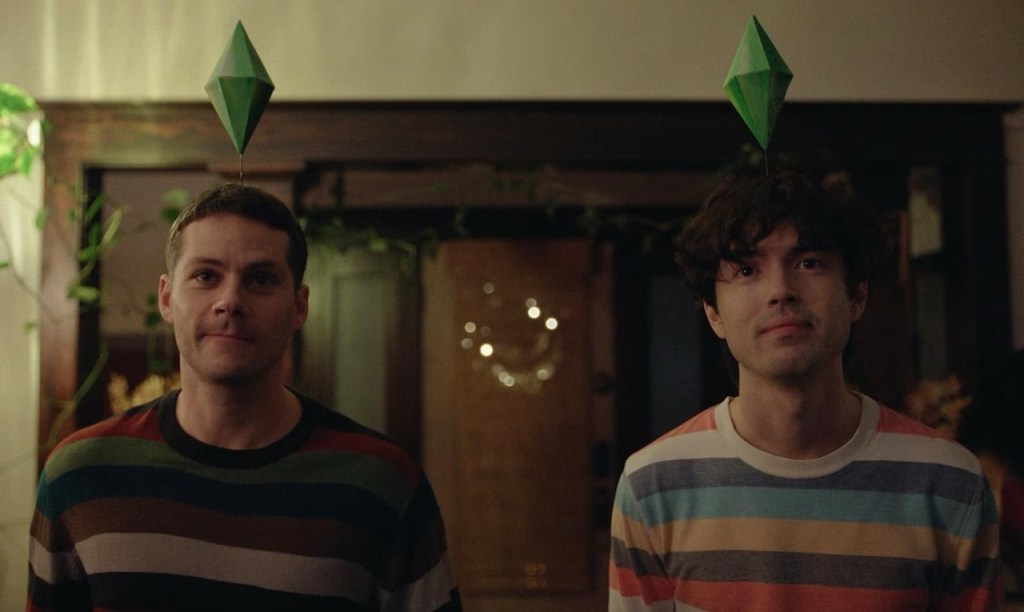
One of the film’s more interesting touches is its use of The Sims as a reference point. The idea of controlling characters and shaping their actions mirrors some of the film’s themes around manipulation and identity. Alongside references like Pokémon cards, it also helps ground the characters in their childhood and shared experiences.
Visually, the film leans into a muted, grey palette, which suits the subject matter and reflects the main characters’ emotional states. This is in stark contrast to the film’s vibrant poster, which suggests something lighter and more comedic. In reality, Twinless is much more of a drama with only occasional moments of humour coming through in the dialogue.
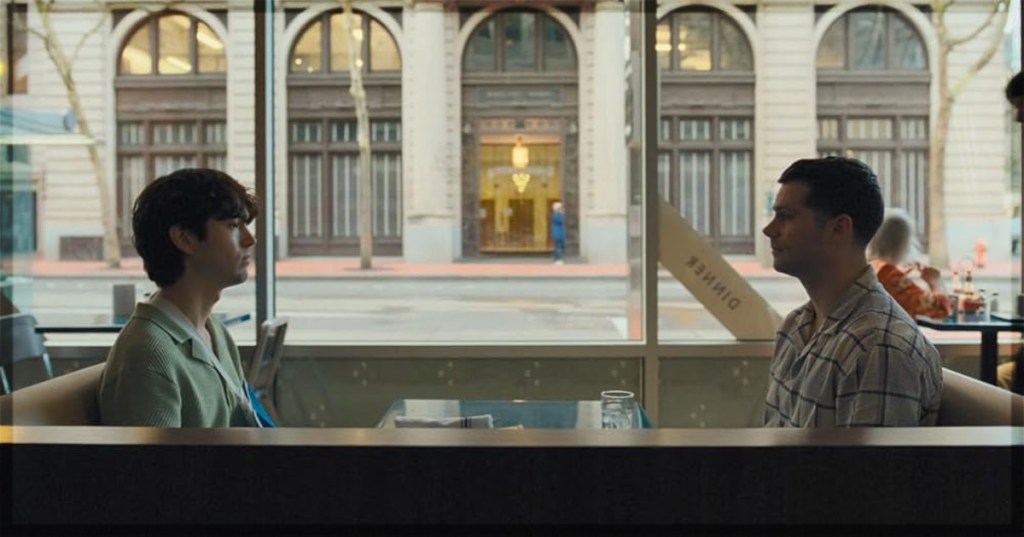
While the premise may feel familiar, particularly in its exploration of lies and their consequences, the use of twins adds something more distinctive. The film touches on the unique bond between twins and raises questions about identity and loss. What does it mean to lose someone who is, in many ways, a reflection of yourself? Visual elements like split screens reinforce this idea, highlighting both connection and absence.
Ultimately, Twinless is an intriguing and thoughtful film that explores grief, identity and human connection. It may not feel entirely original in its structure, but there is enough here in its performances and ideas to make it worth watching.
★★★½ (3.5/5)


One response to “Twinless (2026) Review – Life Without Your Other Half”
[…] TWINLESSFollowing two people brought together by shared loss, Twinless captures the strange intimacy that grief can create. […]
LikeLike