
In one sentence: Three homosexuals living in different periods of Spanish history confront prejudice, love and loss in an extraordinary exploration of the silences that shape lives across generations.
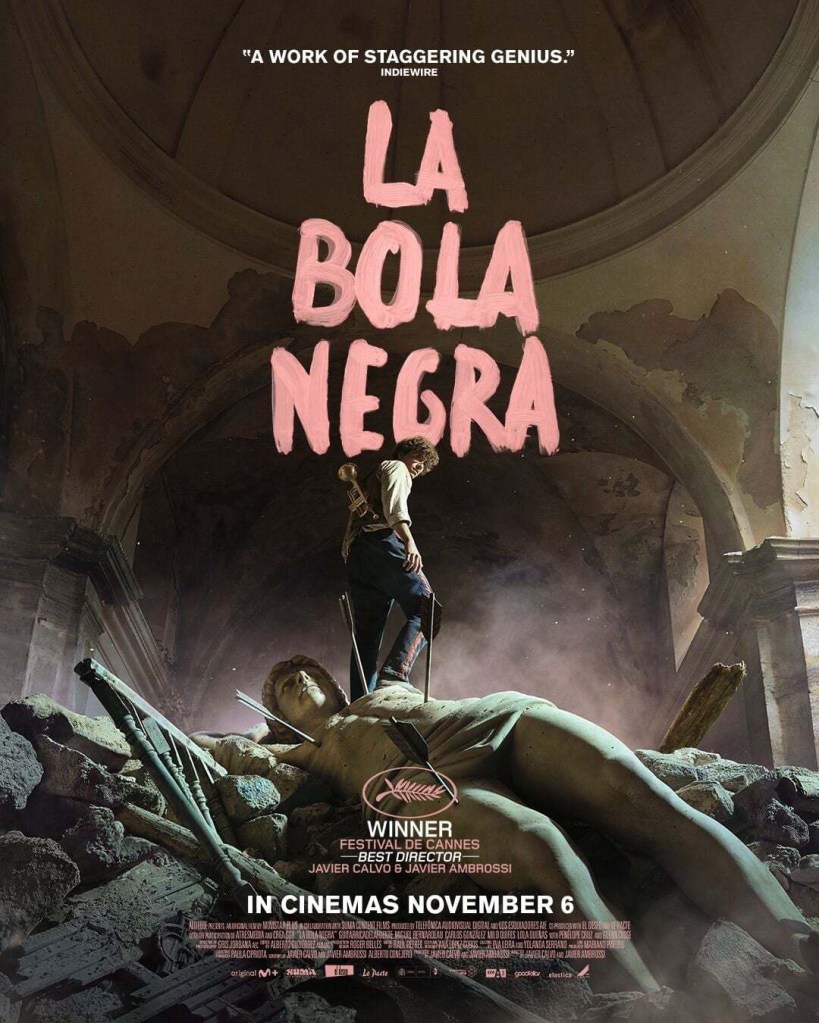
Every once in a while, a film comes along that feels like pure art. The kind of film that reminds you why cinema exists and why certain stories deserve to be experienced on the big screen. This is precisely how I felt watching La Bola Negra, an extraordinary Spanish drama directed by Javier Calvo and Javier Ambrossi, collectively known as Los Javis, who shared the Best Director prize at this year’s Cannes Film Festival.
The film follows three young men across different periods of Spanish history. In 1932, Carlos (Milo Quifes) attempts to join a casino but is rejected because of his homosexuality. In 1937, during the Spanish Civil War, Sebastián (Guitarricadelafuente) finds himself serving with the Nationalist forces and develops an unexpected connection with Rafael (Miguel Bernardeau), an imprisoned Republican officer. Finally, in 2017, Alberto (Carlos González) lives a comparatively open modern life before receiving an inheritance that connects him to a family history he knows little about. Although the men live in vastly different circumstances, their stories are connected by experiences of desire, repression, grief and the consequences of things left unsaid.

What I didn’t realise before watching the film was that it draws inspiration from La bola negra, an unfinished work by the celebrated Spanish poet and playwright Federico García Lorca, who was murdered in 1936, shortly after the outbreak of the Spanish Civil War. The screenplay also draws upon Alberto Conejero’s play La piedra oscura, incorporating historical figures alongside fictional characters and events. The result is something remarkably ambitious, combining history, fiction and artistic interpretation to create a story that feels powerful, tragic and ultimately inspiring. Importantly, the film is equally effective without any prior knowledge of Lorca or his work, which makes its achievements all the more impressive.

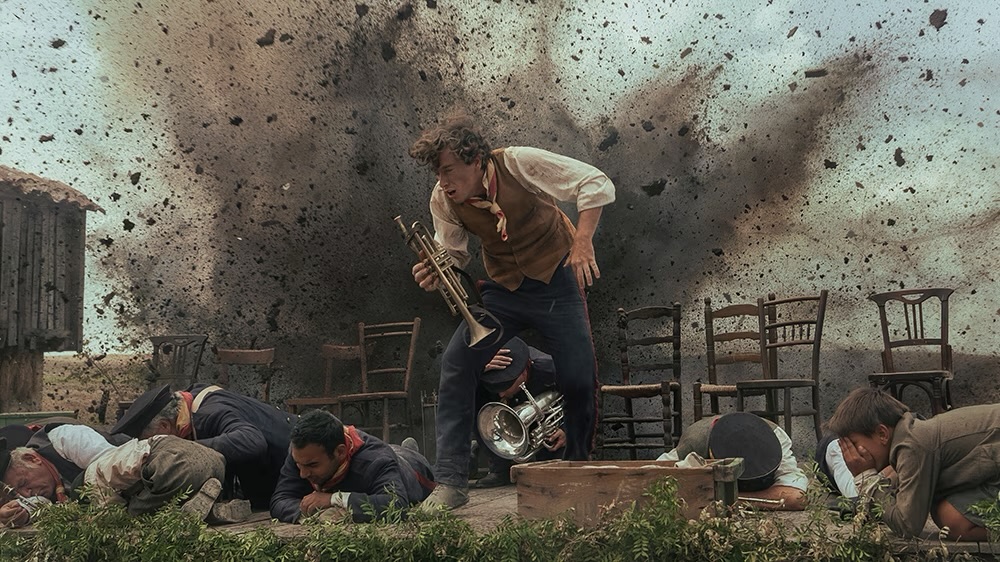
At its heart, La Bola Negra explores the experiences of gay men across generations, examining how prejudice, shame and repression have shaped their lives. Although the film is deeply rooted in Spanish history and culture, its themes feel universal. The confusion of discovering one’s identity, the fear of rejection and the longing to love freely are experiences that transcend national boundaries. Yet it is precisely the film’s Spanish identity that makes it so distinctive. The historical and political circumstances provide a rich, often devastating backdrop to these deeply personal stories. The Spanish Civil War is particularly important and the film makes its brutality apparent almost immediately. We are confronted with shocking violence, graphic injuries and the traumatic consequences of political conflict. These sequences are difficult to watch, but they establish the terrible circumstances in which the characters must attempt to survive.
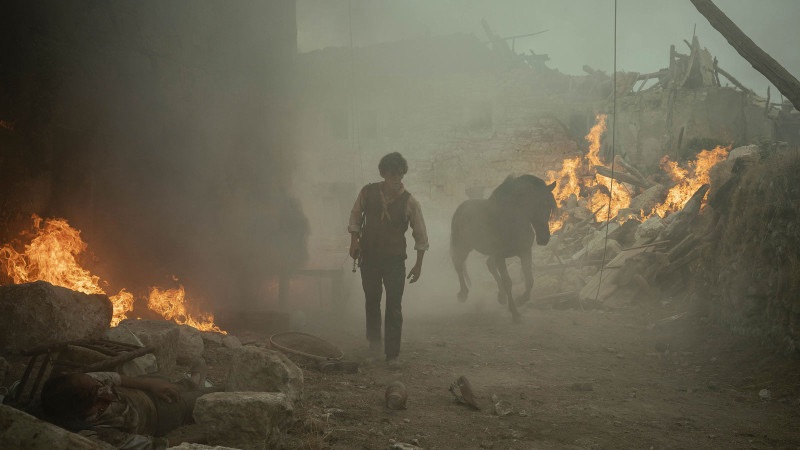
The film also explores political oppression, the destruction of innocence, the consequences of war and the ways in which historical trauma can endure long after the events themselves. The contrast with Alberto’s experiences in 2017 is especially striking. His world includes dating apps and a degree of openness that would have been unimaginable for the men who came before him. There is something genuinely moving about recognising how much has changed, while also understanding the suffering and sacrifices that helped make those freedoms possible.

One of the film’s greatest achievements is the way it weaves together its three timelines. These are not simply separate stories presented alongside one another, but narratives that intertwine and gradually reveal their connections and significance. The film seems to bloom as it develops, with each new revelation adding another layer of meaning to what has come before. There is a wonderful unpredictability to its storytelling. Yet despite its ambition and occasional theatricality, nothing felt so extravagant that it undermined the emotional truth of the story. I was genuinely awestruck by the journey the filmmakers took me on.
The cinematography is exceptional. Every sequence feels carefully considered, transforming both ordinary and extraordinary moments into something remarkably poetic. I sometimes approach films celebrated at Cannes with a degree of caution, wondering whether their artistic ambitions will result in something unnecessarily ostentatious. There is always a danger that experimentation will result in style taking precedence over substance. I never felt that way about La Bola Negra. Its visual flourishes have a clear purpose, whether through the use of theatrical spotlights, falling snow indoors or sequences presented in black and white. These techniques do not simply make the film beautiful, they enhance the emotions, memories and experiences being portrayed.
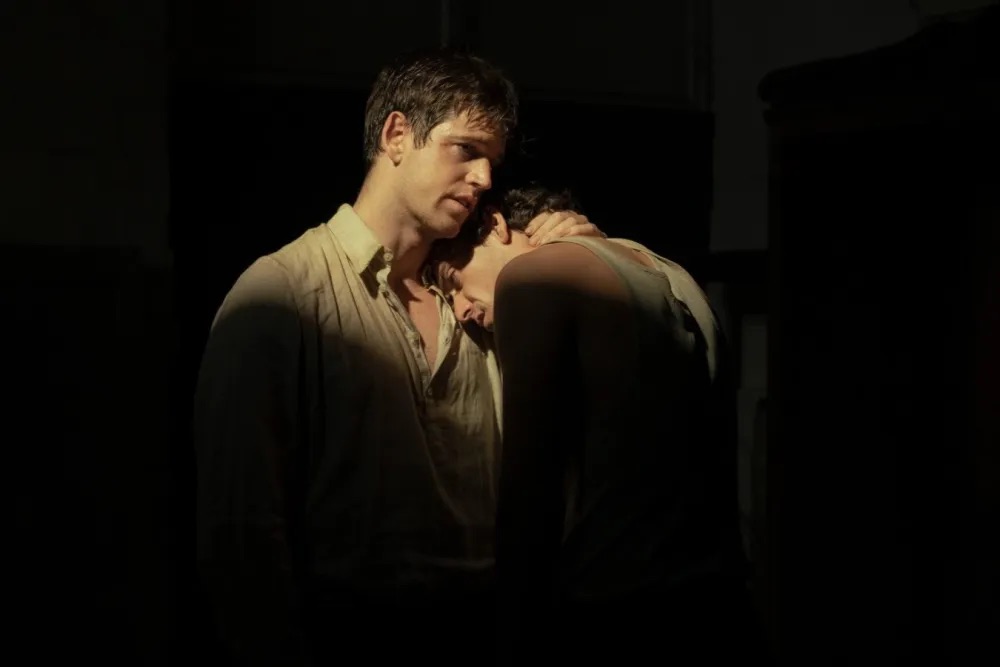
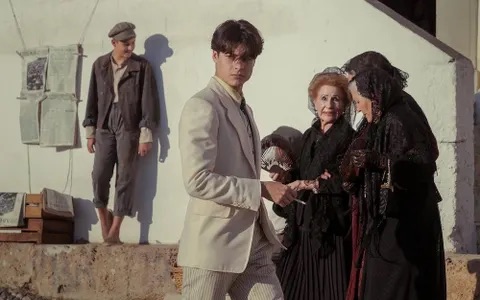
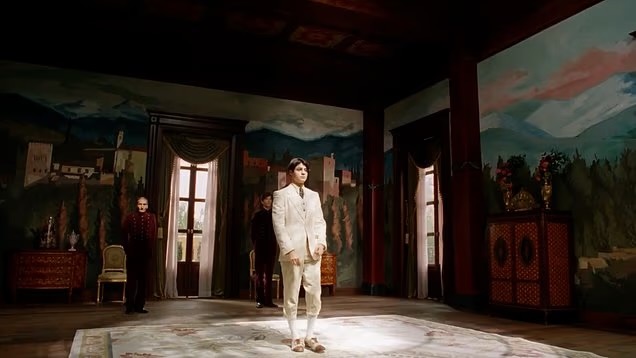
Each timeline also possesses its own distinctive aesthetic. Carlos’ scenes are often sun drenched and highly artistic, reflecting a different atmosphere from the darker, more oppressive world inhabited by Sebastián and Rafael. Alberto’s modern setting feels comparatively casual and familiar, reinforcing the considerable distance between his experiences and those of previous generations. The contrast is visually striking, but the filmmakers maintain a sense of cohesion throughout. It is an extraordinary example of how cinematography can contribute to storytelling.
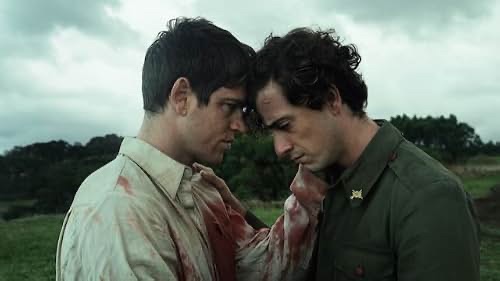
The relationship between Sebastián and Rafael was particularly compelling for me. Following a catastrophic event early in the film, Sebastián finds himself serving as a soldier. He is assigned to guard Rafael, a gravely injured Republican officer who is being kept alive so that he can eventually be interrogated and executed. The two men are ostensibly on opposing sides of a brutal conflict, but their circumstances are more complicated than their uniforms and political allegiances suggest. Rafael is physically imprisoned, injured and facing an almost inevitable death. Sebastián, meanwhile, is trapped in a different way. Traumatised by what he has witnessed and terrified of the circumstances in which he finds himself, he seems unable to exercise any meaningful control over his own future.
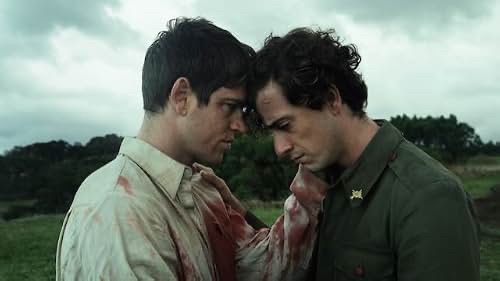
I found Sebastián especially affecting. Rather than presenting him as a committed ideologue, the film portrays a frightened young man struggling to survive events that have overwhelmed him. His apparent allegiance does not necessarily reflect conviction and there is something heartbreaking about watching somebody become caught up in a conflict they are scared of. Despite their opposing positions, the two men discover a shared interest in the arts, allowing a connection to develop that transcends the divisions imposed upon them. Rafael is particularly interesting because he is based on a real historical figure, an actor who was connected to Federico García Lorca. This blending of historical reality and fictional interpretation adds another dimension to their relationship.

The growing affection between Sebastián and Rafael is beautifully understated. Their chemistry is palpable, yet so much of what passes between them is communicated through glances, gestures and moments of quiet understanding. There is extraordinary tenderness in their developing romance, made all the more affecting by the knowledge that their circumstances offer little hope of a happy future. Their relationship emerges amid violence, fear and political hatred, providing moments of humanity within an otherwise devastating situation.

The consequences of the Civil War and the dictatorship that followed are not confined to the historical sections of the film. Their influence extends into the modern timeline, demonstrating how the experiences of one generation can shape those that follow. This exploration of generational trauma is one of the film’s most powerful elements. History is not presented as something distant or concluded, but as a force that continues to influence relationships and identities.
Communication, or rather the absence of it, is another theme that connects all three timelines. Throughout history, countless people have been denied the freedom to express their feelings or acknowledge their identities openly. The consequences of this silence extend beyond the individuals themselves, affecting relationships, families and future generations. La Bola Negra examines how repression can force people to conceal fundamental parts of themselves and how the inability to speak honestly can create wounds that endure for decades. The film develops this idea in a particularly moving way. Some of its most affecting moments depend upon discoveries that deserve to be experienced without prior knowledge.
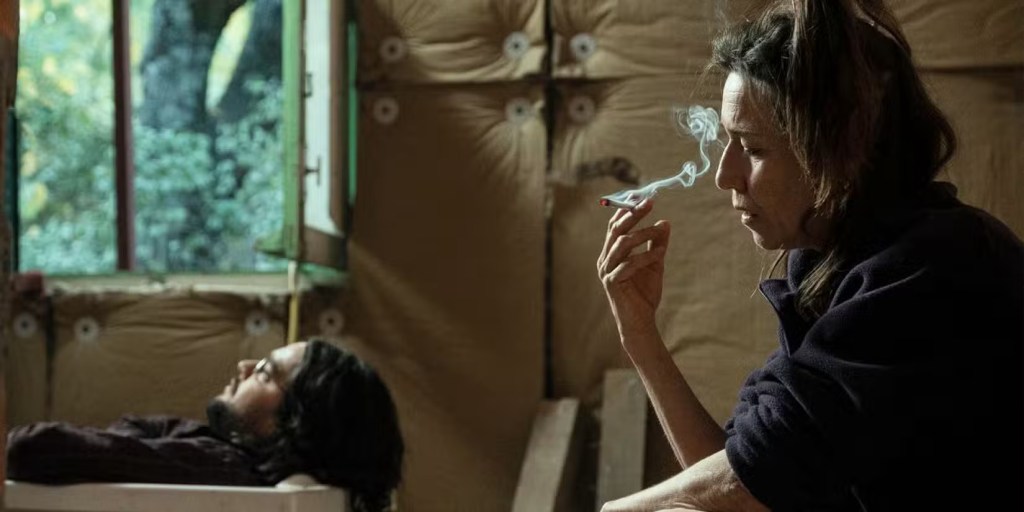
What becomes increasingly apparent is that the freedoms enjoyed by younger generations have emerged as a result of real struggle. They exist because others endured persecution, challenged expectations and, in some cases, suffered terribly for their identities. There is also a powerful argument here for the importance of art and representation of homosexuality.

The performances throughout are superb. Each of the central actors brings something distinctive to his character, capturing different experiences of confusion, vulnerability, desire and self-discovery. The scenes between Sebastián and Rafael were particularly captivating, with Bernardeau and Guitarricadelafuente demonstrating remarkable chemistry. Their performances are restrained when necessary but never lacking in emotional intensity, making their relationship one of the film’s greatest strengths. Penélope Cruz and Glenn Close also make memorable appearances in different timelines, contributing further depth to the narrative. Cruz offers another perspective on the suffering experienced during the Civil War, while Close’s role reinforces the significance of Lorca’s artistic legacy and the importance of giving marginalised people a voice.

The film also possesses an impressive sense of scale. Its extensive cast, large crowd scenes and carefully realised historical settings create a world that feels substantial and convincing. Despite its intimate emotional focus, La Bola Negra frequently has the grandeur of an epic.
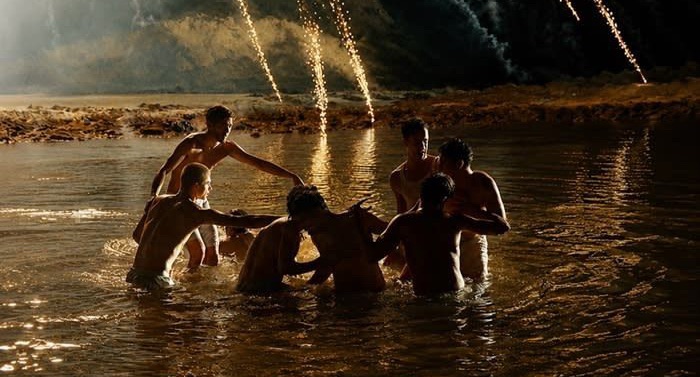
At approximately two hours and thirty-five minutes, the film is on the longer side, but I never found its duration excessive. The directors maintain momentum through the shifting timelines and carefully timed revelations, ensuring that the audience remains engaged as the narrative gradually comes together. There were several moments when I wondered whether the film was approaching its conclusion, only for another development to take the story somewhere unexpected. However, the ending ultimately chosen by the filmmakers felt entirely appropriate, bringing the film’s themes together in a way that justified its ambitious structure.

Perhaps the most telling indication of its impact came when the film finished. The audience in my cinema remained silent for an extended period. Nobody seemed particularly eager to move or speak, as though everyone needed a moment to process what they had just experienced. It was a remarkable atmosphere, and one that perfectly captured my own response. Sometimes great art leaves you speechless, not because there is nothing to say, but because there is so much to consider. That was certainly how I felt after watching La Bola Negra.
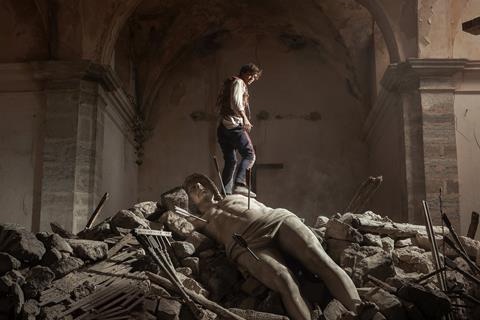
Ultimately, La Bola Negra is an extraordinary achievement in filmmaking. It explores the experiences of gay men across different periods of Spanish history with remarkable sensitivity, ambition and emotional intelligence, while confronting the wider consequences of prejudice, war, loss and generational trauma. Although deeply rooted in Spanish culture, its story is fundamentally human. Its exploration of love, identity, repression and the desire to be understood carries a universality that makes it profoundly affecting. The cinematography is breathtaking, the performances are exceptional and the storytelling is both inventive and deeply purposeful. Its distinctly European cinematic sensibility particularly appealed to me, combining artistic experimentation with an emotional sincerity that never feels compromised by its visual ambition.

I cannot recommend La Bola Negra highly enough. It is a film that celebrates the importance of telling stories, remembering those who came before us and giving a voice to people who were once forced into silence. More than anything, it reminded me of the extraordinary power of cinema.
★★★★★ (5/5)

