
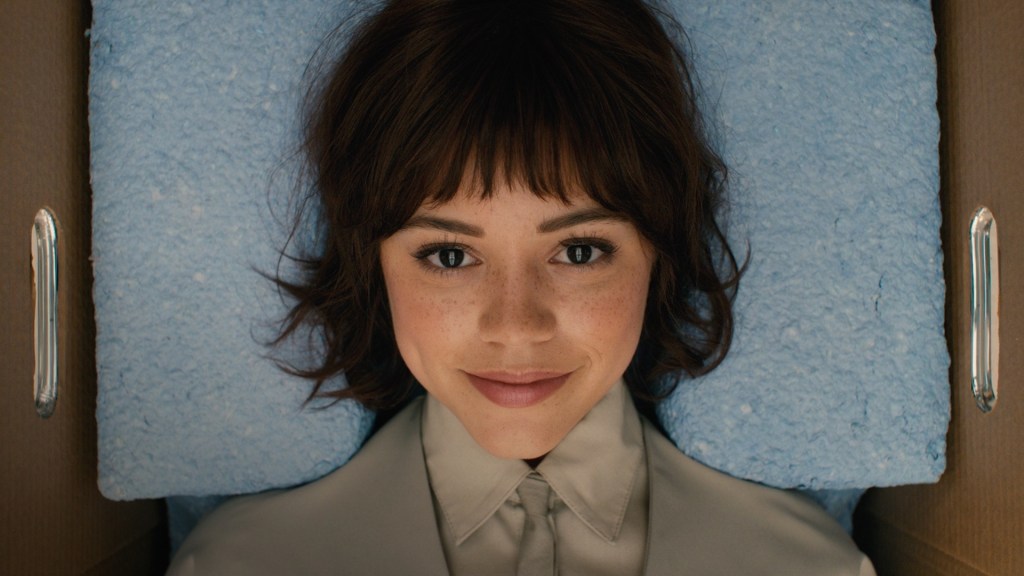
In one sentence: A solar-powered Artificial Friend joins a family in a technologically altered future, learning about love, loneliness and what it means to be irreplaceable.
Following A Pale View of Hills, Klara and the Sun marks the second adaptation of a Kazuo Ishiguro novel to reach cinemas this year. The two stories could hardly be more different, with one looking towards the past and the other imagining a possible future, demonstrating both the author’s range and the opportunities his writing offers filmmakers. This time, director Taika Waititi takes on Ishiguro’s most recently published novel, bringing his distinctive visual style to a story about artificial companionship, love and the value of human individuality.

Set in a world recovering from a third world war, where the internet no longer exists, the film follows Klara (Jenna Ortega), an older-model Artificial Friend, or AF, who longs to find somebody to love. Powered by sunlight, Klara regards the sun as the source of almost everything good in the world, developing a fascination with it that borders on reverence. When she is selected by an enthusiastic teenager, Josie (Mia Tharia), and her considerably less convinced mother, Chrissy (Amy Adams), Klara leaves the familiarity of the AF store and begins discovering what friendship, family and affection mean beyond its windows.
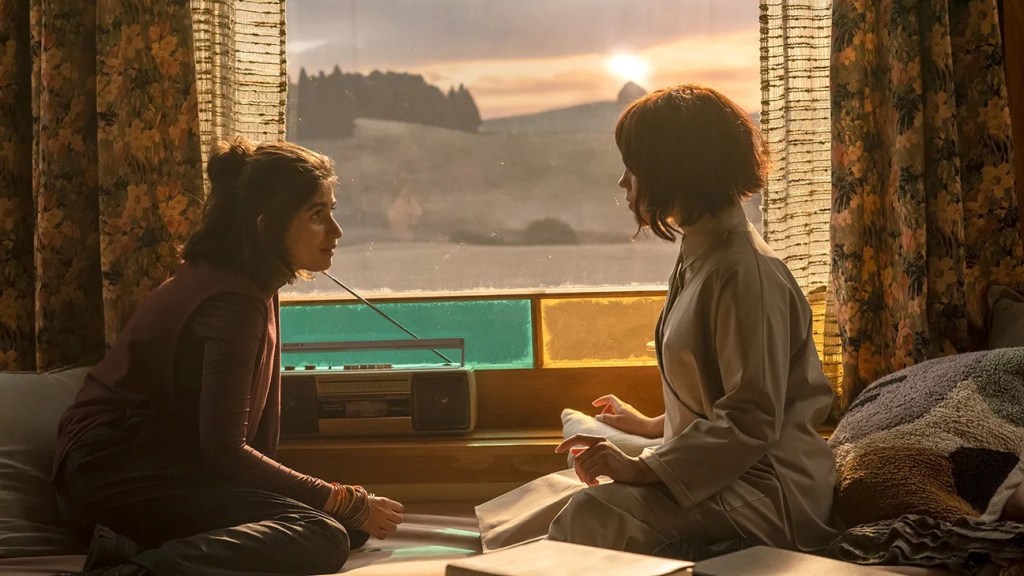
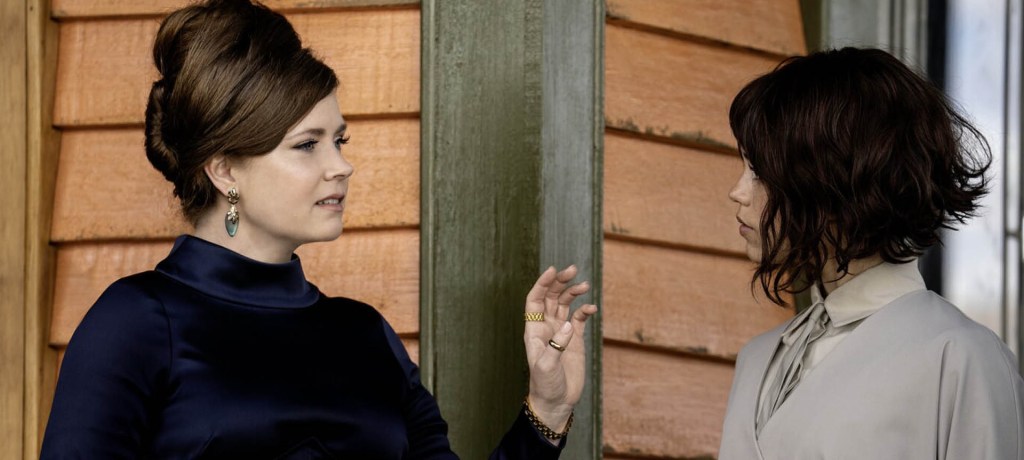
The film’s visual style is immediately striking. Its world combines retro and futuristic elements in a way that feels simultaneously familiar and alien. Driverless cars resemble classic models, fashion has an almost futuristic 1960s aesthetic, and bustling city streets are filled with technology that appears both advanced and curiously old-fashioned.
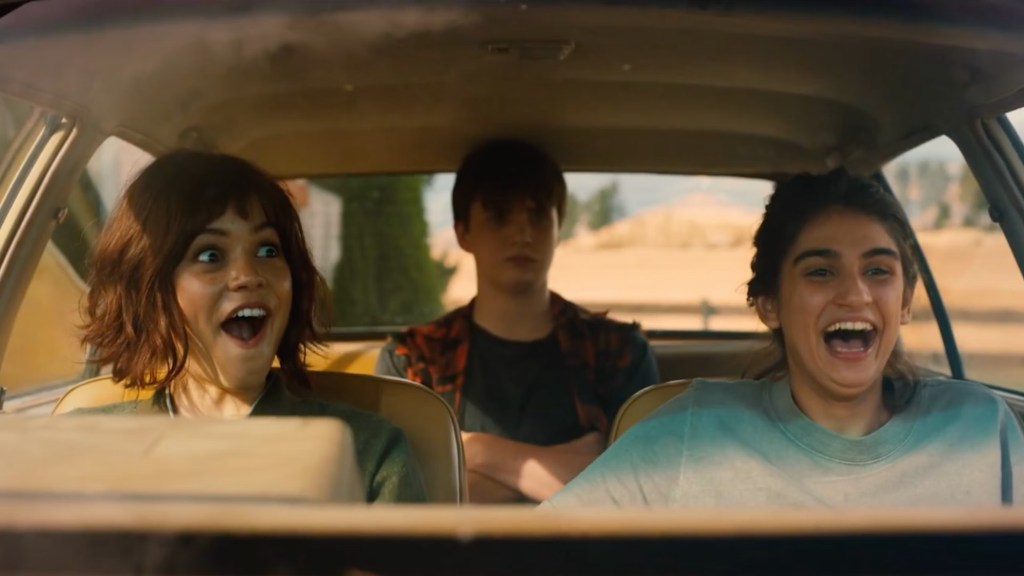
Light plays an especially important role. Much of the film is beautifully bright, with sunlight becoming a recurring visual motif that reflects Klara’s understanding of the world. There is also an almost cartoonish quality to certain sequences, particularly the exaggerated machinery, street cleaners and agricultural equipment that release thick clouds of smoke, obscuring the very light Klara depends upon. Waititi’s distinctive creative vision is evident throughout. Previous films such as Jojo Rabbit and Boy demonstrate his ability to blend eccentricity with more serious subject matter and Klara and the Sun provides an ideal opportunity to explore such a sensibility within a world that is recognisable but fundamentally different from our own.
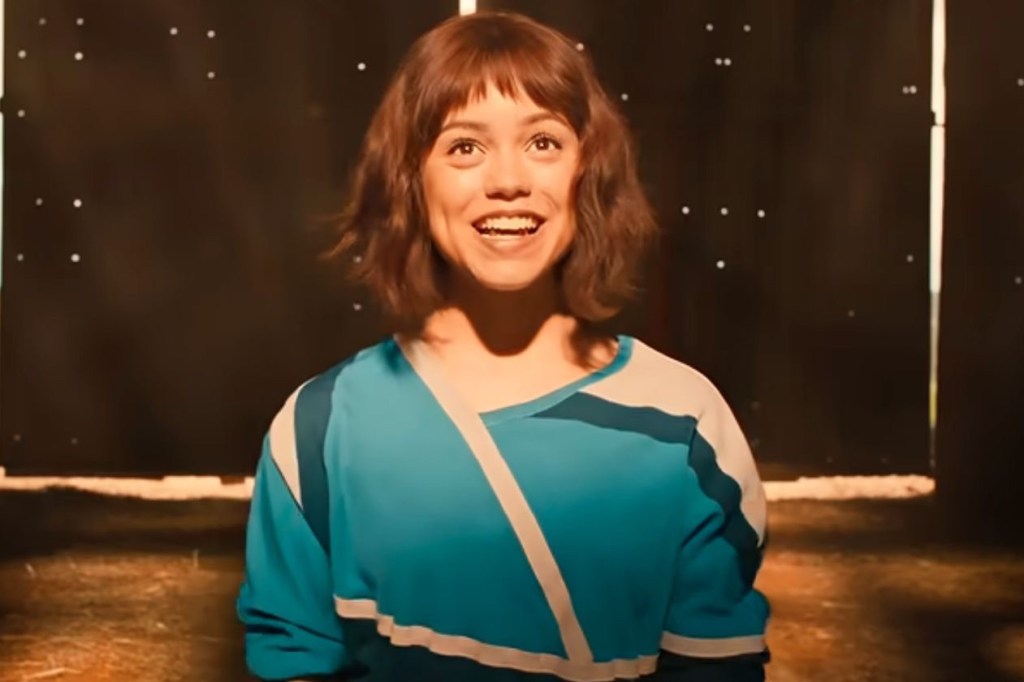
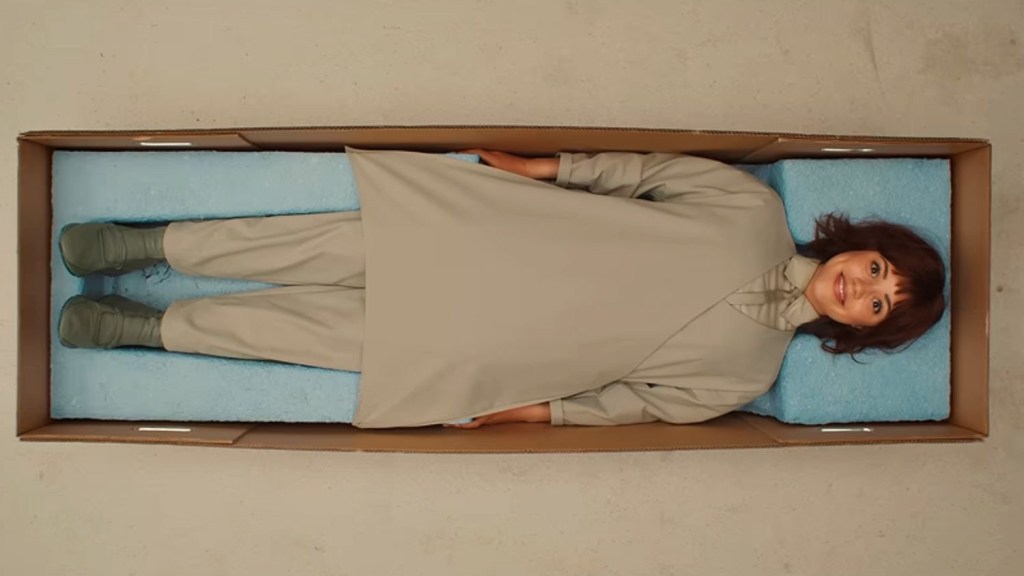
Jenna Ortega is excellent as Klara. Her wonderfully expressive face conveys a sense of innocence and curiosity that feels unusual for a character of this nature. Rather than presenting an android equipped with an encyclopaedic understanding of humanity, the film introduces an Artificial Friend who must gradually learn how the world works through observation and experience. Klara is clumsy, inquisitive, well-meaning and occasionally rather funny, particularly when her attempts to understand human behaviour don’t quite go according to plan. There is something endearing about watching her interpret situations that the audience immediately understands but that remain entirely unfamiliar to her. The mechanics of the AFs and the extent of their individual personalities may require a little suspension of disbelief. However, once you accept the rules of this particular world, Klara becomes a charming and unconventional protagonist. Her obsession with the sun can occasionally become repetitive, with its importance reiterated so frequently that I found it a little grating. Nevertheless, I appreciated the film’s commitment to presenting a different kind of android, one whose understanding of existence is shaped by an almost childlike belief in the extraordinary power of something humans largely take for granted.

Naturally, Klara’s arrival creates uncertainty among those around her. Housekeeper Melania (Rachel House) worries about what an Artificial Friend might mean for her employment, while Chrissy struggles to understand Klara’s purpose and remains uncomfortable with her presence. Even Josie, who initially welcomes her so enthusiastically, experiences jealousy, particularly where her relationship with neighbouring boy Rick (Aran Murphy) is concerned. These concerns are familiar territory for stories about artificial intelligence, but Klara and the Sun approaches them from a rather different perspective.
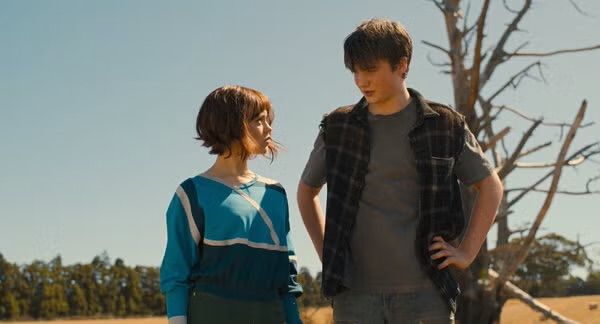
Grief, in its various forms, has long been an important element of Ishiguro’s writing. It can be found in The Remains of the Day, Never Let Me Go and A Pale View of Hills and it is equally significant here. The introduction of Artificial Friends as a response to loneliness, companionship and more complicated emotional needs feels especially pertinent in a world where people are already turning to chatbots and artificial companions for comfort. There is something both fascinating and unsettling about the prospect of creating something that can fulfil an emotional need traditionally met by another person. The film explores how fear, loneliness and grief can influence our decisions, sometimes encouraging us to seek solutions that raise difficult questions of their own.
Although Steven Spielberg’s A.I. Artificial Intelligence previously explored the world through the perspective of an artificial child, Klara offers a rather different experience. Her gradual attempts to understand and interpret her surroundings introduce a gentle humour that is often absent from more sombre portrayals of artificial life.
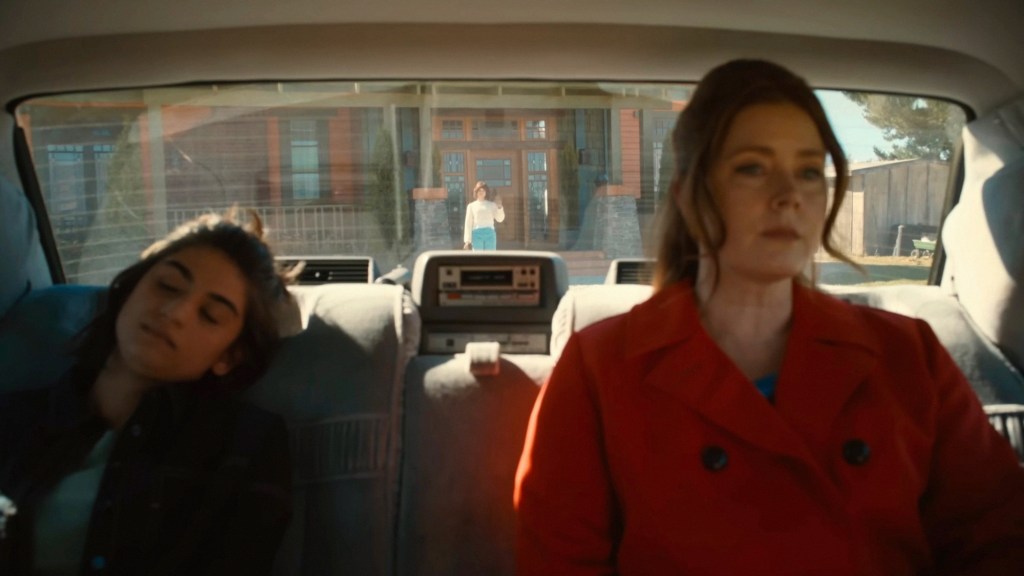
At the centre of the story is the strained relationship between Josie and Chrissy. With her mother frequently occupied by work, Josie often feels unwanted, perhaps explaining her eagerness to welcome Klara into her life. Yet there is considerably more to their relationship than initially meets the eye. One important element is that Josie has been ‘lifted’, a procedure that enhances a child’s intellectual abilities to genius level and is particularly sought after by wealthy families. In this society, lifting creates a significant divide between those whose abilities have been artificially enhanced and those who remain unaltered, something explored through Josie’s relationship with Rick. The concept introduces an interesting discussion about privilege, parental ambition and the pressure to improve ourselves.
Between Klara’s status as an older model, Rick’s position as an unlifted teenager and Josie’s complicated feelings about her own enhancement, the film appears to suggest that there is something valuable in our differences and imperfections. Human beings are not simply collections of desirable qualities that can be upgraded, replicated or replaced. Our individuality is fundamental to who we are.
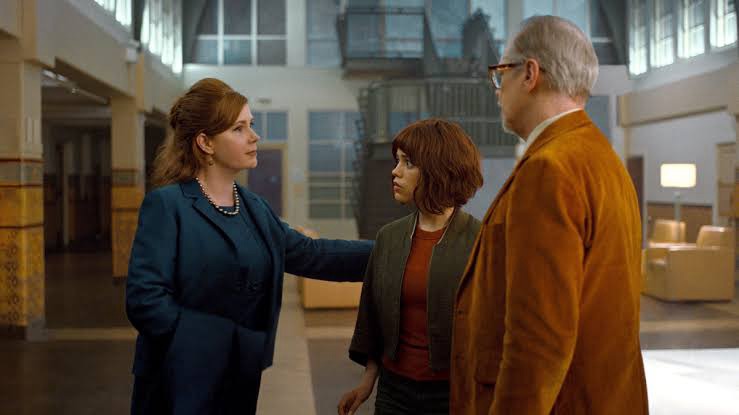
This idea also extends to the film’s exploration of love. Klara believes she has witnessed genuine affection and longs to experience such a connection herself. Her curiosity suggests something approaching sentience, even if her understanding of human emotion remains incomplete. Can an artificial creation genuinely experience love or can it only learn to recognise and imitate its outward expressions? It is a familiar philosophical question within the genre, but Klara’s innocence gives it a slightly different quality. She approaches affection with an earnestness that is often rather touching, contrasting with the more complicated and sometimes contradictory behaviour of the humans around her. There is also something disconcerting about how human the AFs appear despite being fundamentally artificial. As technology continues to develop, the prospect of increasingly lifelike companions feels less like distant science fiction and more like a question society may eventually have to confront.
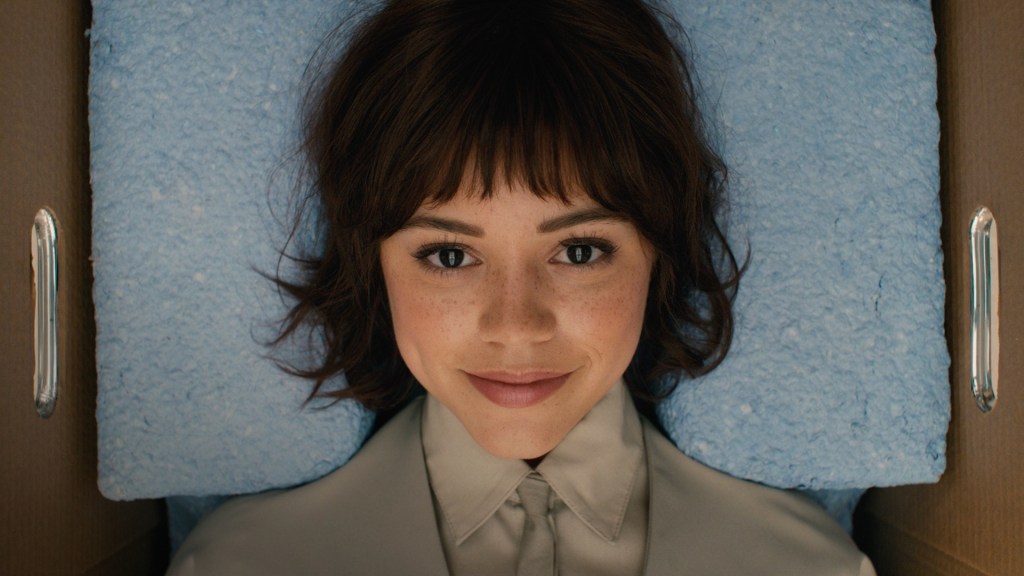
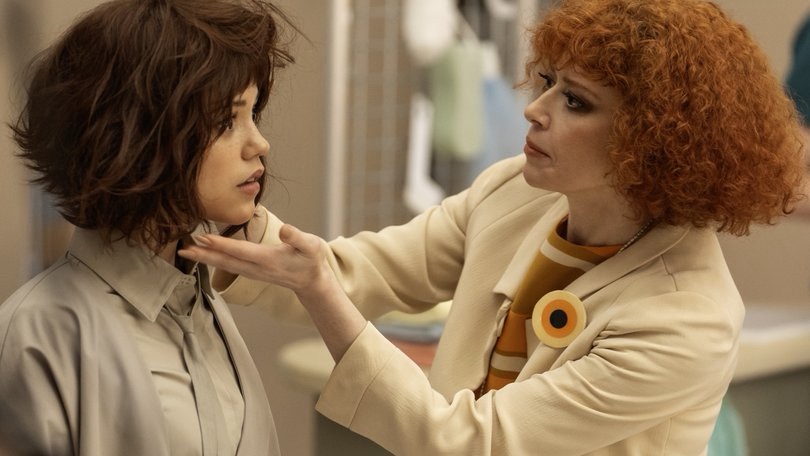
Alongside Ortega’s excellent performance, Amy Adams brings considerable depth to Chrissy. She portrays a complex woman with restraint, allowing glimpses of vulnerability beneath a character who can initially appear rather cold. Mia Tharia is also convincing as Josie, and the chemistry between the central characters gives their unusual household a believable emotional foundation. Natasha Lyonne brings an eccentric quality to the AF store manager, delivering a highly stylised performance that borders on caricature but feels entirely appropriate within Waititi’s world. I must admit, however, that I found the film considerably more engaging once Klara left the store and began experiencing life beyond its windows.
The pacing is generally effective, with a runtime that feels appropriate for the story being told. There is an element of uncertainty throughout, and the film leaves certain questions open to interpretation. Some audiences may find this frustrating, but I thought the ambiguity suited its subject matter. Where Klara and the Sun didn’t quite succeed for me was in its emotional impact. It is clearly a film that hopes to conjure genuine feeling, and although I appreciated its ideas and connected with aspects, I never found myself as moved as I expected to be. It certainly didn’t leave me cold, but perhaps pleasantly warm rather than deeply affected.
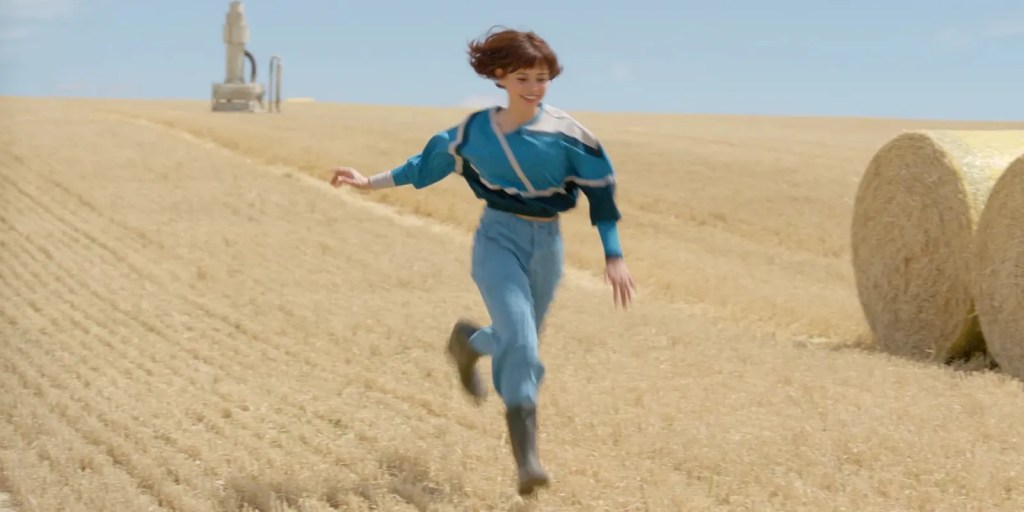
Ultimately, Klara and the Sun is a visually beautiful and refreshingly unconventional addition to the artificial intelligence genre. Waititi creates a distinctive world that blends retro charm with futuristic unease, while Jenna Ortega delivers an excellent performance as a protagonist whose innocence and curiosity make her considerably more interesting than the typical cinematic android. The film’s exploration of grief, companionship, privilege and individuality raises worthwhile questions about a future in which artificial creations may become increasingly difficult to distinguish from the people they are designed to serve. All the components appear to be in place for something truly special, yet despite admiring much of what it achieves, I couldn’t quite connect with it on the emotional level I had hoped.
★★★½ (3.5/5)

