
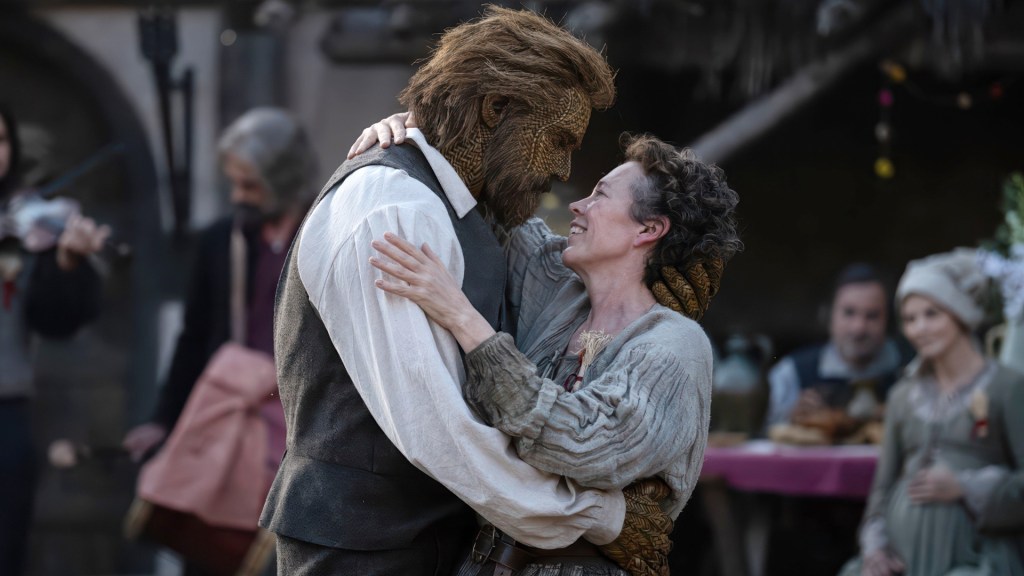
In one sentence: A lonely Fisherwoman commissions a husband woven from wicker, only to discover that finding love may be easier than protecting it from the jealousy of others.
Fables have existed for centuries, using seemingly simple stories to explore human behaviour and offer lessons about the way we live. Although they may take different forms today, their ability to entertain while encouraging us to examine ourselves remains just as relevant. The hotly anticipated Wicker, starring Olivia Colman and Alexander Skarsgård, embraces this tradition wholeheartedly, blending old-world storytelling with distinctly modern questions in a raunchy, quirky and surprisingly touching adaptation of Ursula Wills-Jones’ short story The Wicker Husband.
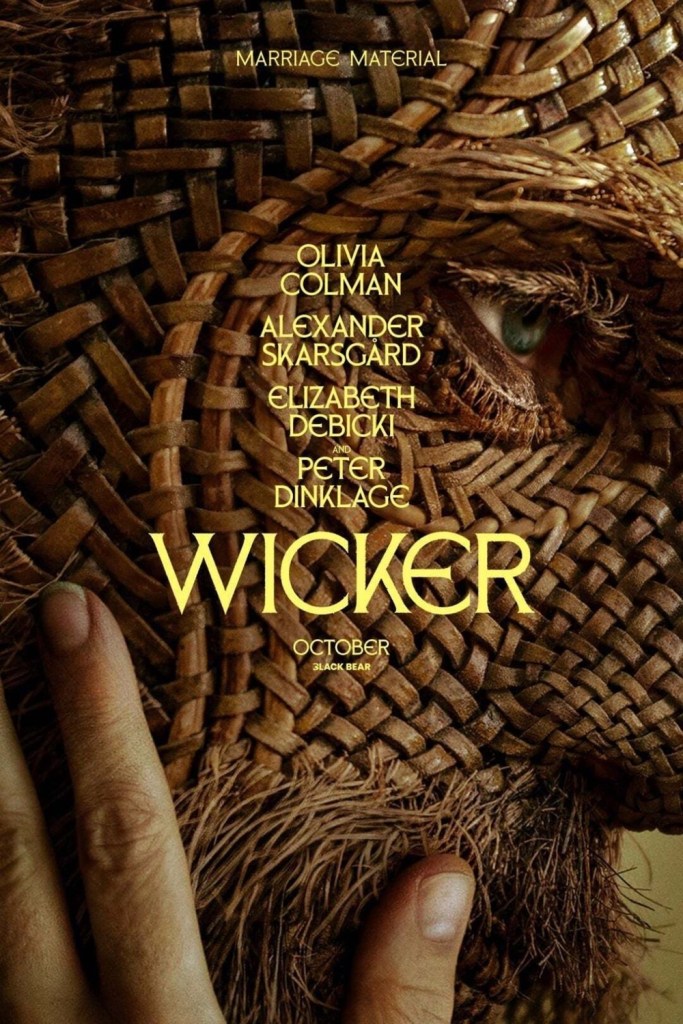
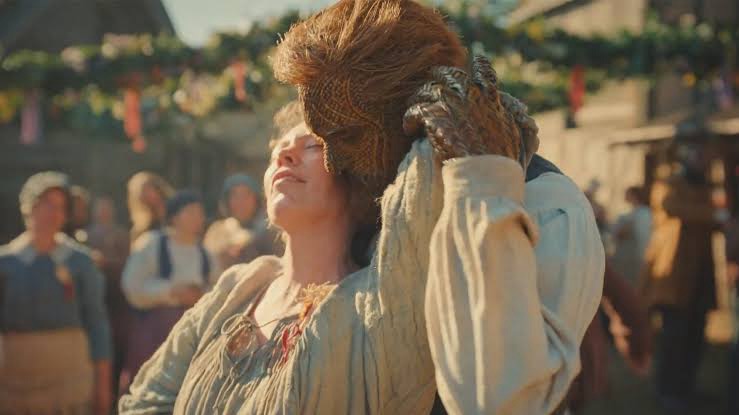
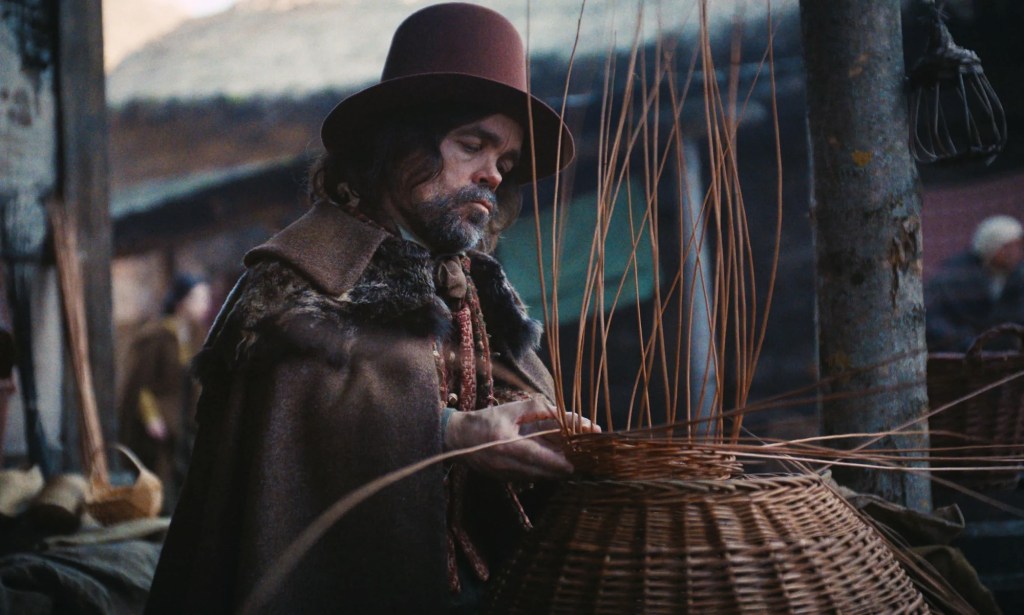
The film follows the Fisherwoman (Olivia Colman), who lives alone in a small fishing hut outside a picturesque village. Ostracised and ridiculed for her age, appearance and pungent smell, she has become something of an outcast among the townsfolk. During a wedding celebration, she inadvertently catches the equivalent of the bridal bouquet, a wicker egg that bursts with purple powder. Her unexpected success prompts further ridicule, particularly from the spiteful Tailor’s Wife (Elizabeth Debicki) so the Fisherwoman decides to take matters into her own hands. She approaches the Basket Maker (Peter Dinklage) with an unusual commission, to weave her a husband. One month later, she meets the extraordinary creation, her Wicker Husband (Alexander Skarsgård).
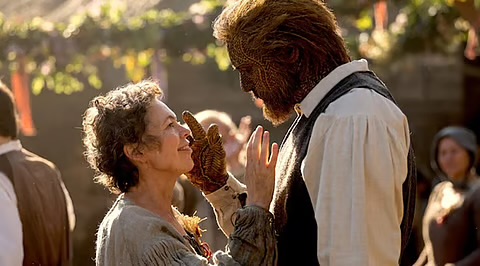
The trailer promises a raucous combination of comedy, sex and outrageous behaviour, and while these elements are certainly present, the film has considerably more depth than its marketing might suggest. Its pace is more tempered than some audiences may anticipate, particularly given its runtime of under two hours, and many of the biggest laughs and more shocking moments are revealed in the promotional material. Personally, I appreciated the film’s balance of light and shade. Its quieter, more reflective sequences allow the humour and raunchiness to stand out rather than become exhausting. This isn’t a relentless comedy, nor should it be. Beneath its eccentric premise lies a surprisingly thoughtful examination of love, insecurity, cruelty and the destructive influence of other people’s opinions.
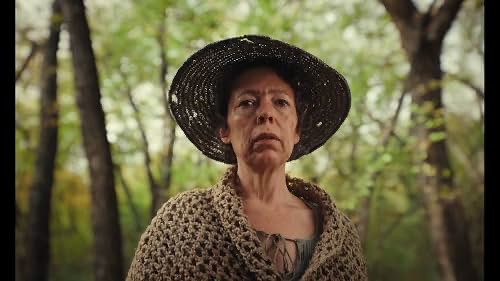
Visually, Wicker is an absolute delight. Its fictional village feels lifted from the pages of an illustrated fairytale, complete with thatched roofs, exposed beams, farm animals and wonderfully peculiar buildings. The Fisherwoman’s hut and the Basket Maker’s home are particularly charming in their unusual shapes, giving the setting an almost handcrafted quality. Yet this is no sanitised storybook world. Chamber pots are emptied through front doors, lecherous old men make crude remarks, and our leading lady is about as far removed from a conventional fairytale princess as one could imagine. There is grit beneath the whimsy and the film makes it abundantly clear that this particular fairytale is intended for adults.
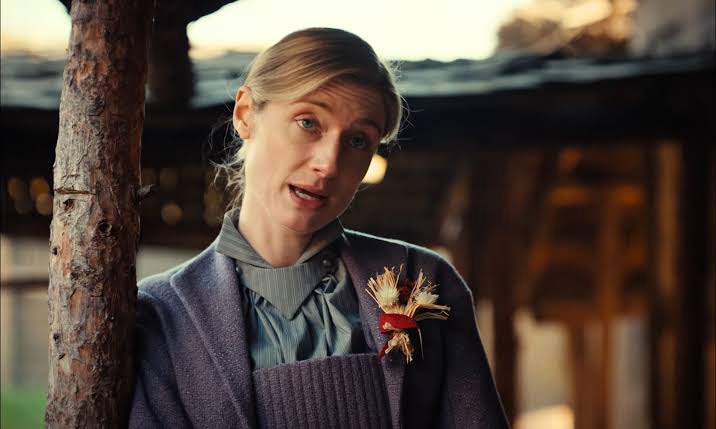
The storybook aesthetic extends to the film’s structure, which is divided into quasi-chapters introduced by handwritten pages containing clever quotations that subsequently become relevant to the unfolding story. The characters are also given a distinctly storybook quality through the absence of conventional names. Instead, they are identified by their professions or relationships, such as the Fisherwoman, the Basket Maker and the Tailor’s Wife. It is a small but effective detail that reinforces the film’s fable-like nature, making its characters feel like figures from a timeless folk tale. As someone who enjoys fairytales and their more mature adaptations, I loved how confidently the filmmakers committed to this style. Rather than simply borrowing a few familiar visual cues, Wicker immerses itself in the tradition while embracing the freedom to be considerably more outrageous than most family-friendly examples of the genre.
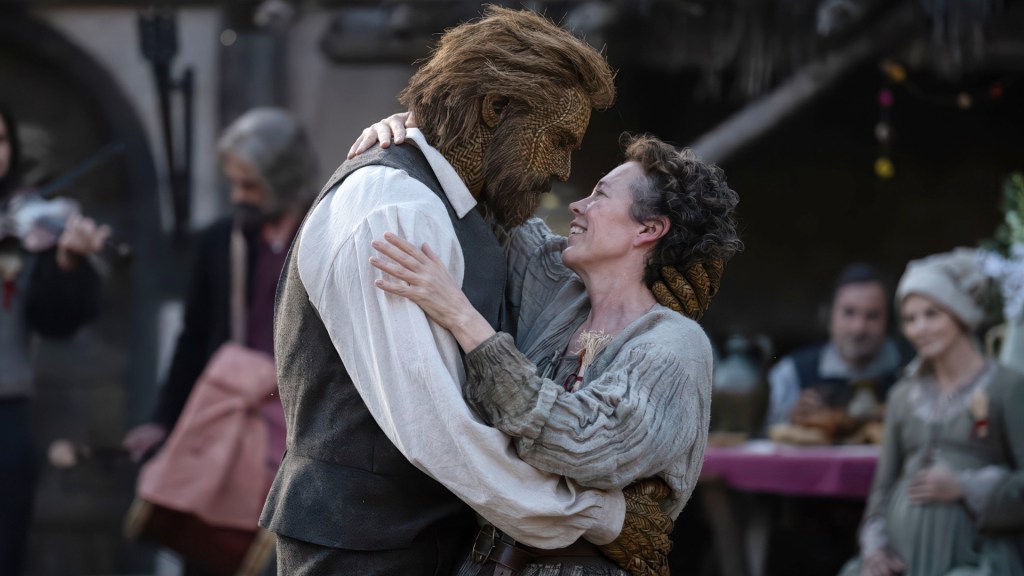
The creation of the Wicker Husband himself is particularly impressive. The attention to detail in his design is extraordinary, with intricately braided wicker forming his face, torso and musculature while still allowing him to move convincingly. His wispy hair and piercing blue eyes give him a strangely beautiful appearance, while the audible creaking of his body, like that of old wicker furniture, is an inspired touch. There is something faintly reminiscent of Jonathan Bailey’s Scarecrow transformation, although the Wicker Husband is a considerably more elaborate creation. The effects and makeup departments deserve enormous credit for producing a character who feels simultaneously fantastical, tactile and believable within the film’s world.
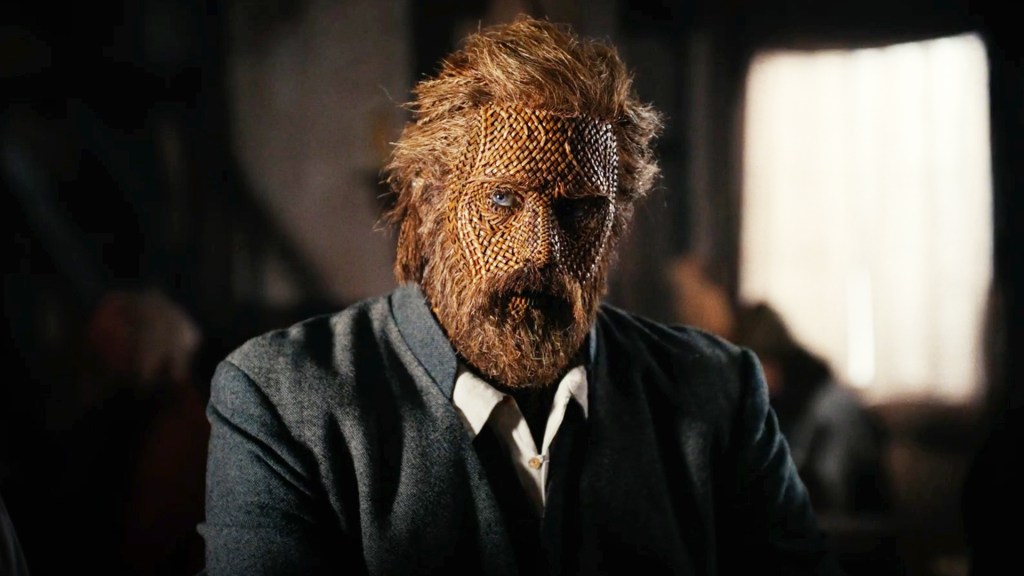
Skarsgård is excellent in the role. Retaining his Swedish accent, he sounds noticeably different from the surrounding villagers and their regional English accents, reinforcing his status as someone who does not quite belong. His speech is initially tentative and simple, yet unexpectedly eloquent, gradually developing as he becomes more familiar with the world around him. What could easily have been a gimmicky character becomes surprisingly layered. Despite his unusual construction, the Wicker Husband possesses a gentle charisma and an undeniable physical appeal. Even woven from wicker, Skarsgård remains remarkably striking, something that certainly doesn’t go unnoticed by the village’s women or their increasingly envious husbands.
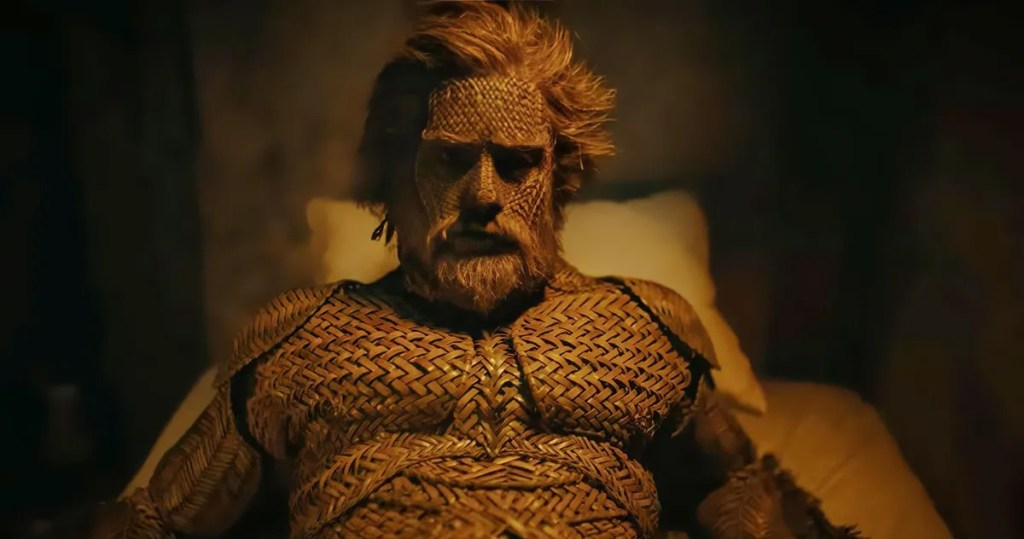
This attention quickly becomes a catalyst for some particularly unpleasant behaviour, with the townspeople’s fascination turning into covetousness and jealousy. It provides an interesting examination of how easily people can become resentful of another person’s happiness, particularly when they believe somebody they consider beneath them has acquired something they themselves desire.
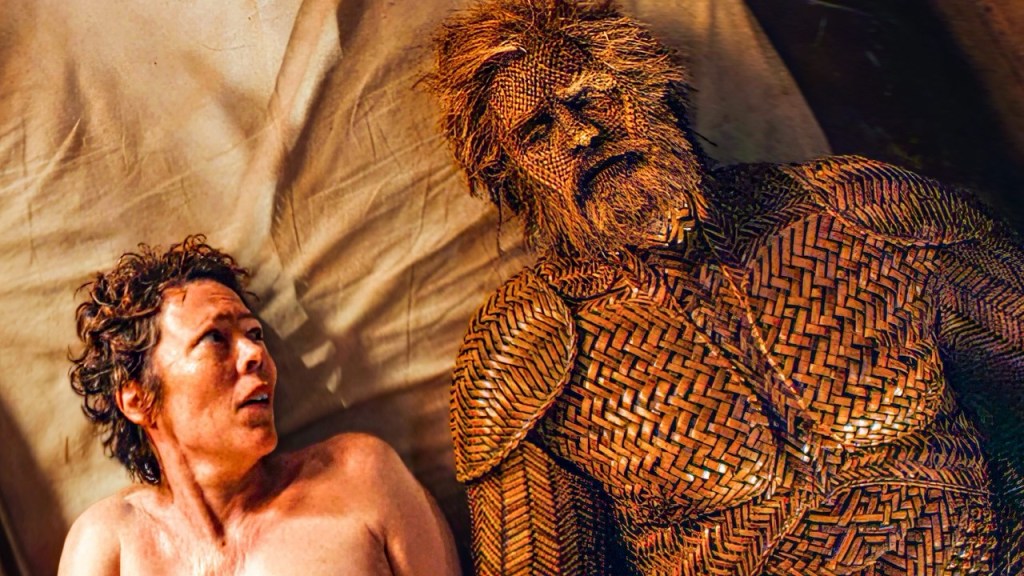
Olivia Colman is excellent as the Fisherwoman. She has no hesitation in embracing the character’s unglamorous appearance, abrasive manner and outsider status, yet beneath her hardened exterior is a deeply vulnerable woman who has spent much of her life being made to feel undesirable. There is something relatable about her emotional uncertainty. Despite finally having a husband who appears to adore her, she cannot entirely trust that his affection is genuine. After all, he was specifically made for her. If someone has been created to love you, can this love truly be considered freely given? This question reminded me of one of my all-time favourite films, I’m Your Man, which explores a similar dilemma through the concept of an artificial romantic companion. It is an especially interesting question in a world where AI companionship is becoming an increasingly realistic prospect. Although Wicker presents its dilemma through the traditional imagery of a magical creation, its underlying concerns feel remarkably contemporary.
Peter Dinklage is another highlight as the Basket Maker. Poetic, charismatic and wonderfully theatrical, he feels entirely at home within the film’s fairytale setting. His monologues, particularly when deliberating over his unusual commissions, have an almost melodic rhythm, as though each word has been carefully considered before being spoken. Elizabeth Debicki, meanwhile, makes an effective antagonist as the Tailor’s Wife. Although the film offers occasional glimpses of the sexism and social expectations that may have contributed to her bitterness, these do not excuse her cruelty. She and the other townsfolk are frequently spiteful, and while Wicker makes some effort to explore the motivations behind its characters’ behaviour, it never loses sight of the damage their unkindness causes.
As with any good fable, there are lessons to be drawn from the story and I think one of its strongest concerns the destructive power of jealousy. The Fisherwoman finds something that brings her happiness, yet the resentment of those around her threatens to undermine it. Their opinions begin to matter far more than they should, raising the question of how much power we allow other people to have over our relationships and sense of self-worth. There will always be people who resent what somebody else has, particularly when they believe that person does not deserve it. Perhaps there is something to be said for ignorance being bliss when it comes to other people’s opinions, especially when those opinions are motivated by envy rather than genuine concern.
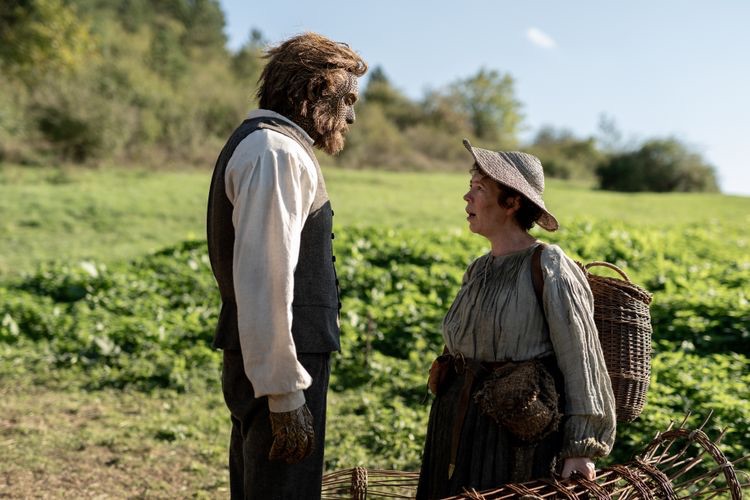
Ultimately, Wicker is a wonderfully unusual film that offers considerably more than the outrageous comedy promised by its trailer. It may not sustain that level of audacity throughout, but its combination of raunchiness, tenderness and thoughtful social observation makes for a rewarding experience. Colman and Skarsgård are excellent, the visual design is enchanting, and the film’s exploration of manufactured love feels particularly relevant. It is a story about love, jealousy, insecurity and the human tendency to interfere in happiness that does not belong to us. Wrapped in the familiar language of a fairytale, Wicker reminds us that the best fables do more than entertain. They invite us to recognise something of ourselves within their characters, even when one of them happens to be made entirely from wicker.
★★★★ (4/5)

