
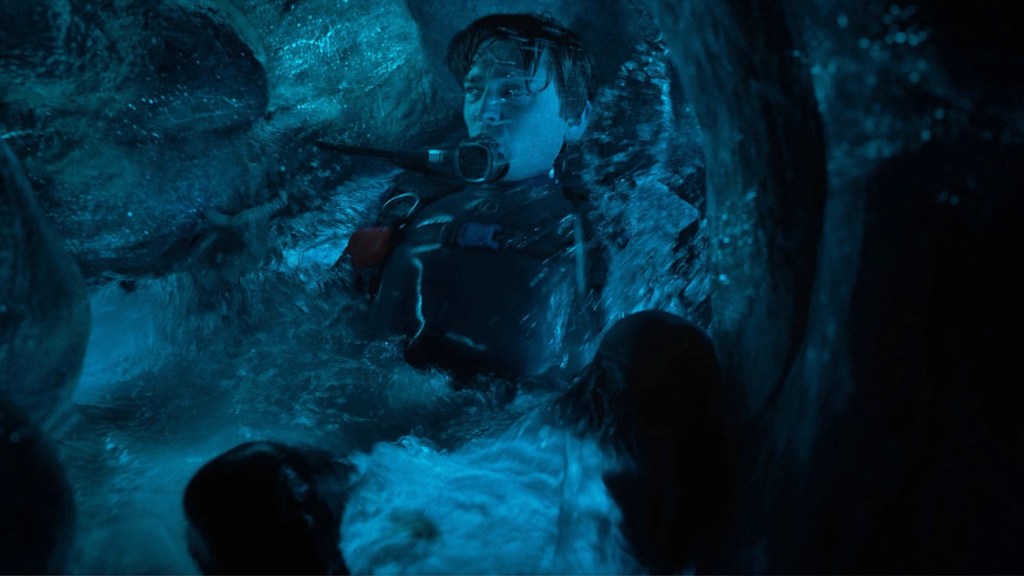
In one sentence: A young diver searching for his father’s remains is swallowed by a sperm whale, leaving him with just an hour of air to escape while confronting the memories of their troubled relationship.
Stories of men being swallowed by whales have fascinated audiences for centuries, from the biblical tale of Jonah to Pinocchio. Yet few have explored the horrifying possibilities quite as dramatically as Whalefall, the latest survival thriller to hit cinemas. Taking an extraordinary premise and combining it with a surprisingly moving exploration of grief, the film breathes new life into a genre that can often feel rather formulaic.
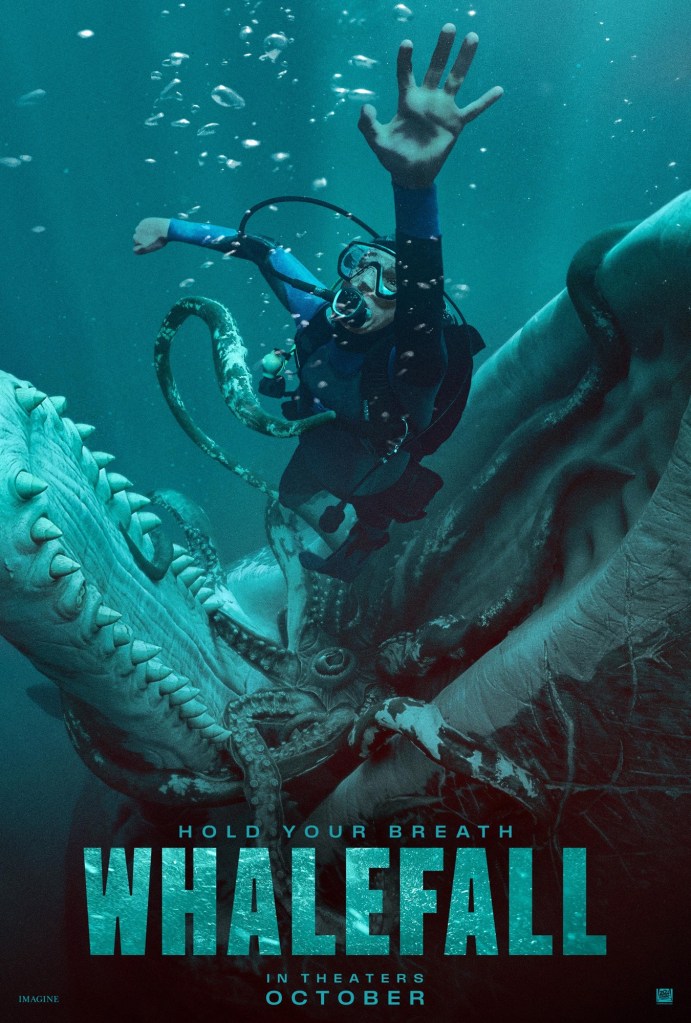
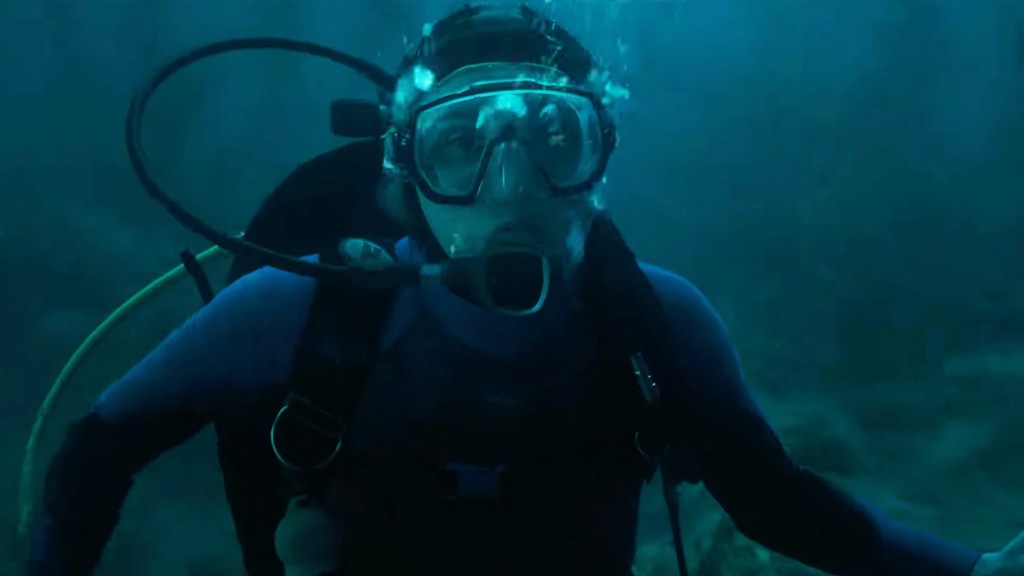
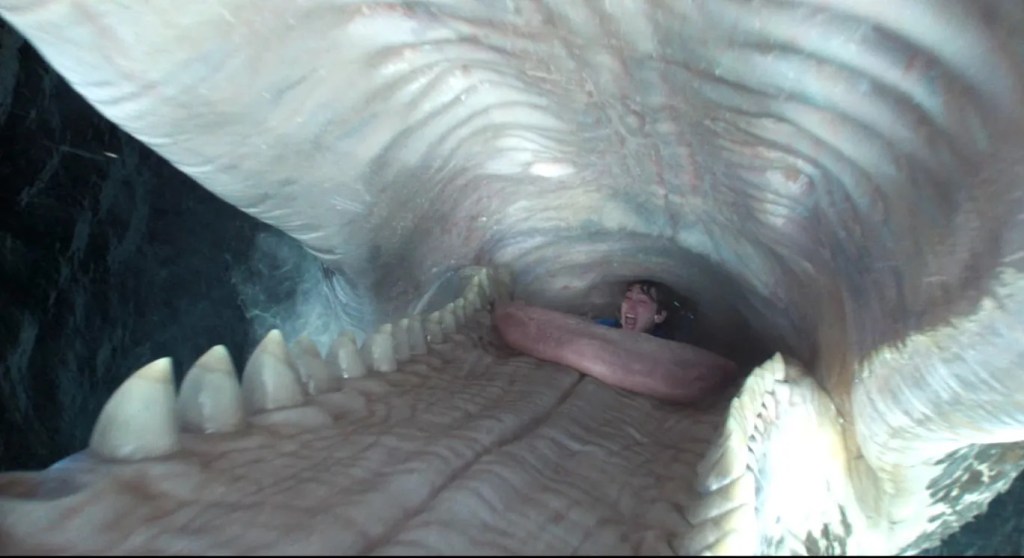
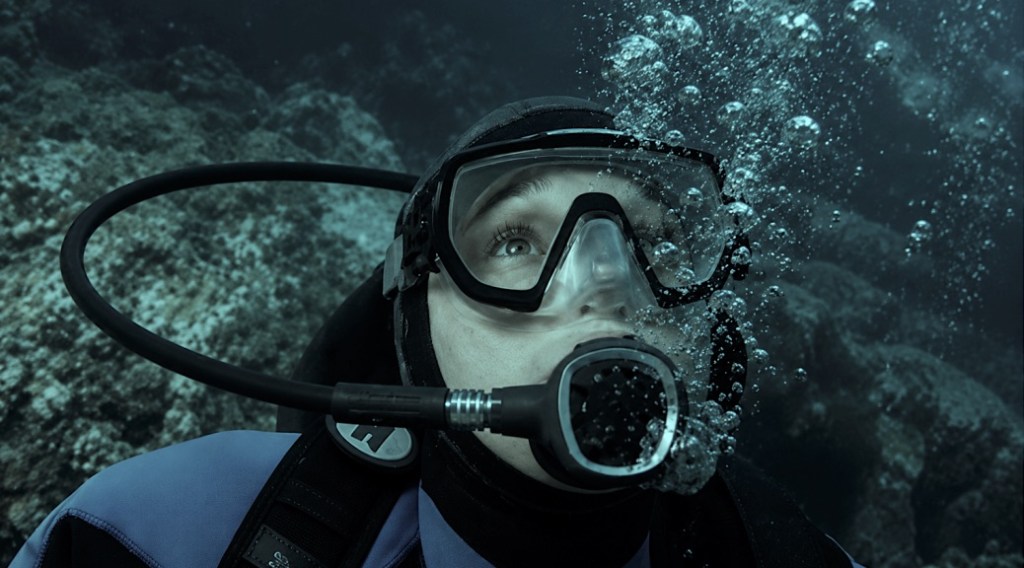
Based on the novel by Daniel Kraus, the film follows Jay Gardiner (Austin Abrams), a young man who decides to scuba dive in search of his father’s remains a year after his death. His father (Josh Brolin), a highly skilled diver who suffered from a debilitating lung disease and took his own life by drowning, leaving Jay with a complicated mixture of grief, guilt and unresolved feelings about their difficult relationship. Despite dangerous tides and restrictions preventing people from entering the nearby waters, Jay is determined to complete his search, perhaps hoping that recovering his father’s remains will provide the closure he has been unable to find elsewhere. While exploring an underwater cliff, Jay inadvertently becomes caught in a hunt between a sperm whale and a giant squid. The squid grabs hold of him and drags him along as it is swallowed by the whale, leaving Jay trapped inside the enormous creature with approximately one hour of air remaining in his tank. What follows is a desperate race against time to escape an environment no human being was ever meant to experience.
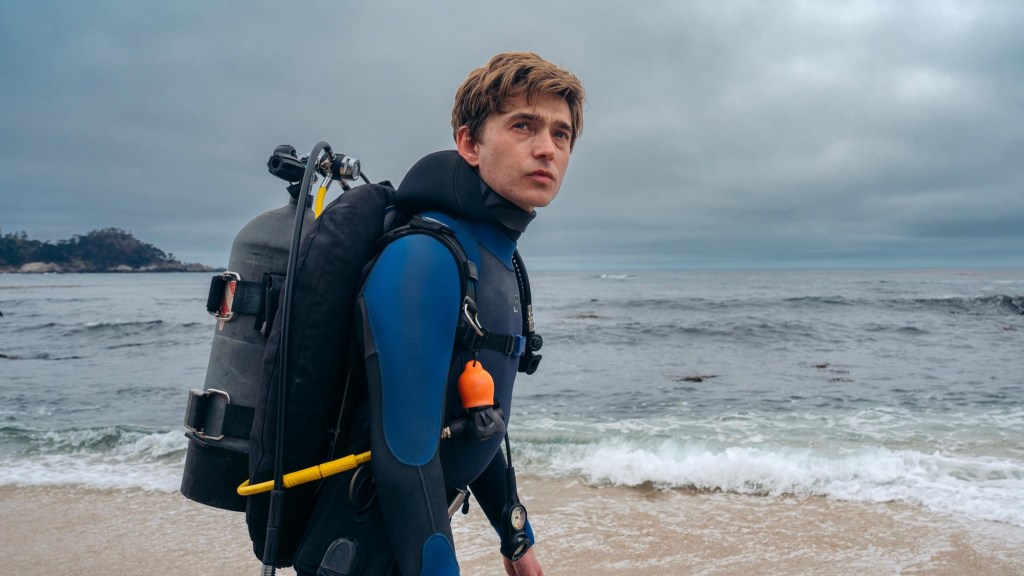
Naturally, the premise raises questions about scientific plausibility. Could somebody really survive being swallowed by a sperm whale, let alone remain alive inside its stomach? Personally, I am happy to approach Whalefall as a piece of speculative fiction and judge it on the world it establishes rather than demand absolute biological accuracy. The filmmakers have clearly given considerable thought to the whale’s anatomy, drawing on the fact that sperm whales swallow large prey and possess a multi-chambered digestive system. Jay’s journey through the different chambers introduces increasingly dangerous conditions, including the threat of digestive fluids. Whether every detail would withstand scientific scrutiny is another matter, but the film makes its extraordinary situation convincing enough to become completely engrossing.
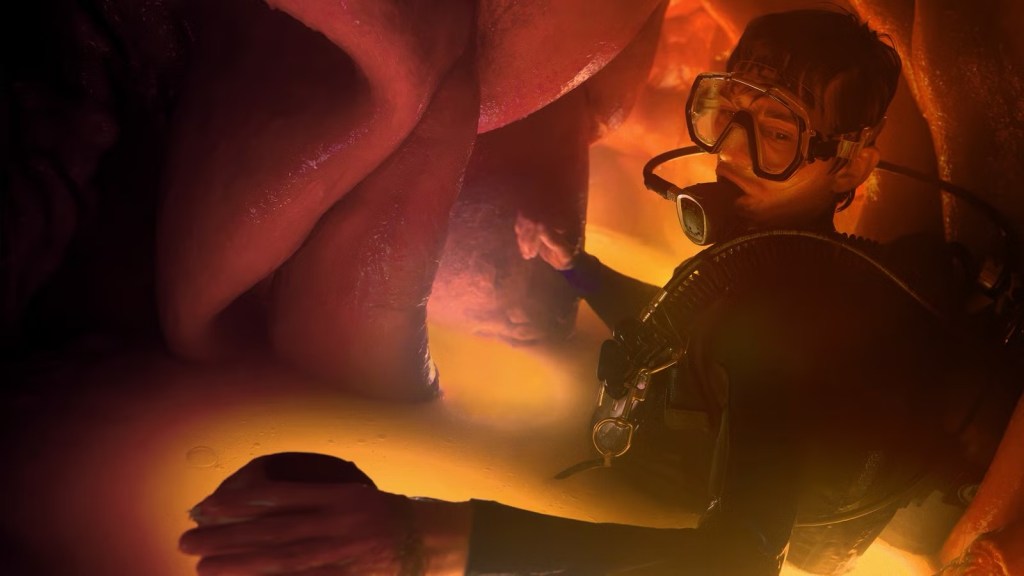
Given the setting, there is an inevitable sense of claustrophobia, but Director, Brian Duffield, handles this expertly. Rather than confining the audience to the whale’s stomach for the entire runtime, the film regularly moves between Jay’s present predicament and memories of his father. These sequences gradually reveal their complicated relationship, the skills Jay learned from him and the emotional baggage he has carried into adulthood. The structure serves two important purposes. It gives the audience a necessary respite from the increasingly oppressive conditions inside the whale, while also ensuring that Jay’s struggle becomes considerably more meaningful than a straightforward attempt to stay alive. The past and present complement one another well, with memories of his father taking on new significance as Jay draws upon everything he was taught.
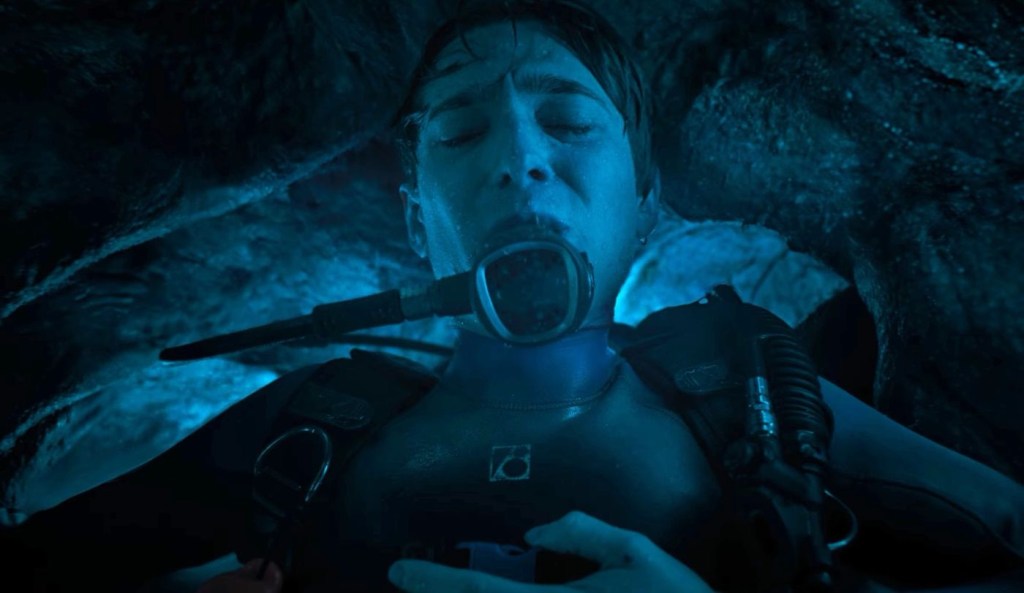
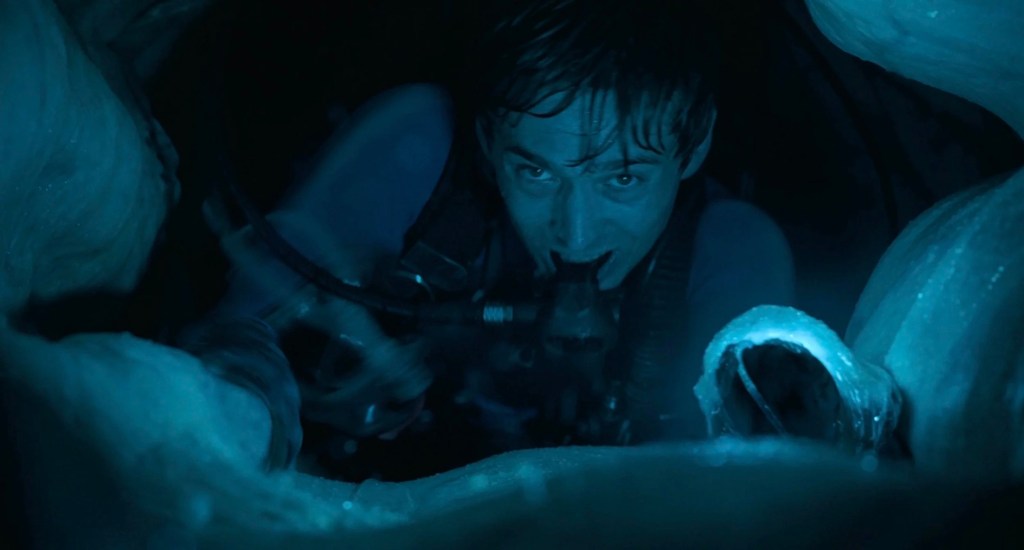
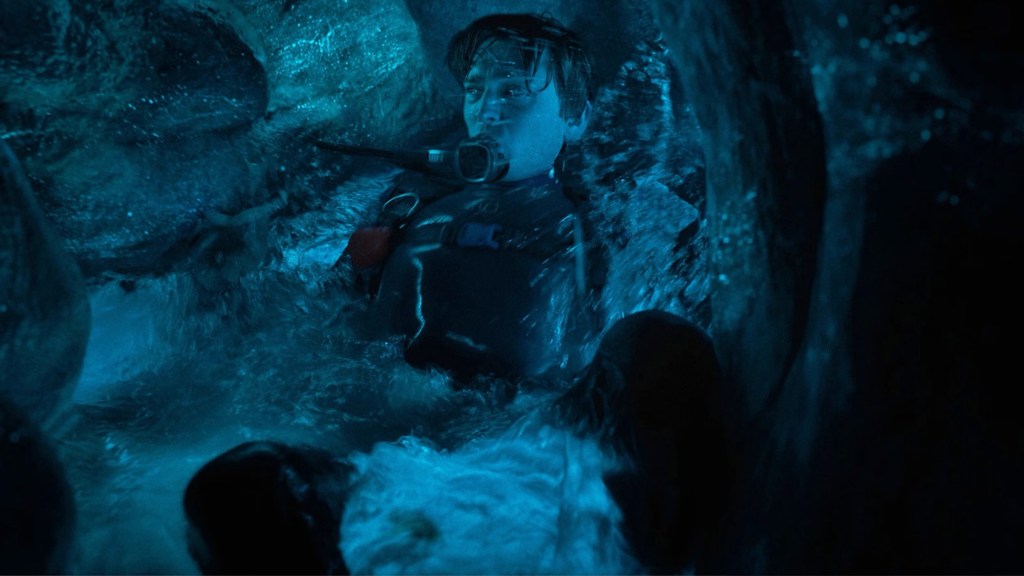
Inside the whale, the environment is extraordinary. Its stomach chambers are constantly moving, making the setting feel like a living, unpredictable obstacle rather than a static location. Muscles contract, water enters and drains and other swallowed creatures and objects introduce additional threats. The background is never entirely the same, reinforcing just how little control Jay has over his surroundings. When he reaches the second chamber and encounters its digestive fluids, the tension becomes almost unbearable. Watching him struggle against an environment that is effectively beginning to digest him is genuinely horrifying. The film doesn’t shy away from the physical consequences of his predicament, and there were moments when I found myself almost unable to watch.
As someone who experiences claustrophobia, Whalefall tapped into that fear in an entirely new way. Strangely, I found it exhilarating. There is something compelling about experiencing such extreme danger from the safety of a cinema seat and this film finds an original way of delivering that sensation. I am not sure I could have endured an entire feature confined exclusively to the whale’s stomach, making Duffield’s decision to interweave Jay’s memories all the more effective.
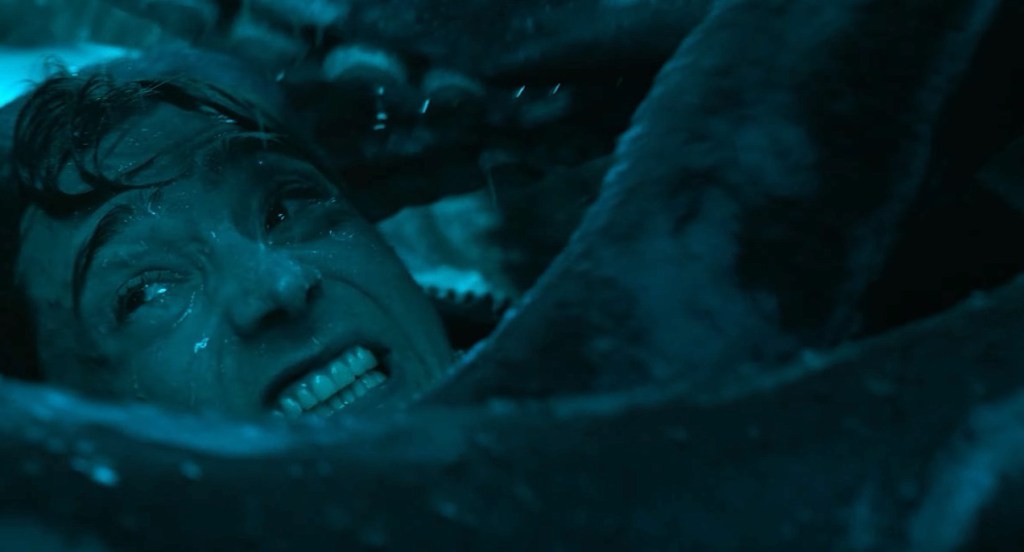
Austin Abrams is excellent in the leading role. With relatively little dialogue for much of the film, he relies heavily on his expressions, physicality and reactions to communicate Jay’s desperation. He is thrown around, battered and terrified, and his screams feel genuinely convincing. What I particularly appreciated is that Jay isn’t presented as a conventional alpha-male survival hero. He is a gentler, more sensitive character, something that becomes especially apparent in his interactions with his father. Yet his vulnerability doesn’t diminish his resilience or resourcefulness. He is frightened, but he keeps going, drawing upon his knowledge and determination to survive. I spent the entire film desperately willing him to escape, which speaks volumes about Abrams’ ability to make his character worth caring about.
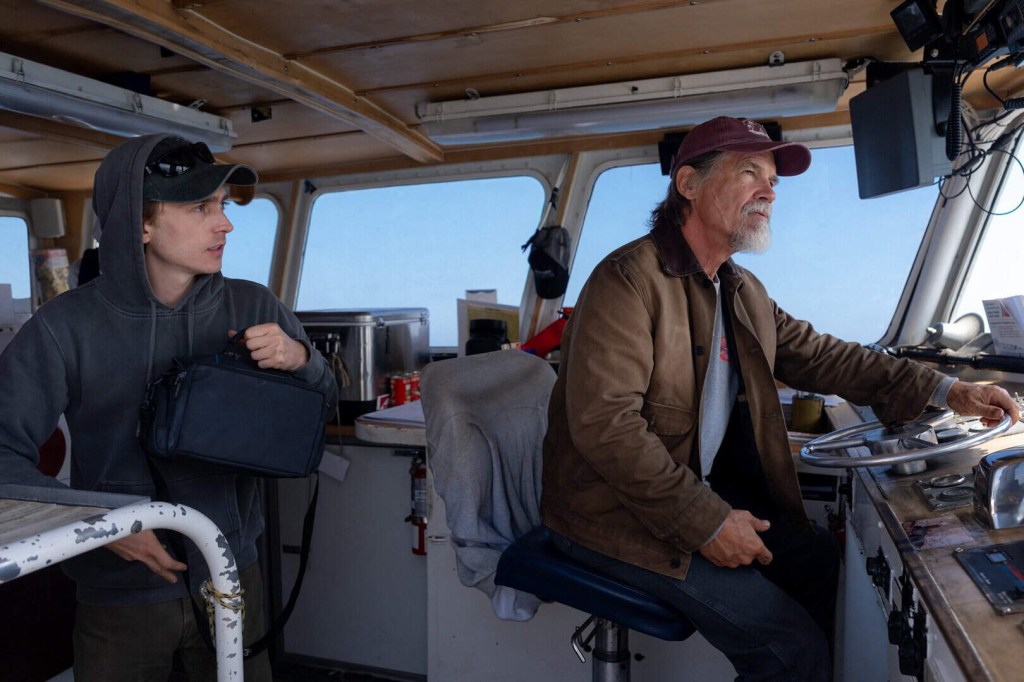
His scenes with Josh Brolin are equally important. Their relationship reveals an uncomfortable dynamic between a tough, demanding father and a more sensitive son, demonstrating how difficult it can be when two people struggle to understand one another despite the bond they share. Jay’s decision to search for his father’s remains, therefore, gives the film an emotional foundation that many survival thrillers lack. He is not simply an unfortunate diver who finds himself in an extraordinary situation. He enters the ocean already carrying the weight of unresolved grief, searching for something that might help him make sense of a relationship he can no longer repair. The question of what might have been hangs over his memories, giving his physical fight for survival an unexpectedly cathartic quality.
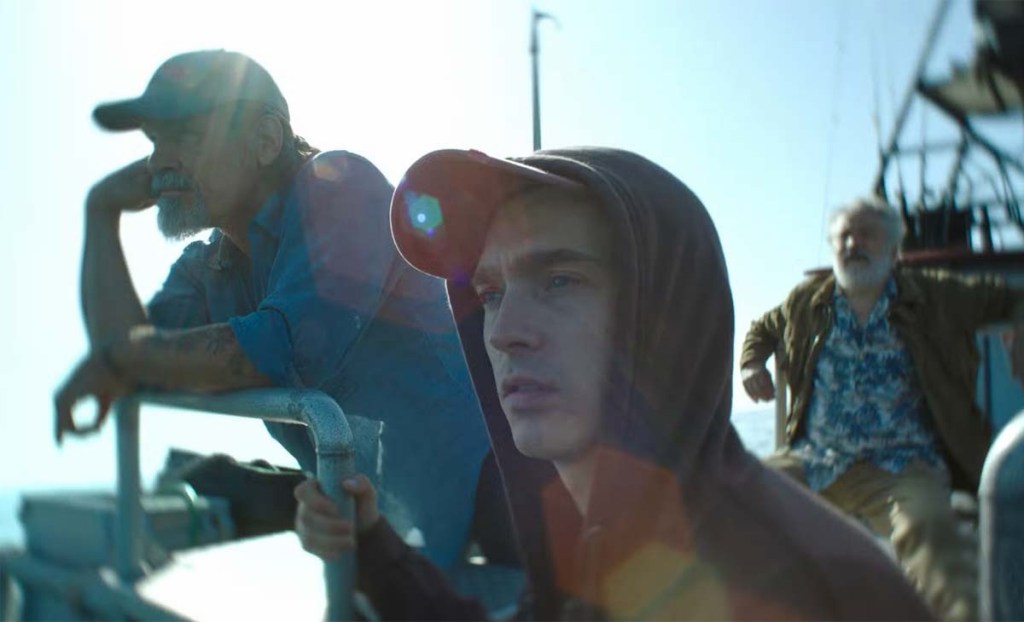
Visually, Whalefall is arresting. Before Jay is swallowed, there is a particularly memorable sequence in which he hangs over the edge of an underwater cliff that descends into seemingly endless darkness. It is both beautiful and terrifying, highlighting the extraordinary scale of the ocean and how much of it remains beyond our understanding. Jay is already entering dangerous territory as he descends into the depths, although he has no idea quite how much worse his situation is about to become.
The CGI is impressive, particularly in its depiction of the whale and the surrounding marine life. One sequence featuring orcas and other sperm whales is so beautifully realised that it could almost belong in a high-quality nature documentary. The film captures both the majesty and danger of these enormous creatures without losing the sense that Jay is an extraordinarily small presence within their world.
The sound design and score elevate the experience further. There is a persistent sense of impending doom, with the whale’s internal rumblings so powerful that they can almost be felt through the cinema seat. Whalefall is unapologetically loud when it needs to be, but its quieter moments are just as effective. The contrast between overwhelming noise and sudden silence makes both considerably more impactful, reinforcing Jay’s isolation and the sheer enormity of his surroundings.
There are, inevitably, some familiar survival thriller tropes. Jay has certain items available when the situation requires them, his oxygen supply provides a convenient countdown and each new obstacle arrives with another seemingly impossible challenge to overcome. However, these devices give the film momentum and structure while allowing its more unusual premise to remain the central attraction.
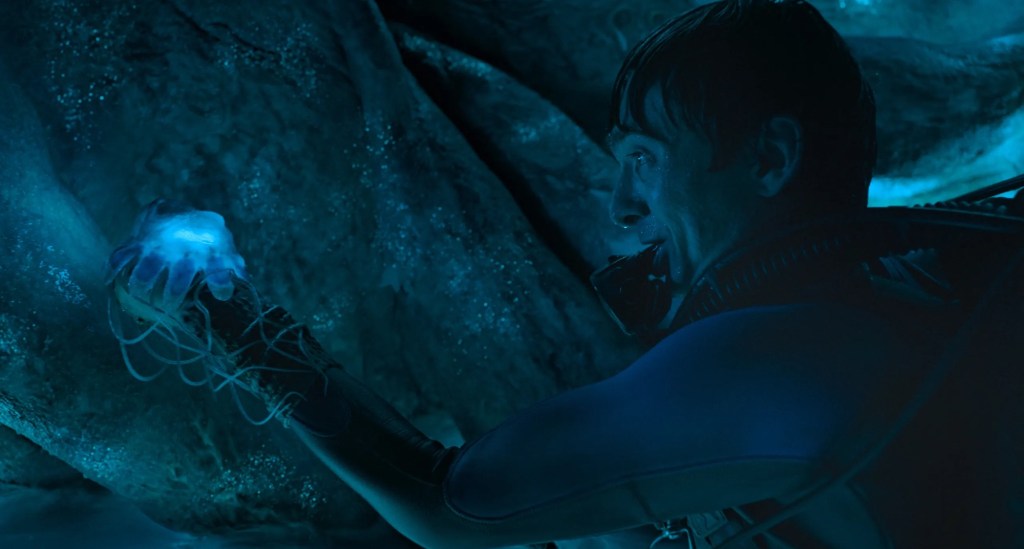
What distinguishes Whalefall is the care given to Jay’s background. In many survival thrillers, personal history is introduced briefly to establish a little emotional investment before being largely forgotten. Here, it is fundamental to the story. Jay’s memories, his father’s teachings and their unresolved relationship continually inform the present, ensuring that his character develops alongside the physical challenges he faces.
Ultimately, Whalefall is a gripping and surprisingly affecting addition to the survival thriller genre. Its extraordinary premise provides plenty of spectacle, but the exploration of grief, regret and the complicated relationship between father and son gives it a depth that extends far beyond its setting. Austin Abrams proves himself a compelling and versatile leading man, while the impressive visuals, immersive sound and expertly managed claustrophobia make this a particularly rewarding film to experience on the big screen. Urgent, intelligent and frequently terrifying, Whalefall demonstrates that a survival thriller can offer considerably more than the question of whether its protagonist will make it out alive. Sometimes, the greatest depths we have to navigate are emotional rather than physical.
★★★★ (4 stars)

