
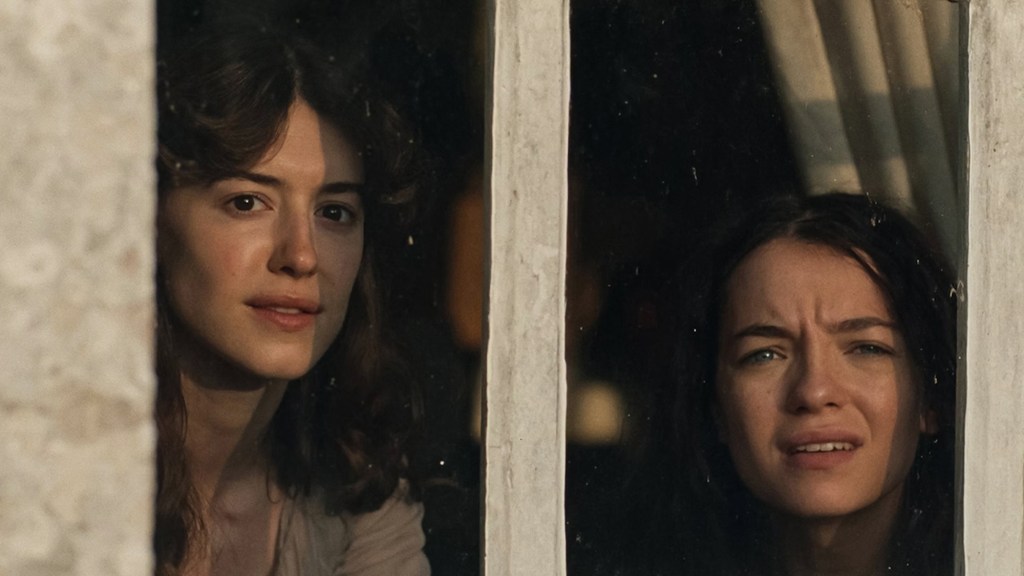
In one sentence: Two very different sisters navigate love, loss and social expectation while learning that happiness may require finding a balance between sense and sensibility.
Jane Austen has been adapted for the screen so many times that each new version inevitably faces the question of what it can possibly add. Yet the continued appetite for her stories demonstrates how every generation manages to find something recognisable within them. As a long-time admirer of Austen who once had a dog called Mr Darcy, I hardly need convincing of her enduring appeal. What I sometimes need convincing of is the need for another adaptation. Thankfully, Sense and Sensibility makes a persuasive case, bringing something fresh and modern to the period drama without sacrificing the qualities that make Austen’s work timeless.
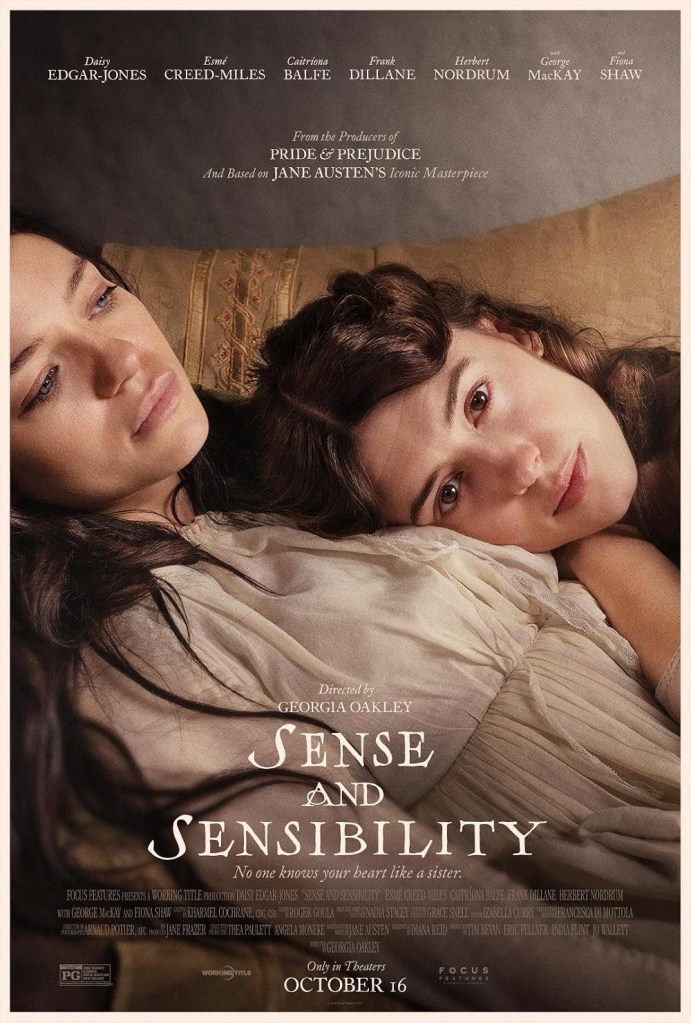
The film follows the Dashwood sisters, Elinor (Daisy Edgar-Jones) and Marianne (Esmé Creed-Miles), who, alongside their mother (Caitríona Balfe) and younger sister Margaret (Bodhi Rae Breathnatch), find their circumstances dramatically changed following the death of their father. Forced to leave their home, the women are fortunate to receive help from a distant relative (Fiona Shaw), who finds them a cottage in Devonshire. Before departing, Elinor meets Edward Ferrars (George MacKay), the brother of her sister-in-law, and the pair form a close bond characterised by quiet restraint and yearning. Distance and circumstance soon separate them. Marianne, meanwhile, is swept up by the charms of Willoughby (Frank Dillane) after he comes to her aid when she injures her ankle, while the older Colonel Brandon (Herbert Nordrum) quietly develops feelings of his own. As the sisters navigate love, disappointment and changing circumstances, their contrasting approaches to life become increasingly apparent; Elinor embodies sense, while Marianne is driven by sensibility.
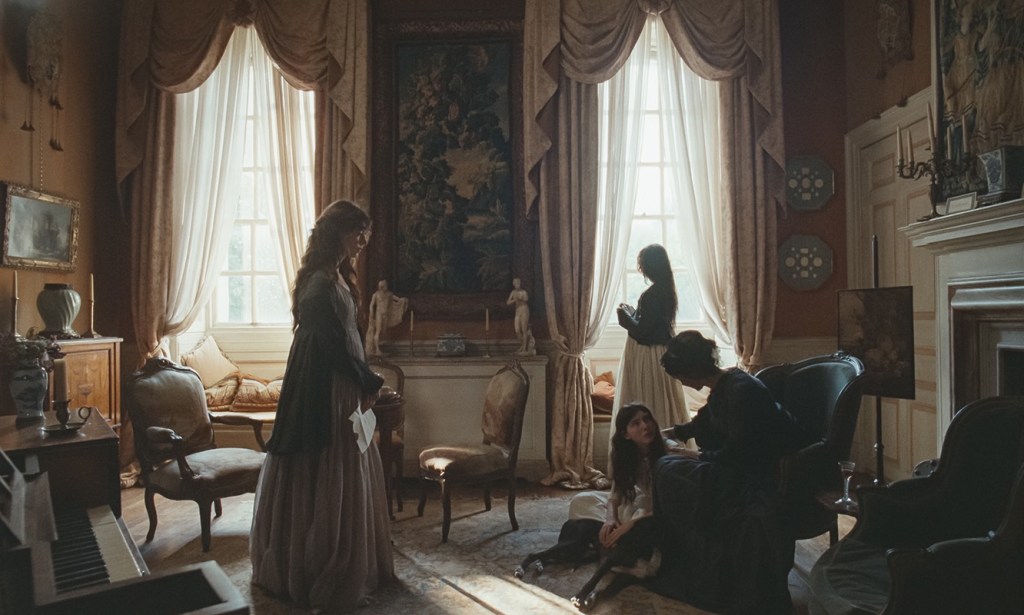
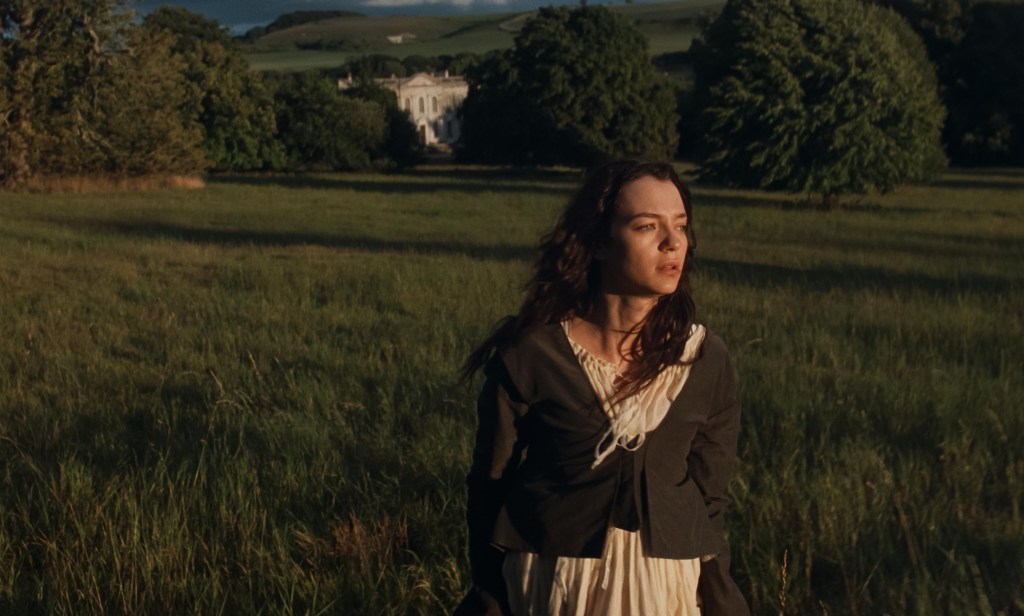
The first thing that struck me was just how beautiful the film looks. The British countryside is dreamy, rugged, colourful and bleak, sometimes within the space of a single sequence. We experience the landscape through changing seasons and weather, giving nature a wildness that feels important to the story. Period adaptations can sometimes make the past appear immaculately manicured, as though every hedge, curl and drawing room has been arranged specifically for the camera. Here, the world feels lived in. Inevitably, comparisons will be made with Ang Lee’s highly regarded 1995 adaptation, which I also enjoyed, but the 2026 film establishes a visual identity entirely of its own. At times, its windswept landscapes almost make it feel like an Austen and Brontë crossover, bringing a touch of romantic wildness to Austen’s more socially restrained world.
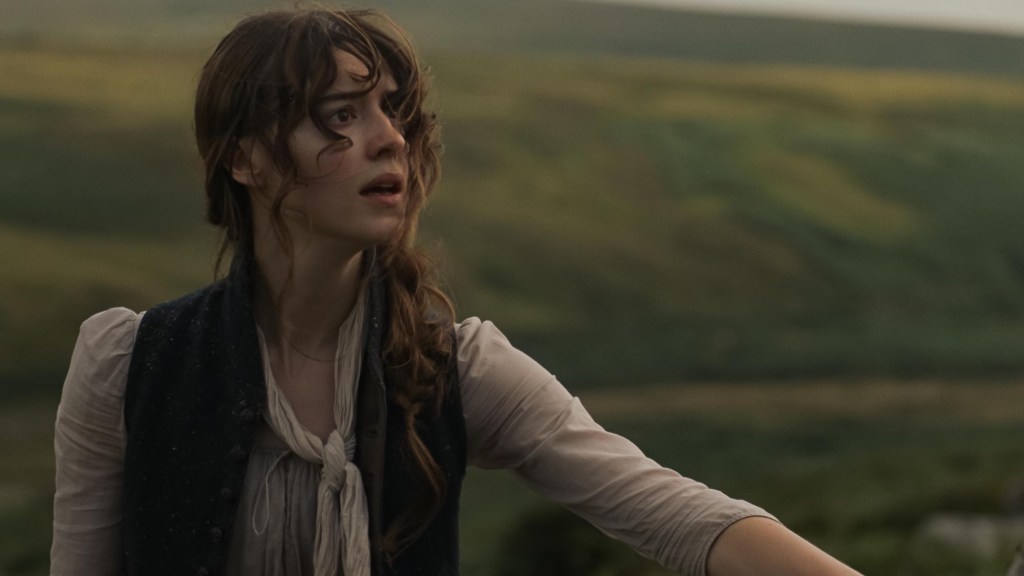
This naturalism extends to the hair and makeup. When the Dashwood sisters are at home or walking through the countryside, their hair is frequently worn long and loose rather than permanently arranged into immaculate period curls. It’s a seemingly small decision, but it makes them feel freer and more approachable. They feel like young women actually inhabiting Austen’s world.
More than two centuries after Austen published the novel, women’s lives and rights have changed enormously, so it is reasonable to question whether the concerns driving these stories can still resonate with modern audiences. Yet Sense and Sensibility demonstrates why they can. The story is about more than finding a suitable man. It is about understanding yourself, recognising your own weaknesses and learning how emotion and reason can coexist. Elinor and Marianne initially appear to embody opposite philosophies. Elinor suppresses almost everything, while Marianne experiences emotion without restraint. Neither approach ultimately provides everything they need. Elinor’s control threatens to become self-denial, while Marianne’s romantic impulsiveness leaves her vulnerable to devastating disappointment. There are moments where Elinor’s emotional restraint even reminds me of The Remains of the Day and the tragedy that can come from allowing principle and propriety to silence what we really feel.

There is something each sister can learn from the other. Marianne needs a little of Elinor’s sense, while Elinor could benefit from some of Marianne’s sensibility. Their growth isn’t about abandoning who they are, but finding a healthier balance between the two. Perhaps that is ultimately the point of the title itself. Neither head nor heart is quite enough on its own.
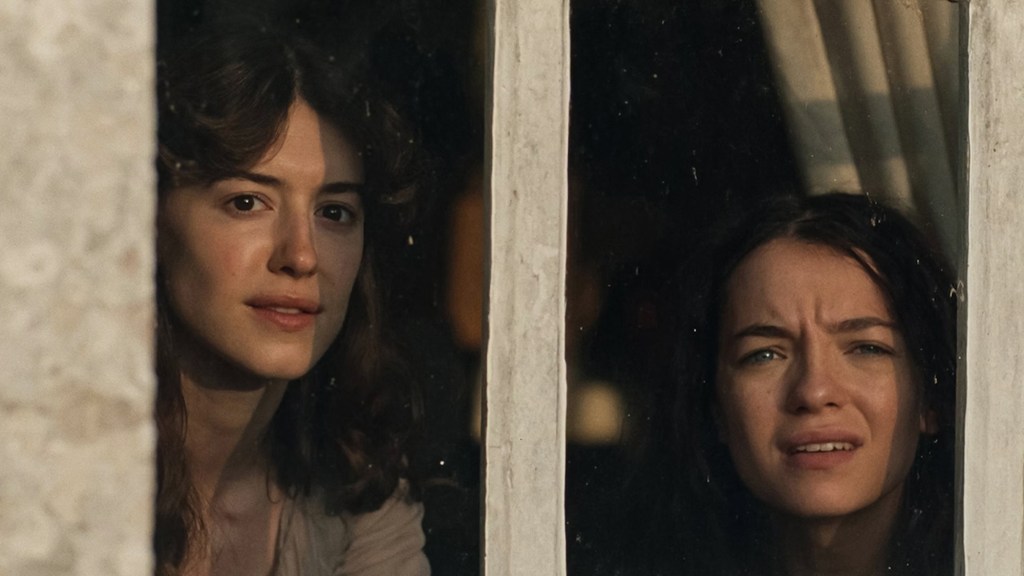
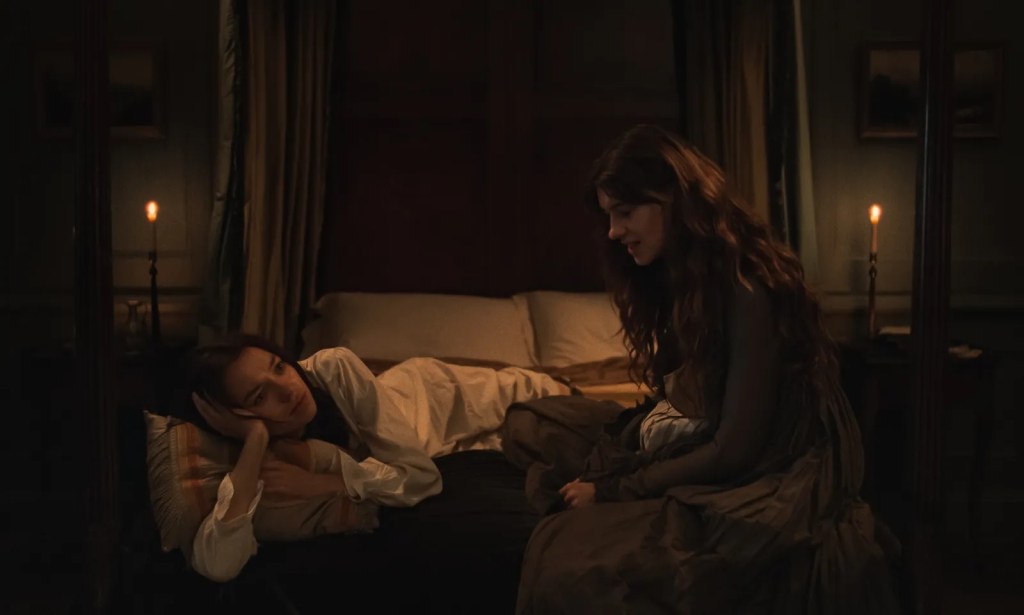
The performances across the film are excellent. Daisy Edgar-Jones makes a convincing Elinor, finding vulnerability beneath a character who works extremely hard not to reveal it. She doesn’t attempt to recreate Emma Thompson’s performance, instead finding her own version of Elinor’s quiet yearning and steadfast principles. There are moments of real strength alongside glimpses of the emotion she works so hard to contain. Esmé Creed-Miles brings an entirely different energy to Marianne, capturing her free spirit, occasional petulance and rapidly shifting emotions. Marianne needs to be both intoxicating and frustrating, and this volatility comes through beautifully. Creed-Miles bears a striking resemblance to her mother, Samantha Morton, and demonstrates an impressive acting ability of her own.
As someone who is always pleased to see George MacKay appear on screen, I particularly enjoyed him as Edward. He has tremendous range and this feels quite different choice of role for him. His cautiousness, yearning and gentlemanly awkwardness are incredibly endearing, but there is also the layered quality I frequently enjoy in his performances. He makes an excellent Austen leading man.

Fiona Shaw brings welcome humour and lightness, while Herbert Nordrum gives Colonel Brandon an intriguing intensity. Frequently dressed in dark clothing and associated visually with his dark horse, he becomes the film’s dark horse. It’s a simple visual metaphor, but an effective one, particularly for a character whose appeal gradually becomes clearer as the story progresses.

The pacing is equally assured, particularly in the unconventional handling of Elinor and Edward’s relationship. Their romance doesn’t unfold according to the most obvious screen formula and this fragmented quality actually strengthens the yearning between them. Their feelings exist in absences, interruptions and things left unsaid, making their emotional connection all the more compelling.

Most impressively, the film finds a way to modernise Austen without making her world feel artificially contemporary. This is not Bridgerton. The movie finds modernity in the humanity of its characters, allowing them to feel recognisable without pretending they belong to our time.
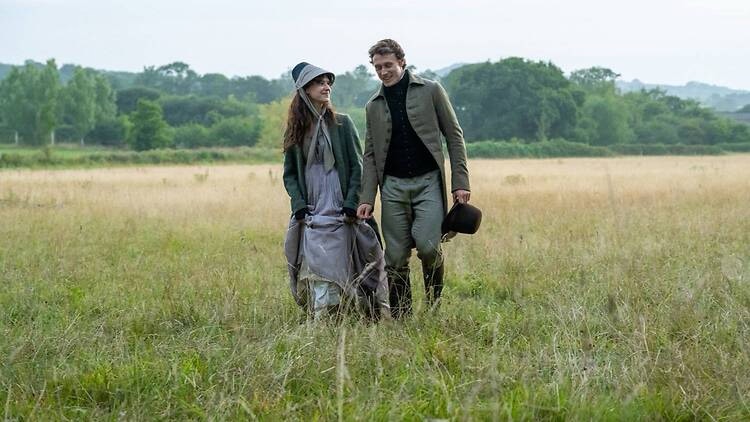
Ultimately, Sense and Sensibility answers the question inevitably facing any new Austen adaptation; indeed, there is still something new to find. Excellent performances and assured pacing bring the familiar story to life, but it is the film’s visual identity that distinguishes it most. Its windswept landscapes, natural beauty and more approachable Dashwood sisters strip away some of the stiffness that can occasionally distance modern audiences from period drama. They are portrayed as human, flawed, impulsive, restrained and still learning who they are. More than two centuries after Austen created them, Elinor and Marianne continue to demonstrate why neither pure sense nor unrestrained sensibility is quite enough.
★★★★ (4/5)

