
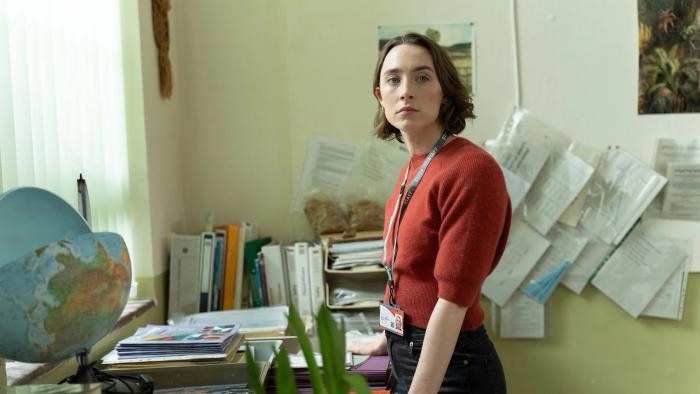
In one sentence: An overwhelmed primary school teacher makes one disastrous decision while dealing with a disruptive pupil, setting off a chain of events that becomes increasingly impossible to undo.
Sometimes one bad decision is all it takes. A choice made in panic creates another problem, the solution to that problem demands another questionable decision and, before long, the original mistake has snowballed into something almost impossible to escape. Stories like this are fascinating because they inevitably leave us wondering at what point we would have stopped and whether, placed under the same pressure, we might have behaved any differently. Bad Apples takes this familiar moral dilemma and gives it a surprisingly fresh and crisp twist.
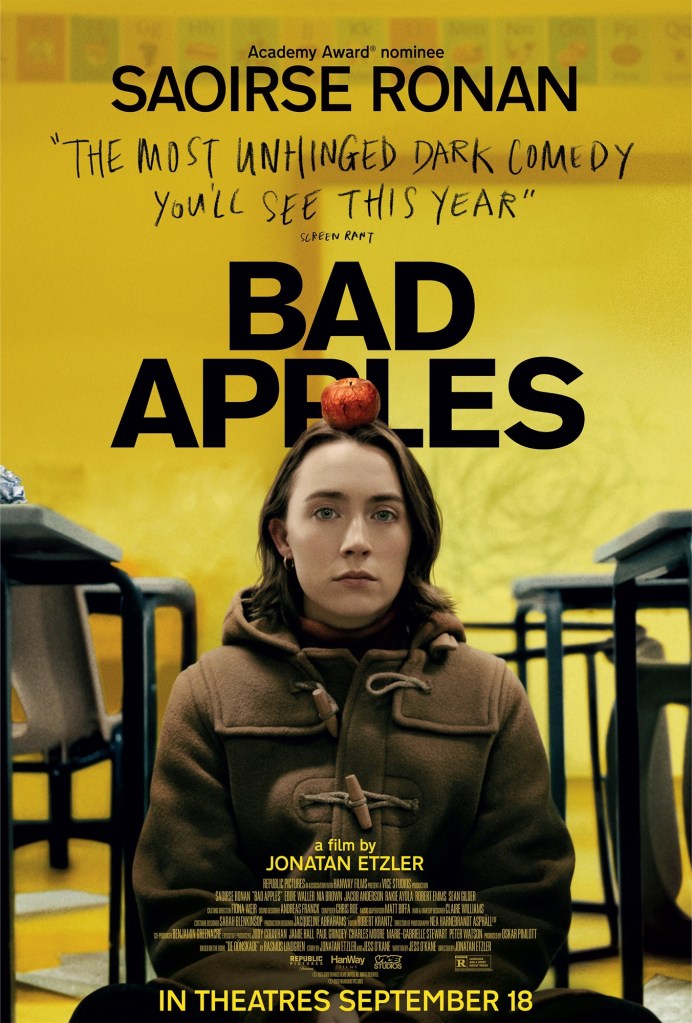
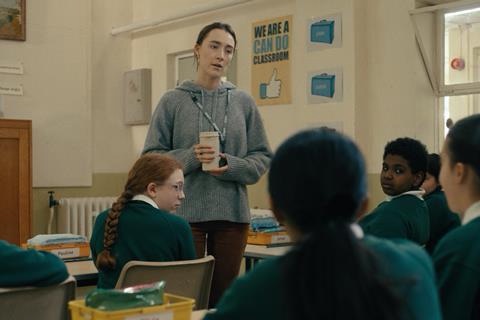
The film follows primary school teacher Maria (Saoirse Ronan), whose classroom is terrorised by the behaviour of disruptive pupil Danny (Eddie Waller). When Danny pushes fellow student Pauline (Nia Brown) over a balcony, leaving her with a broken arm, he is suspended. Unable to reach his overworked and largely absent father, and with an imminent Ofsted inspection adding further pressure, Maria finds herself in an increasingly difficult situation. One drastic decision made in the heat of the moment soon spirals far beyond anything she could have anticipated.
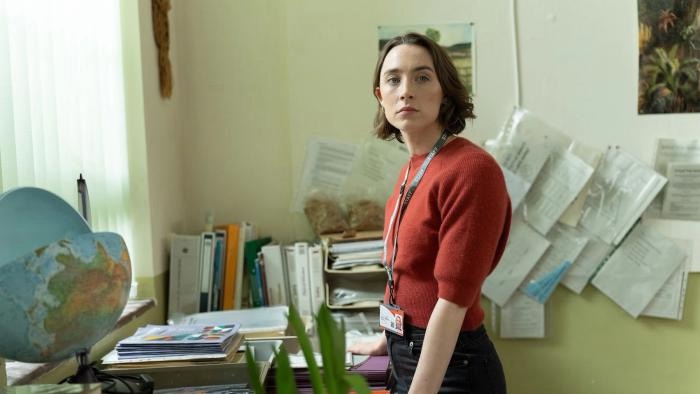
Based on the novel De Oönskade by Swedish author Rasmus Lindgren, the film presents an interesting perspective on how undersupported school systems can fail teachers and pupils alike when dealing with seriously disruptive behaviour. Maria is completely consumed by managing Danny’s violence, swearing and disruption. Her attention is focused so heavily upon him that she barely has the opportunity to recognise the talents and needs of the other children, while equally lacking the time and resources to properly understand what lies behind Danny’s behaviour. Everyone loses. As events progress, the changing dynamics within the classroom become one of the film’s most interesting satirical elements. With Danny removed from the equation, Maria’s relationship with the remaining children changes, as do the attitudes of their parents. There is an uncomfortable suggestion that the needs of one struggling child can become so consuming that everyone else is inadvertently pushed into the background.
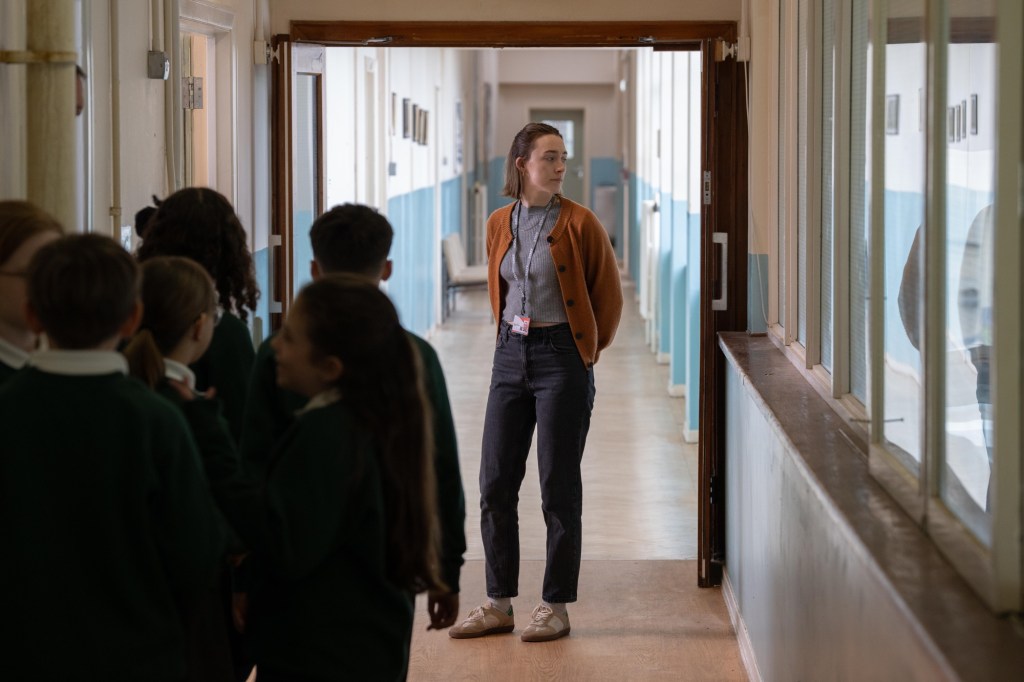
This also makes the title increasingly interesting. Danny initially appears to be the obvious ‘bad apple’, the disruptive child affecting the rest of the class, but as Maria’s own behaviour deteriorates, that label becomes much harder to assign. Is an individual inherently bad or can circumstances, neglect and failing systems allow the rot to spread?
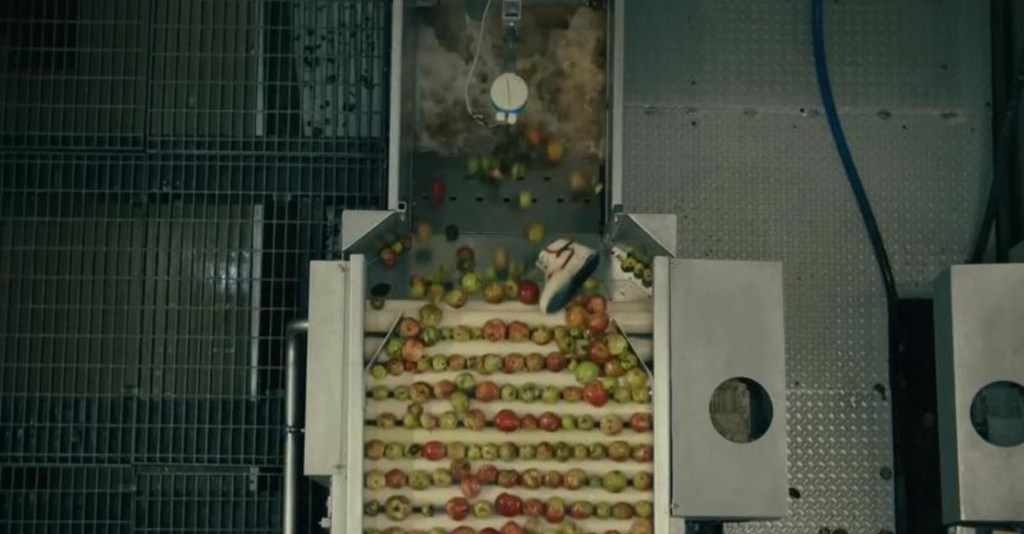
Apples naturally become a recurring visual motif. We begin at a cider mill during a school trip where they are fresh and abundant, but as Maria’s ethical boundaries begin to deteriorate, the imagery changes with her. Apples become bruised, rotten and eventually infested with maggots, providing an increasingly grotesque visual representation of the moral decay taking place.
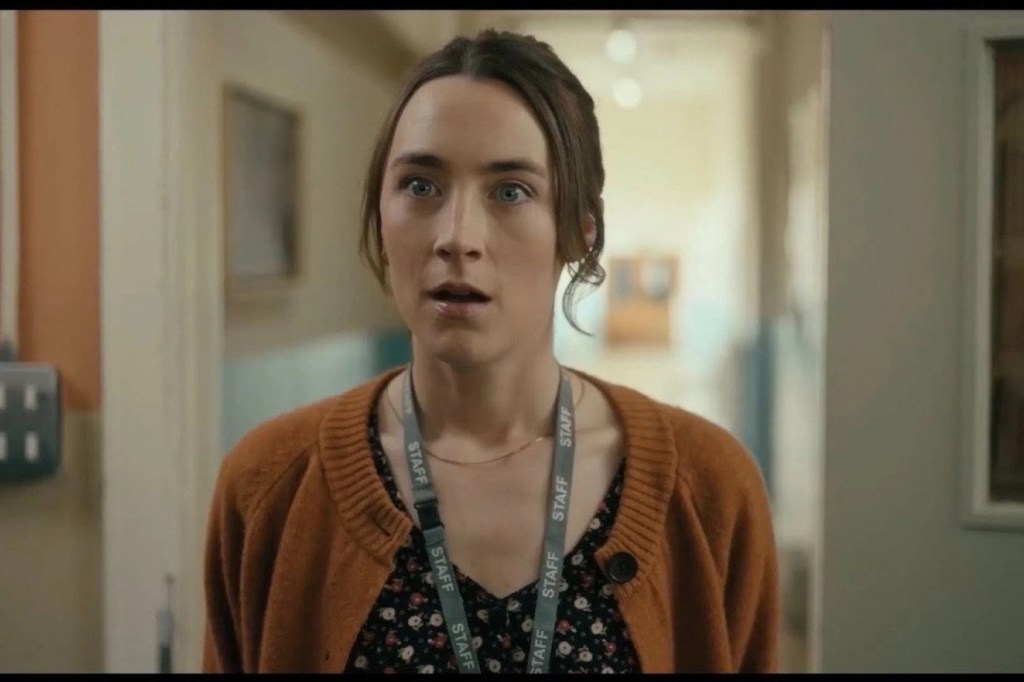
Cleverly, Maria herself moves in the opposite direction. At the beginning she appears plain, exhausted and dishevelled. As events become darker, she becomes increasingly polished and put together. The contrast is wonderfully ironic. The more presentable she becomes on the outside, the more compromised she is within.
The premise could easily have tipped into absurdity, but the film maintains an impressively controlled balance between black comedy, satire, drama and thriller. Despite its British setting, there is something distinctly Scandinavian about its tonal restraint, perhaps unsurprising given its Swedish source material. It knows that the situation is outrageous without treating it as a joke.
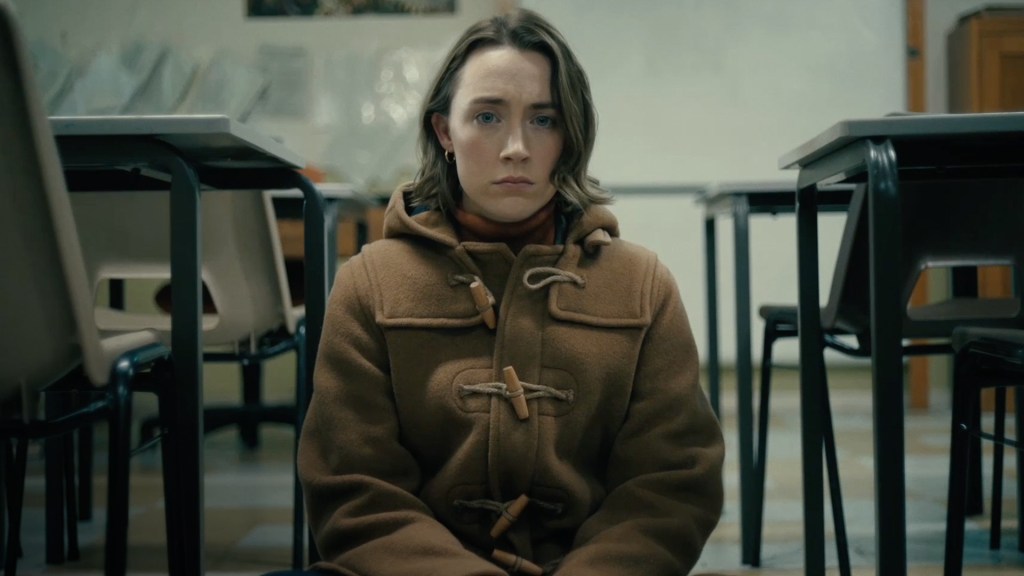
Most importantly, Maria remains sympathetic without the film ever asking us to condone her actions. We can understand the exhaustion, panic and desperation surrounding her initial decision while simultaneously recognising that what she does is indefensible. This tension is crucial. Maria isn’t someone who makes one terrible choice and suddenly becomes a completely different person; she becomes trapped by it. Every attempt to avoid the consequences requires another compromise, until admitting the truth becomes increasingly difficult. It raises an uncomfortable question about morality by asking how many bad things can a fundamentally ordinary person do while continuing to believe that, underneath them all, they are still a good person?
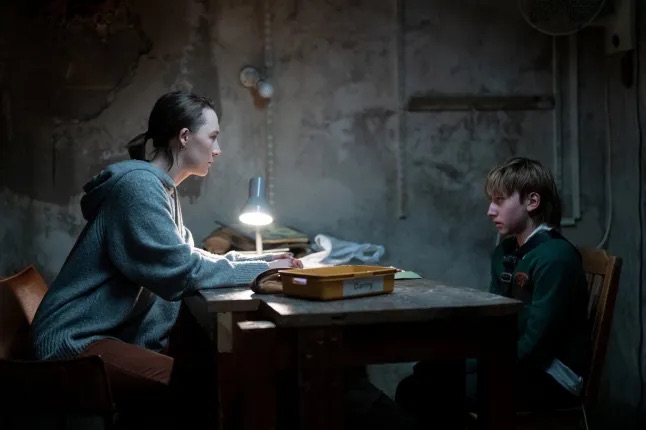
Beneath its increasingly outrageous situation, Bad Apples also touches on a surprising range of psychological and social issues, including bullying, illiteracy and the strange attachments that can develop between people placed in deeply unhealthy circumstances. Danny’s difficulties gradually complicate our initial perception of him. Behaviour that initially appears simply malicious begins to exist alongside evidence of a child whose needs have not been adequately addressed.
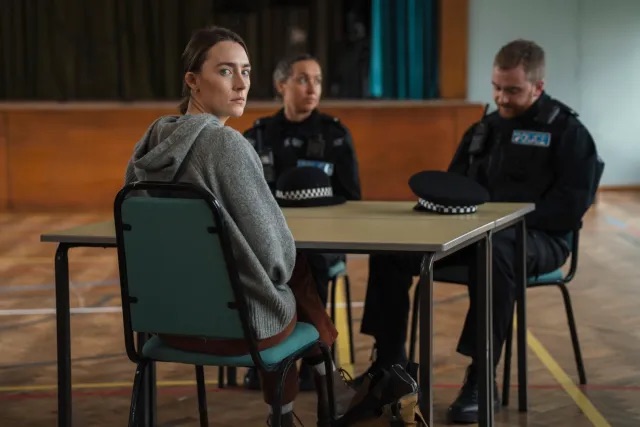
The classroom dynamics also reminded me of my own school days. Whenever one particularly disruptive pupil repeatedly interrupted lessons, I remember resenting them for the effect their behaviour had on my own education. I suspect this feeling will be familiar to many people. It is an uncomfortable but perhaps universal experience, particularly as a child, when you are unlikely to understand what might be driving another pupil’s behaviour.
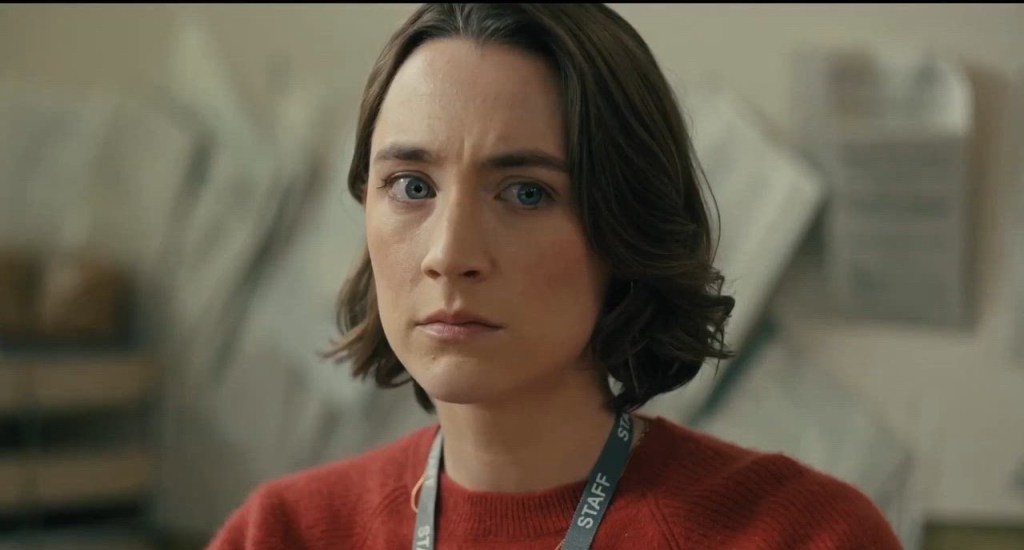
Saoirse Ronan is superb as Maria and carries the film effortlessly. She has the difficult task of making an increasingly indefensible character remain recognisably human. Her expressive performance allows us to see the panic, calculation and desperation behind Maria’s decisions. There is an everywoman quality to her that is essential. Maria doesn’t initially seem like someone capable of extraordinary wrongdoing, which makes watching her cross one boundary after another considerably more unsettling. The young cast are equally impressive. Eddie Waller plays Danny with unnerving confidence, particularly remarkable for such a young performer, while Nia Brown’s Pauline develops in a very different and unexpectedly interesting direction. Her journey introduces another uncomfortable idea that once people discover another person’s vulnerability or secret, even children can recognise the power that knowledge gives them.
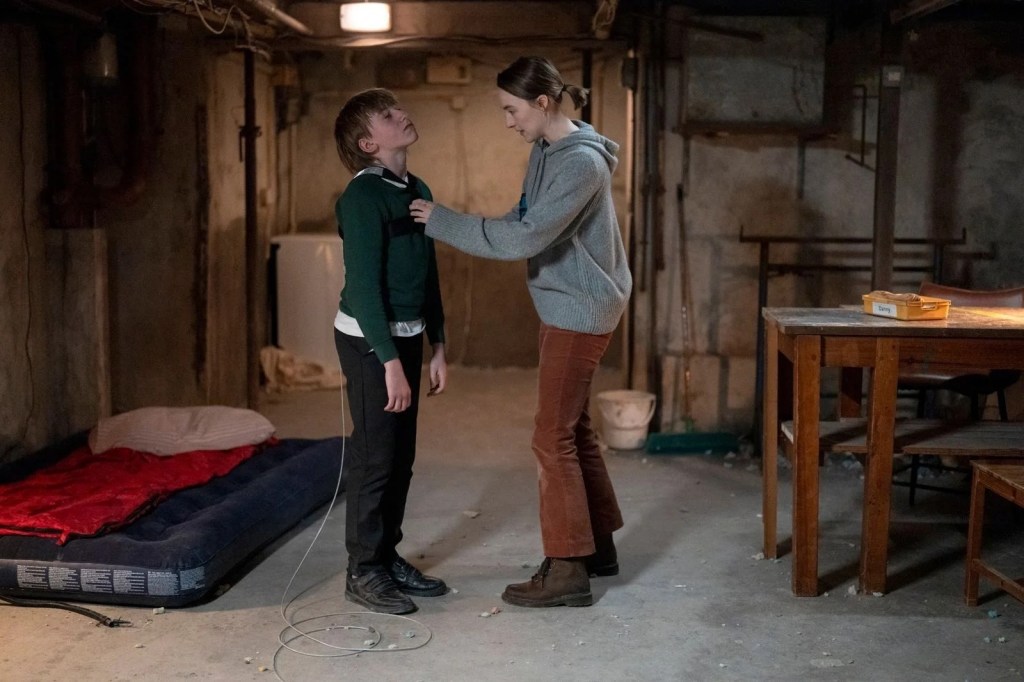
Ultimately, Bad Apples takes an outrageous premise and uses it to explore something surprisingly relatable, the frightening ease with which one terrible decision can create another. Its sharp tonal balance, clever imagery and excellent performances ensure there is considerably more beneath the surface than its premise suggests. Most importantly, it leaves plenty to discuss about education, responsibility, morality and whether circumstances can turn otherwise ordinary people into something they never imagined becoming. Films that inspire conversation are often the ones I find most rewarding, and Bad Apples gives audiences plenty to bite into.
★★★★ (4 stars)

