

In one sentence: A group of tourists on a trip through the Louisiana Bayou find themselves fighting for survival against a territorial hippopotamus.
Shark movies seem to be coming out of our ears. There is seemingly another one released every few weeks, and clearly there is still an appetite for watching people become prey from the safety of our sofas. These films are a guilty pleasure of mine, so Hungry immediately caught my attention by replacing the genre’s usual shark with something a little different; a hippopotamus. Often regarded as cute, hippos have a considerably more dangerous reputation in reality, making them a surprisingly plausible candidate for the next creature feature. Unfortunately, changing the animal doesn’t necessarily change the formula.
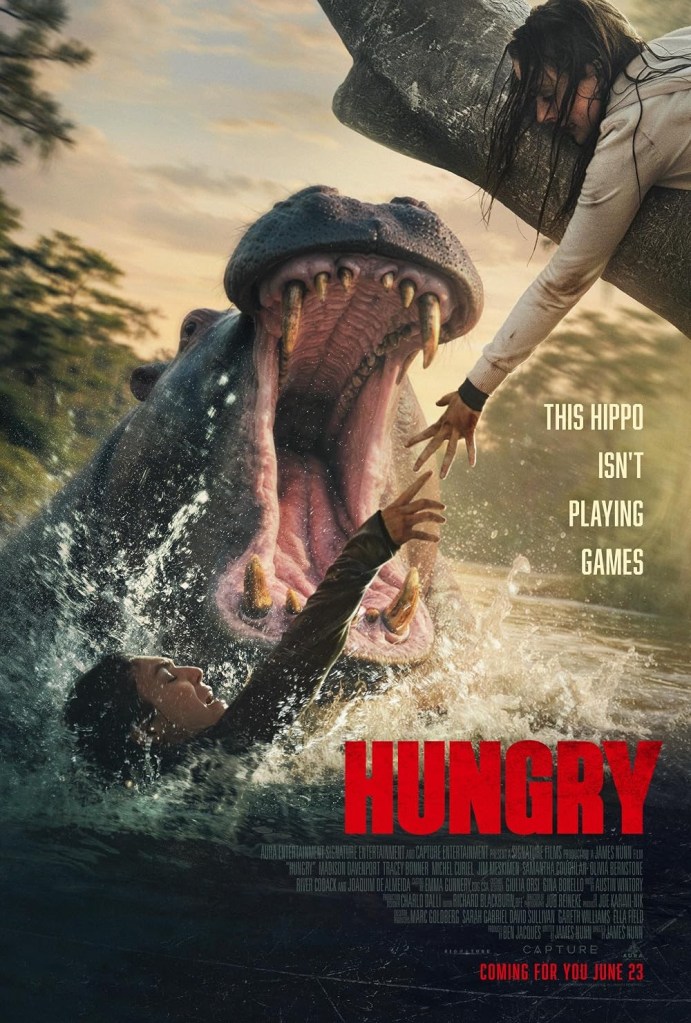
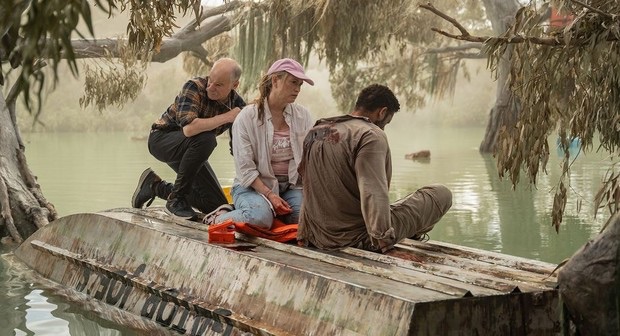
The film follows Sistine (Madison Davenport) and her friend Hannah (Olivia Bernstone), who are holidaying in New Orleans when Hannah books them onto an alligator boat tour through the Louisiana Bayou. Led by tour guide Rodrigo (Michel Curiel), the pair are joined by businesswoman Dionne (Tracey Bonner) and three generations of another family. Their journey takes them deep into the Bayou in search of Big Ben, supposedly the largest alligator in the area. When they discover him torn apart on the bank of the swamp, it quickly becomes apparent that something considerably bigger is sharing the water with them. The group soon find themselves at the mercy of an extremely territorial hippopotamus.
The marketing enthusiastically embraces the obvious connection to Hungry, Hungry Hippos, complete with the tagline “This Hippo Isn’t Playing Games”. It’s a fun promotional hook, although it also gives the film a slightly comic quality. More importantly, hunger isn’t really what motivates the creature. Hippos are largely herbivorous and this particular animal is territorial rather than hunting its victims for food, making Territorial perhaps a more accurate, if considerably less marketable title.

Keeping the hippo largely hidden for the first two thirds of the film works in its favour. Limited glimpses allow some degree of tension to develop and leave the audience to imagine what is lurking nearby. Unfortunately, the final act abandons such restraint and gives us considerably more of the animal. This is where one of the film’s biggest weaknesses becomes impossible to ignore; the CGI simply isn’t convincing. Once the hippo is fully exposed, the illusion collapses with it. Budget limitations are understandable in films of this kind, but when your central threat is a giant territorial hippo, it really needs to look as if it belongs in the same world as its victims.
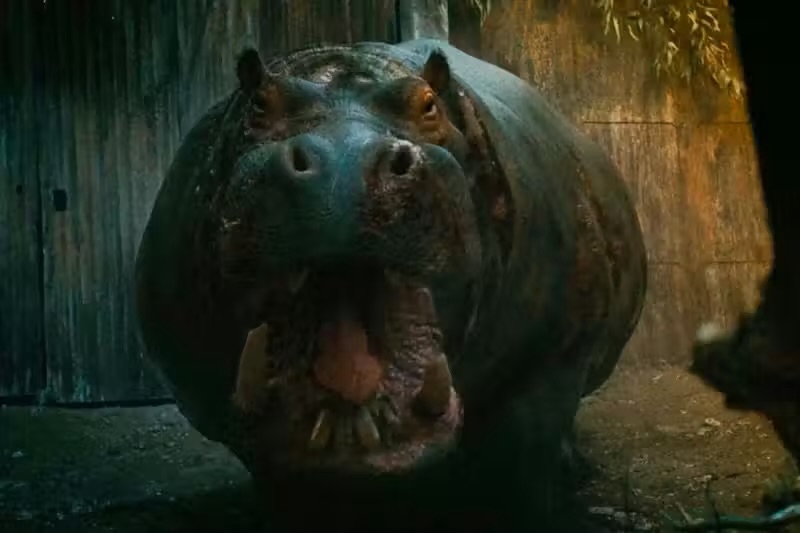
Unexpectedly, the element of Hungry that interested me most came from the concept of the movie. The presence of a hippopotamus in the Louisiana Bayou initially seems completely absurd, given that hippos are native to Africa, but the film draws inspiration from a fascinating piece of American history. In the early twentieth century, there really was a bill (one that was seriously considered by Congress) to introduce hippos to the United States, both as a potential food source during concerns about meat shortages and as a possible solution to invasive Japanese hyacinth clogging the waterways. The plan never came to fruition, but Hungry essentially asks what might have happened if hippos had found their way into the American ecosystem anyway. I knew absolutely nothing about this before watching and immediately found myself reading about it afterwards. If nothing else, I have to give the film credit for sending me down an unexpectedly fascinating historical rabbit hole. It also provides considerably more justification for the premise than simply dropping an African animal into Louisiana and hoping nobody asks questions.

Unfortunately, the human side of the story is much less convincing. The performances leave plenty to be desired and most of the characters are too thinly drawn to create real emotional investment. Hungry inevitably invites comparison with other films in the genre and for me Rogue remains an example of how to do this kind of survival story particularly well. The creature matters, but so does understanding the people trying to escape it. Here, conflicts emerge and personalities clash, but without sufficient psychological depth, many of the interactions feel stiff rather than organic. A creature feature doesn’t need extraordinarily complex character studies, but it does need us to invest in their survival attempt. I did, however, thoroughly enjoy the extraordinarily expressive turtle witnessing the film’s introductory attack. He delivers more emotion in a few seconds than some of the human cast manage throughout the film and therefore receives my entirely unofficial Best Actor award.

Like most films of its genre, Hungry gradually stacks the odds against its characters as one thing after another goes wrong. Some suspension of disbelief comes with the territory, although I struggled with tour operator, Walker (Joaquim de Almeida), failing to become seriously concerned until closing time, despite the boat being around seven hours overdue. Surely alarm bells might have started ringing a little earlier? Still, demanding impeccable health and safety procedures from a killer hippo movie may be missing the point.
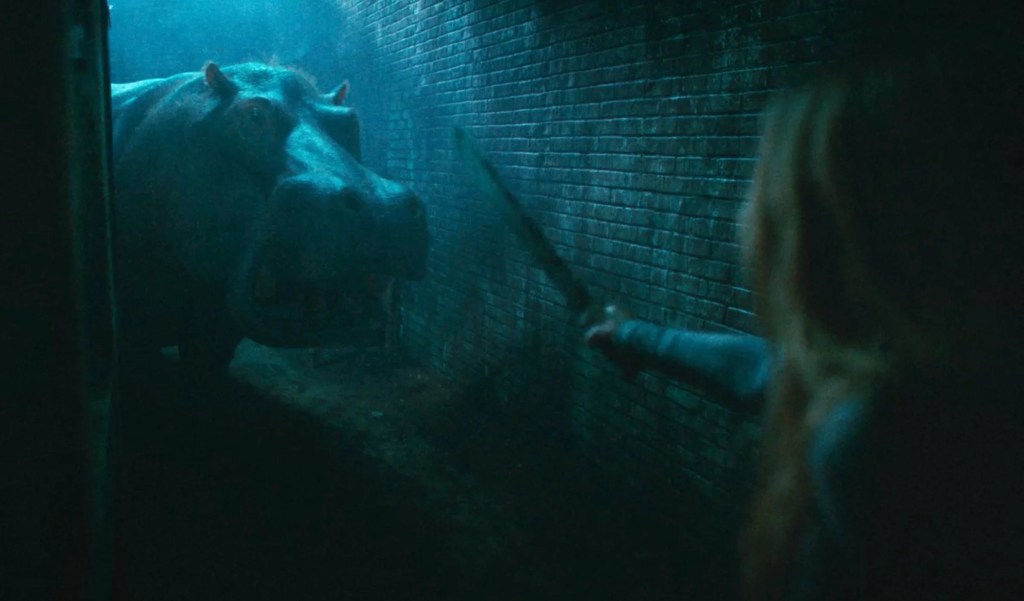
Ultimately, Hungry is the kind of film that invites audiences to switch off their brains and enjoy a familiar survival formula with a different animal at its centre. There are moments of entertainment and I genuinely appreciated the unusual piece of history underpinning its wonderfully ridiculous premise, but weak characterisation, uneven performances and increasingly unconvincing CGI prevent it from making the most of its potential. Unfortunately, this film didn’t leave me hungry for more.
★½ (1.5/5)

