
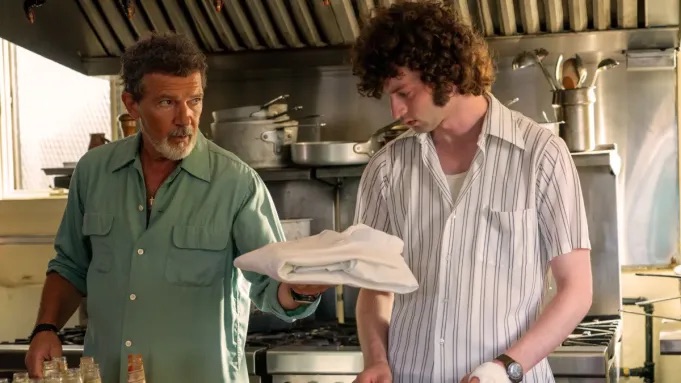
In one sentence: After a major disappointment derails his plans, a young Anthony Bourdain follows a crush to Provincetown and unexpectedly discovers a world that will change the course of his life.
Biopics can sometimes feel overly familiar, following extraordinary lives through a predictable collection of successes, failures and defining moments. The best ones, however, can reveal something universal within a very specific life. Tony does just that, taking one formative summer in Anthony Bourdain’s youth and turning it into an unexpectedly hopeful story about failure, purpose and finding your way.
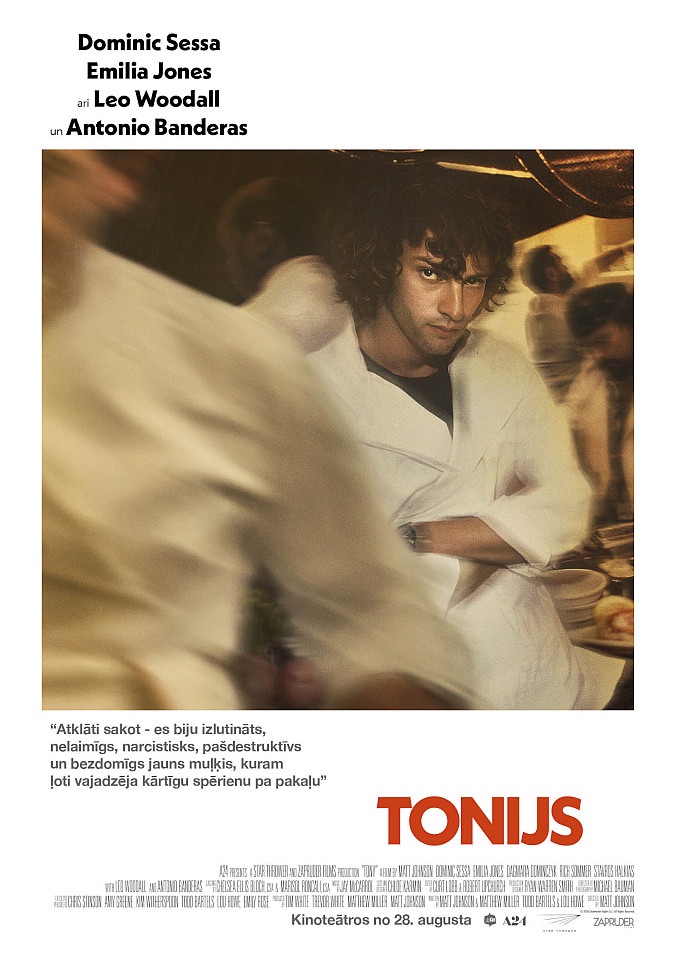
The film follows a young Anthony ‘Tony’ Bourdain (Dominic Sessa), who is pinning his hopes on securing a writing fellowship for the summer of 1975. When he is unsuccessful, he pivots his plans and follows his crush, Nancy (Emilia Jones), to Provincetown in Cape Cod. Without enough money to return home, Tony finds work for Chef (Antonio Banderas), alongside a colourful group of characters, including Sal (Leo Woodall). As he learns his way around the kitchen, Tony hides his disappointment over the fellowship and begins lying about his circumstances. What he cannot yet know is that the failure he is so ashamed of is quietly setting him on the path towards becoming a celebrated chef.

At its heart, Tony is a genuine coming of age story. An opening quote from Bourdain describes his younger self as a “lout”, immediately establishing the distance between the young man we are about to meet and the acclaimed figure he would eventually become. Tony is full of contradictions; he is cocky yet deeply insecure, rude but capable of remorse, brash while occasionally revealing surprising gentleness. His frequent lies are frustrating, but they seem rooted in shame and the pressure he places upon himself, compounded by expectations from his mother (Dagmara Domińczyk). He thinks he knows who he is, but the film gradually reveals a young man who hasn’t really found himself at all.
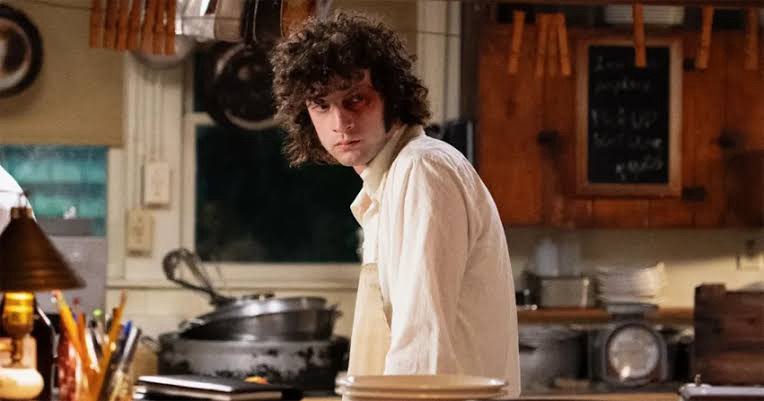
What makes his journey so satisfying is the knowledge that the failure Tony finds so humiliating ultimately redirects his life. The film captures something reassuring about disappointment in that sometimes the door we desperately wanted to open isn’t necessarily the one we needed. What initially looks like failure can, with hindsight, become the beginning of something far more meaningful.
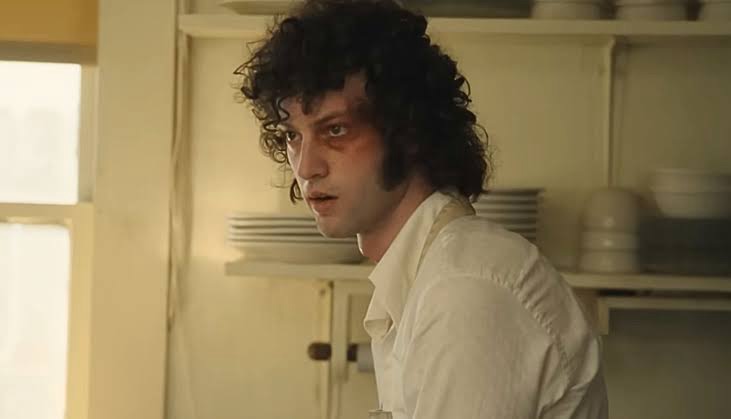
The film does a brilliant job of creating a sense of time and place. Cape Cod feels utterly idyllic with glorious beaches, wooden buildings and a bustling summer atmosphere that makes it look like somewhere you would immediately want to visit. The film also subtly acknowledges Provincetown’s long-established identity as an LGBTQ+ destination when Tony does a double take after seeing two men kissing in the street. Set in 1975, the film never needs to shout about its period setting. Instead, details such as Jaws playing at a drive-in, the music and the fashion gently establish the era. A particular shout-out must go to Emilia Jones’ costume designer, who gives Nancy some effortlessly cool 1970s looks.

The use of colour is particularly beautiful, drawing from the coastal landscape with cool and warm blues, glowing beach fires and the cold gloaming of twilight. Lighting subtly shifts alongside Tony’s emotions, making Provincetown feel not merely like a picturesque backdrop but part of his transformation.
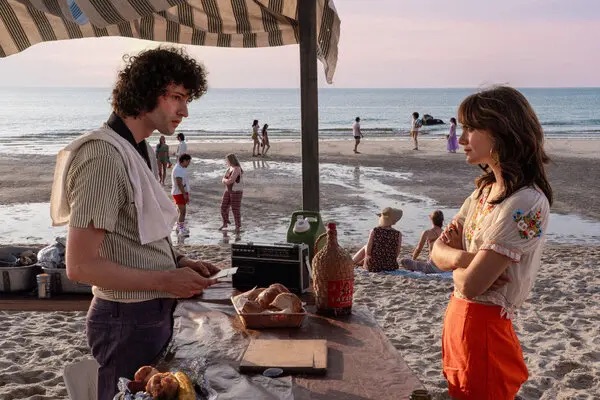
Naturally, food becomes a feast for the senses. From overflowing lobster rolls and freshly shucked oysters to the theatricality of lobster Thermidor, the seafood is mouth-watering. The film captures not only the pleasure of eating but the craft involved in preparing food, even finding an unexpected sensuality in something as simple as shucking an oyster. Traditional clambakes sit alongside the rowdy brotherhood of the professional kitchen, a world that feels exciting, chaotic, occasionally disgusting and sometimes genuinely dangerous. Unlike the intensity of something like The Bear, I found this portrayal refreshingly unpretentious and accessible. Food is presented as something to share and fall in love with.
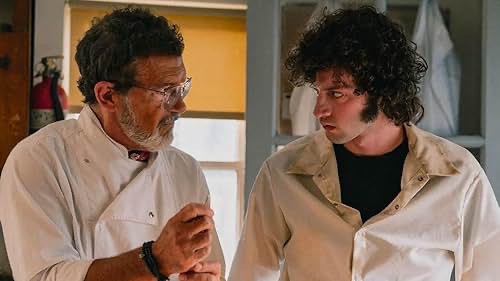
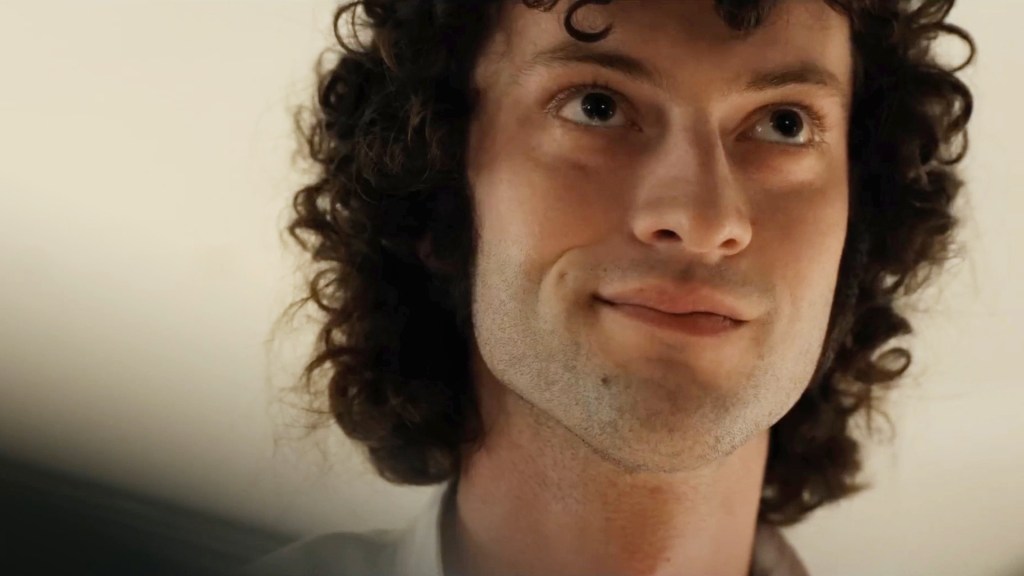
Dominic Sessa is excellent as Tony, capturing his angst, recklessness and insecurity without losing the charisma that makes us want him to succeed. Following The Holdovers, this is another story built partly around a young man and an older mentor, but Sessa makes the character feel entirely distinct. His growth throughout the film is convincing and immensely satisfying to watch. Antonio Banderas is wonderful as the unnamed Chef, balancing firmness with warmth and humour. He recognises something in Tony before Tony can fully recognise it in himself. More importantly, Banderas convinces as someone for whom cooking is not simply employment but a craft worthy of care and respect.
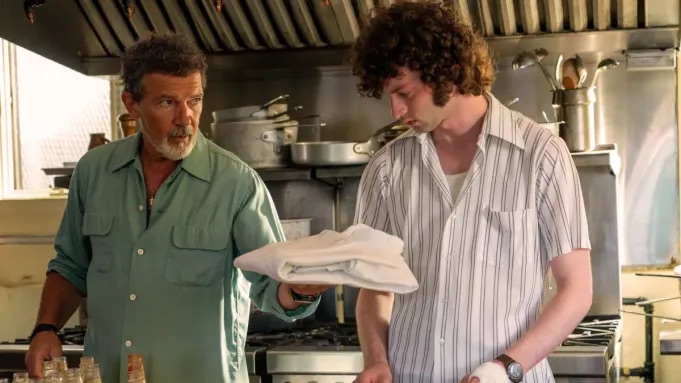
Leo Woodall brings a very different energy as Sal, an impulsive bad boy who lives dangerously and, in some respects, represents another possible path for Tony. He is funny and shocking in equal measure, but there is something cautionary about him too. Woodall continues to demonstrate his versatility and makes a strong impression. Emilia Jones is equally convincing as Nancy and feels increasingly assured as a performer.
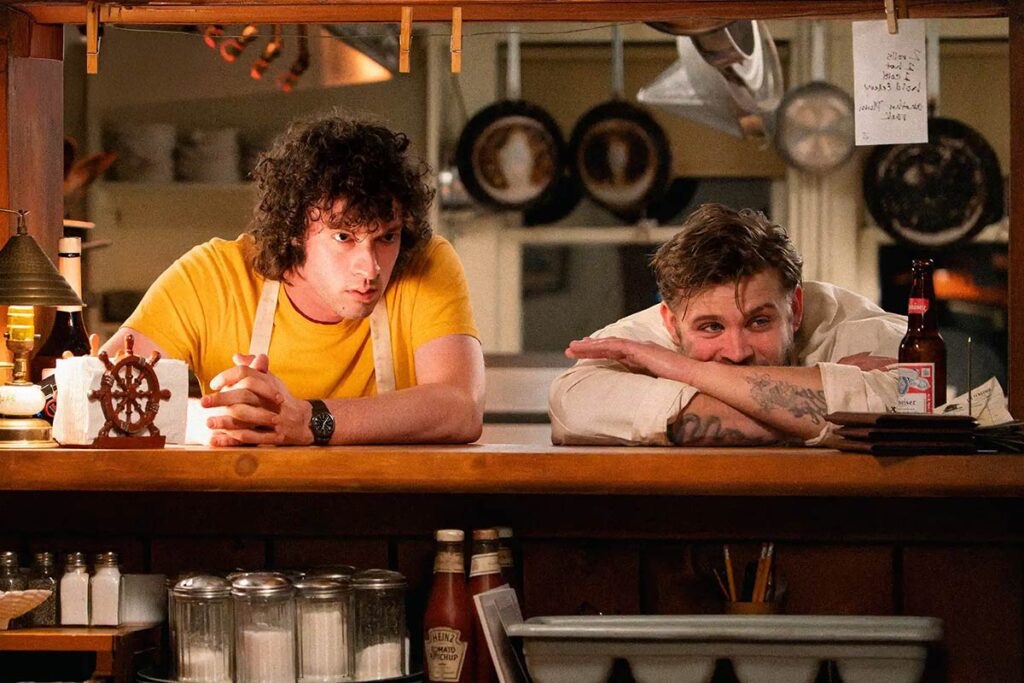
The film presents Tony with several ethical dilemmas that invite the audience to consider what they might do in his position. His decisions are not always admirable and there are plenty of moments when you desperately want him to make a better choice. This investment is particularly impressive when we already know that, professionally at least, things ultimately work out for him. The destination may be known, but the film makes the journey matter.

Knowing what eventually happened to Bourdain inevitably brings an additional poignancy to the story. The film’s closing notes choose not to mention his death by suicide, instead allowing his achievements and the life he built to define his legacy. I found that choice particularly moving. His death is part of his story, but Tony refuses to allow it to overshadow everything that came before it. Here, we are invited to remember the life rather than view every moment through the tragedy of its ending.
Ultimately, Tony is far more than an origin story for Anthony Bourdain. It is a warm, beautifully acted coming of age film about failure, opportunity and the unexpected paths that shape a life. Its food, coastal setting and rich cinematography make it a feast for the senses, but its greatest strength lies in the hope at its centre. For anyone who has ever believed that one failure means the end of the road, Tony offers a reassuring reminder that sometimes it is simply where another road begins.
★★★★½ (4.5 stars)

