
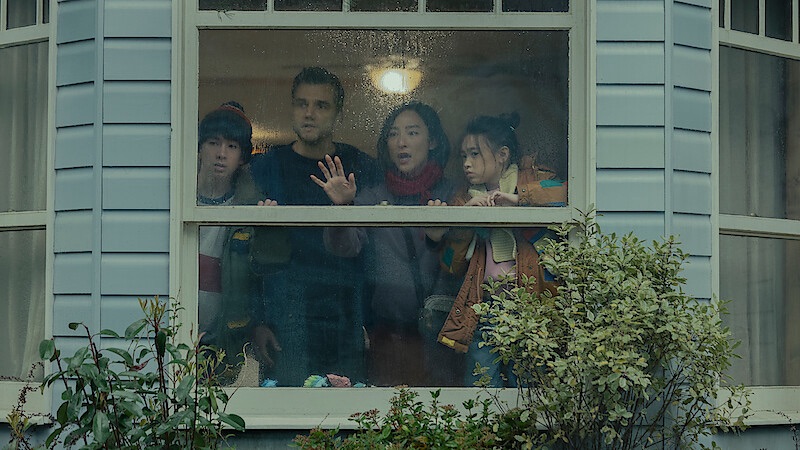
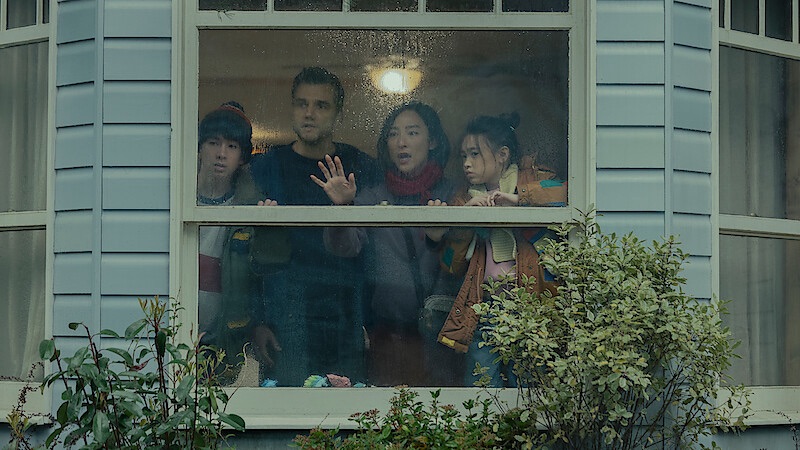
In one sentence: A family wakes to find every door and window of their home mysteriously sealed, leaving them trapped inside as an unknown danger waits beyond the walls.
In many ways, the COVID lockdowns feel like a lifetime ago, yet certain memories can make them feel like yesterday. For most of us, being confined to our homes is probably an experience we’d rather leave in the past, but Netflix’s The Last House takes that familiar feeling of isolation and turns it into something far more extreme.
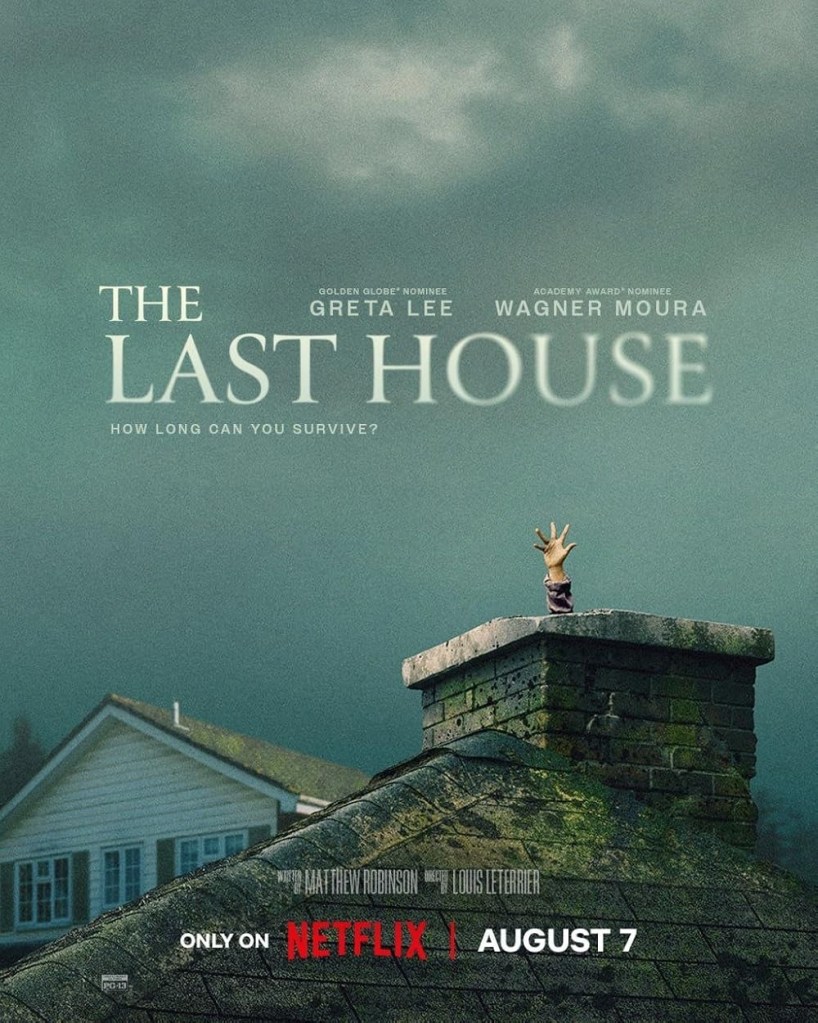
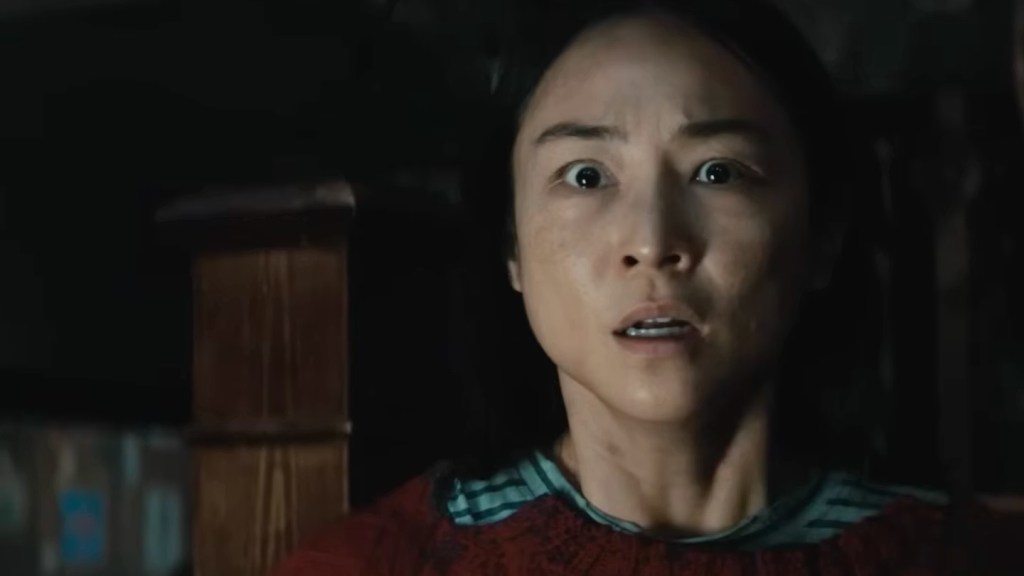
The film follows a family of four, two parents (Greta Lee and Wagner Moura) and their two children, living in a quiet neighbourhood when they suddenly discover they are unable to open any of their doors or windows. The Wi-Fi is down, but they still have electricity and water, leaving them dependent on whatever food they already have in their cupboards and fridge. Their only connection to the outside world comes through brief conversations with neighbours using chalk and whiteboards held against the windows. As time passes, it becomes apparent that some kind of force is keeping them inside.
Working largely within a single location and with only four main characters presents an obvious challenge, but plenty of films have used similar restrictions to create gripping stories. Unfortunately, The Last House struggles to generate the tension required. Despite the increasingly dire circumstances, the film moves at a languishing pace and rather than helping us empathise with the family’s confinement, it often makes the film feel like a chore to watch. Perhaps there is an unintended echo of the monotony many experienced during lockdown, but here it feels more like a flaw than an effective creative choice.
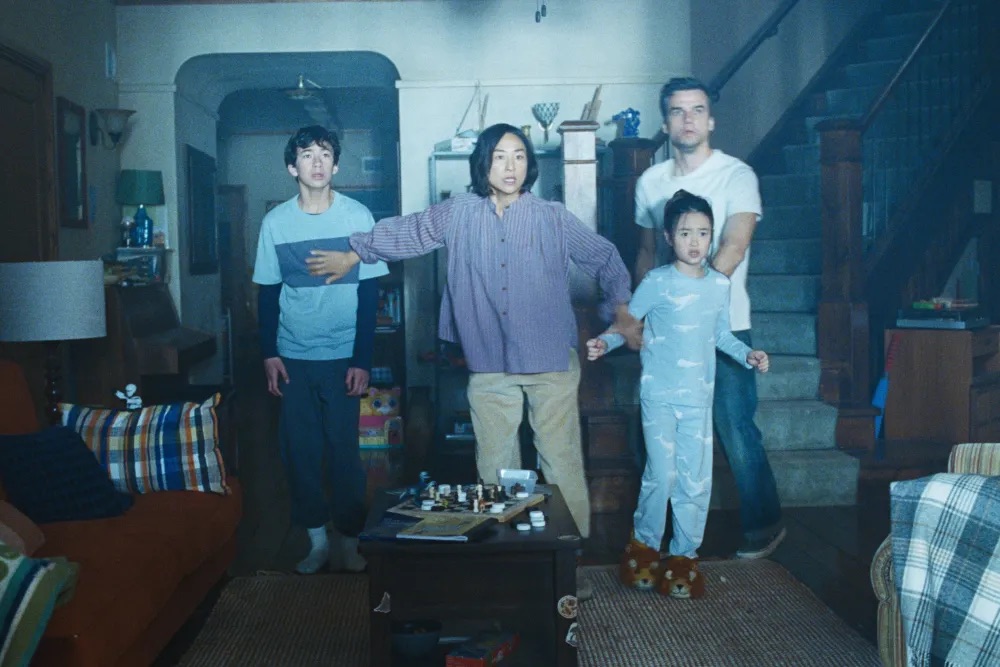
The performances themselves are decent, yet the chemistry between the family members never completely clicks. In a film this contained, connection is paramount. Whilst I wanted the family to survive, I never felt as emotionally invested in their survival as I wanted to be. With so few characters and so little outside distraction, stronger family dynamics could have made their deteriorating situation far more affecting.
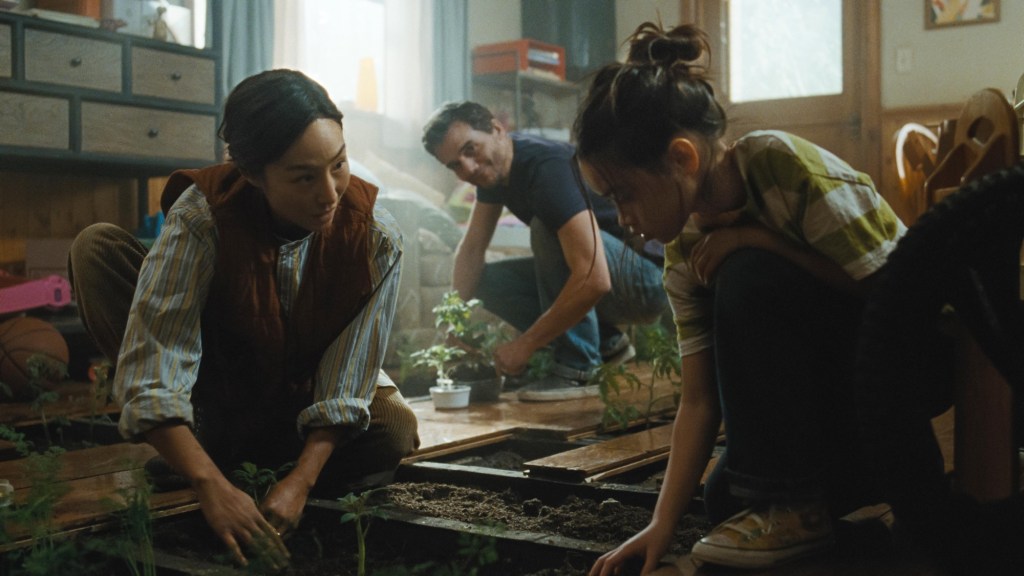
The greater problem is that the film’s underlying message remains frustratingly difficult to decipher. There are hints of environmental commentary throughout as the world outside becomes greener, the stars shine more brightly and animals appear to thrive in humanity’s absence. There are also references to fishing, hunting, mercy and the idea of sharing the planet with other species. Taken together, these elements seem to suggest that humanity has become destructive to the natural world, but the film never brings them together convincingly enough for its intentions to feel clear. Ambiguity can invite an audience to think, but here I was left wondering whether I had missed something the film simply hadn’t communicated effectively. I am usually willing to suspend disbelief for science fiction, but the film’s explanation involving the chimney stretched my willingness a little too far. Sometimes accepting questionable science is simply part of watching the genre, but certain elements here were difficult to overlook.
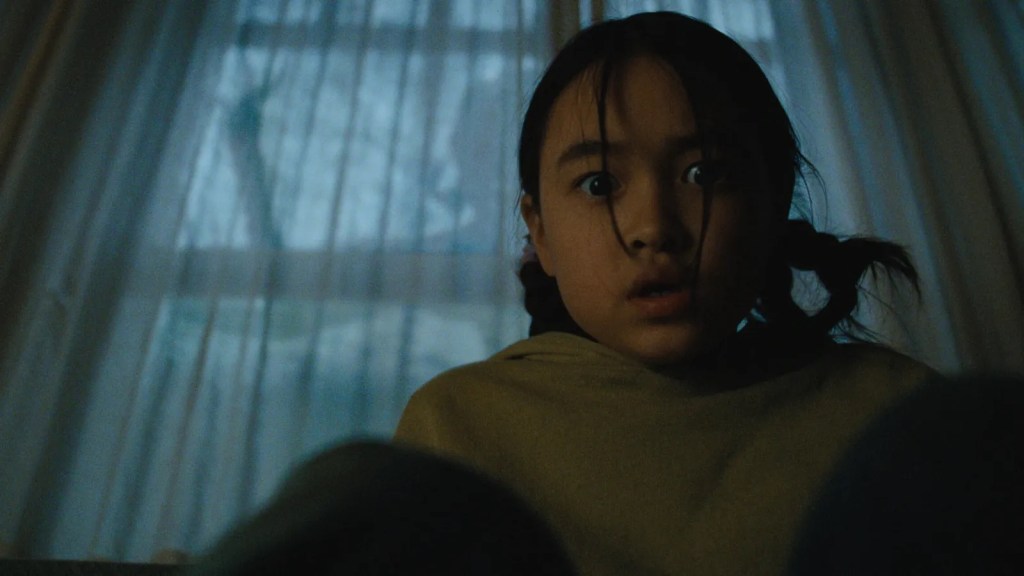
When the creatures responsible for the family’s confinement are eventually revealed, their design feels like an unusual cross between Predator and the Kraken. Perhaps more familiar is the way the daughter develops the greatest understanding of them. Science fiction frequently uses children in this way, presenting their innocence and lack of prejudice as an ability to see what adults cannot. The Last House follows this tradition, with the adults once again reluctant to trust a child’s instinct until circumstances force them to reconsider what they believe they know.
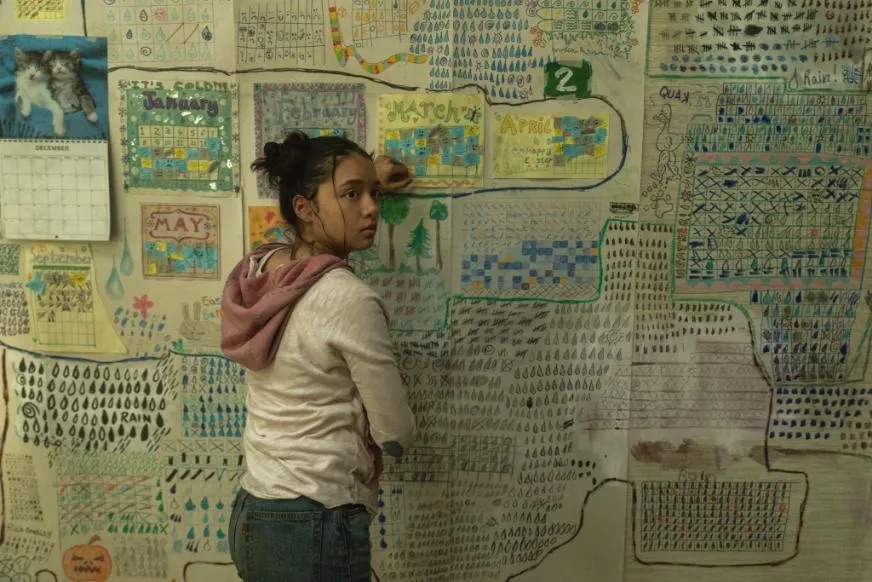
As their supplies dwindle, the family’s attempts to survive become increasingly desperate and occasionally stomach-churning. It certainly puts our own lockdown complaints into perspective. We may have been stuck indoors, but at least most of us still had Wi-Fi, supermarkets and takeaways. Here, desperate times really do call for desperate measures and the family is forced to become increasingly inventive as the threat of starvation and dehydration grows. The survival storyline also involves the trapping and killing of animals and I did not enjoy these scenes. The moments appear to feed into the film’s wider commentary on humanity’s treatment of other species, although, like many of its ideas, the message never feels fully developed.
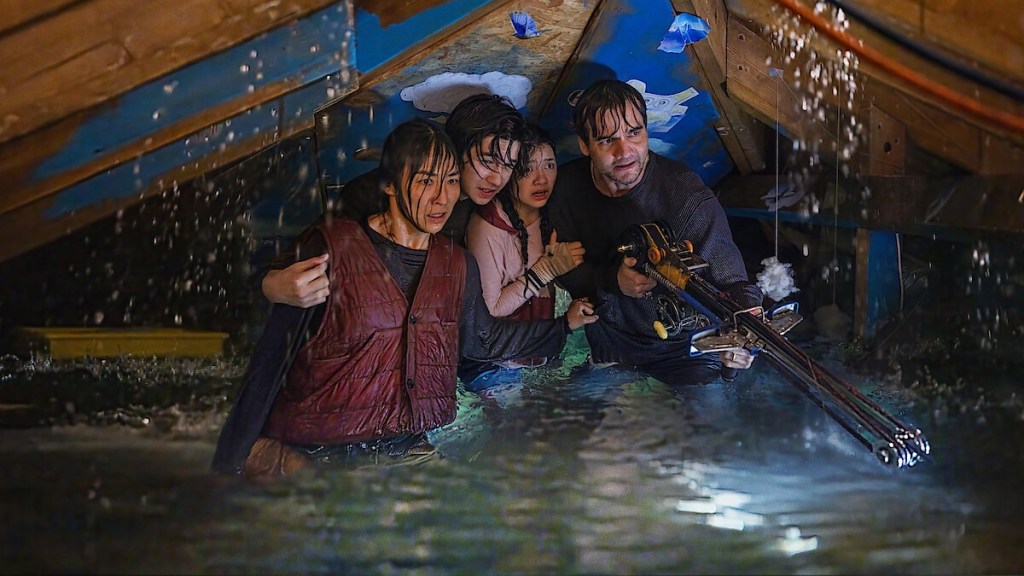
Visually, the film gravitates towards a muted palette that suits its oppressive science-fiction atmosphere. Interestingly, warmer tones emerge during moments when the family pulls together, creating a subtle visual contrast between harmony and desperation. It is a thoughtful use of colour, but combined with the film’s slow pace and confined setting, the overall aesthetic contributes to what can become a rather laboured viewing experience.
Ultimately, The Last House has an intriguing premise and several interesting ideas, but they never quite coalesce into a satisfying whole. Its crawling pace and lack of convincing chemistry make it difficult to become fully invested in the family’s plight, while its environmental and philosophical themes remain frustratingly muddled. There is potentially a fascinating film here about humanity’s relationship with the natural world and what happens when our homes cease to feel safe, but The Last House never quite unlocks it.
★★ (2/5)

