
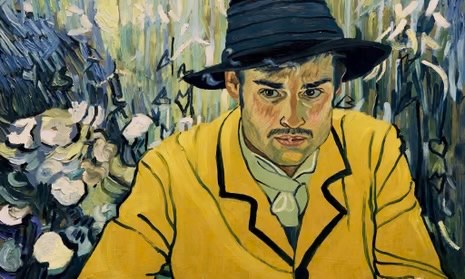
In one sentence: One year after Vincent van Gogh’s death, a young man sets out to deliver one final letter to his brother, uncovering the many conflicting memories of the artist along the way.
Cinema has always been an art form, but rarely has it embraced another art form quite so completely. With Loving Vincent, filmmakers did not simply tell the story of Vincent van Gogh, they painted it.
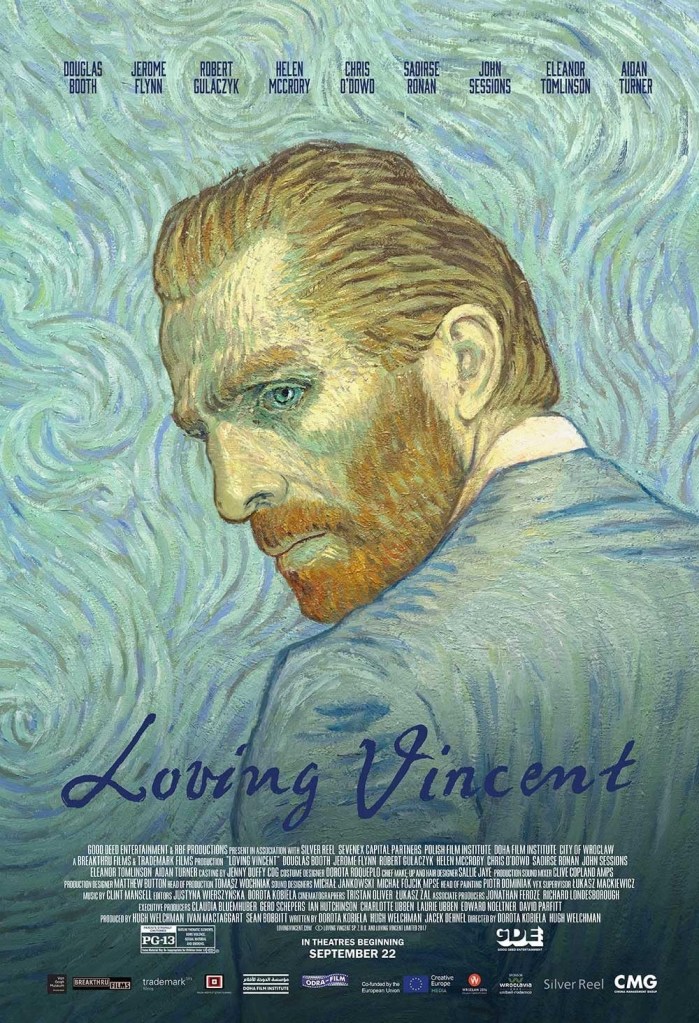
The film follows Armand Roulin (Douglas Booth), who, one year after Van Gogh’s (Robert Gulaczyk) death, is asked to deliver a final letter to the artist’s brother, Theo. Upon discovering Theo has also passed away, Armand instead embarks on a journey through the village of Auvers-sur-Oise to find someone who can receive the letter. Along the way, he encounters people who knew Van Gogh, each offering their own account of the artist and his final days and gradually revealing a portrait of a man who remains as mysterious in death as he was in life.

It would be impossible to discuss Loving Vincent without first talking about its extraordinary visual style. Recognised as the world’s first fully hand-painted feature film, its creation is nothing short of astonishing. The movie was initially filmed with live actors before that footage was used as a reference by 125 oil painters, who painstakingly recreated every frame in the style of Van Gogh. Around 65,000 individual oil paintings were produced, each photographed before being painted over to create the next frame. Many canvases were reused throughout production, while others have since become works of art in their own right.

As someone who enjoys creating art myself, I can hardly imagine the dedication required to produce a film in this way. The result is visually breathtaking. Van Gogh’s bold brushstrokes, swirling skies, textured lines and vivid colour palette are instantly recognisable, while many of the people who originally existed only within his paintings are transformed into living, breathing characters. The audience is no longer simply looking at Van Gogh’s art, they are fully experiencing it.
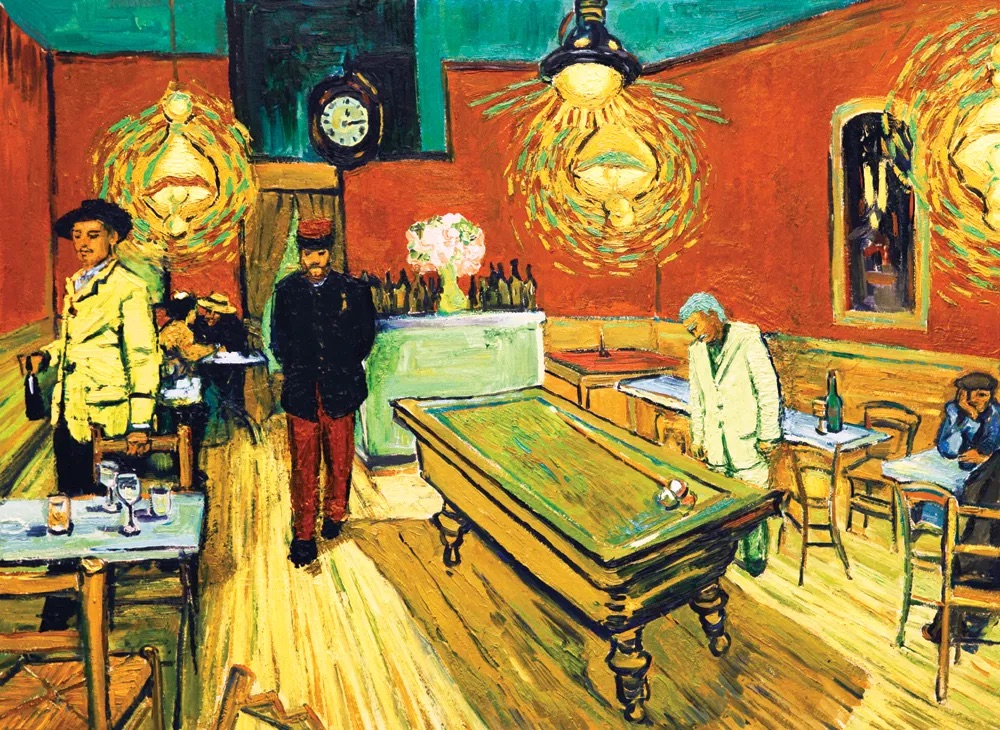
Remarkably, the animation flows far more smoothly than you might expect given its process, although there are occasional moments where the constant movement of the brushstrokes creates a slightly dizzying effect. The contrast between the vibrant painted present and the black and white flashbacks is also cleverly employed, helping distinguish memory from the present while supporting the film’s quasi-murder mystery structure.
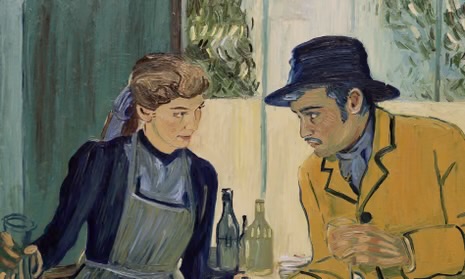
Rather than following the conventions of a traditional biopic, Loving Vincent builds its story around the mystery surrounding Van Gogh’s death. Although fictional in structure, much of the dialogue draws upon the extensive correspondence exchanged between Vincent and Theo. The film also leans into the long-standing debate surrounding whether Van Gogh truly took his own life. As Armand pieces together differing accounts from those who knew the artist, the film explores how one person’s life can be remembered in completely different ways depending on who is telling the story. It becomes a thoughtful reflection on memory, perception and the impossibility of ever fully knowing another person.
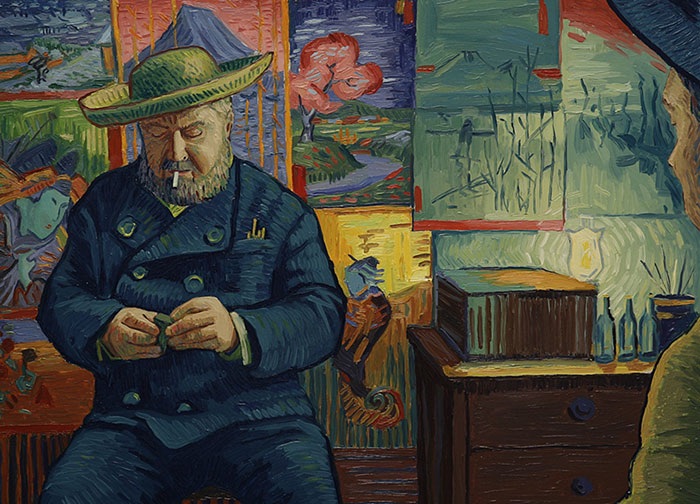
Throughout these conversations, the audience is also confronted with mental illness through a distinctly modern lens. The film quietly acknowledges the immense suffering Van Gogh experienced while never allowing it to completely define him. Instead, it presents an artist whose struggles shaped, but did not solely create, his extraordinary work.

The unusual visual style might suggest that performances become secondary, yet the paintings convey remarkable emotion and the cast provides strong foundations beneath the animation. My one reservation lies in the range of accents, which occasionally feel at odds with the French setting. While I understand the desire to cast recognisable actors in such an ambitious and unconventional project, I couldn’t help wondering whether a more regionally authentic cast might have enhanced the film’s immersion. Likewise, I found myself questioning whether combining such an experimental visual style with a murder mystery narrative perhaps asked a little too much of the audience. A more conventional biographical approach may have allowed us to connect more deeply with Van Gogh himself.
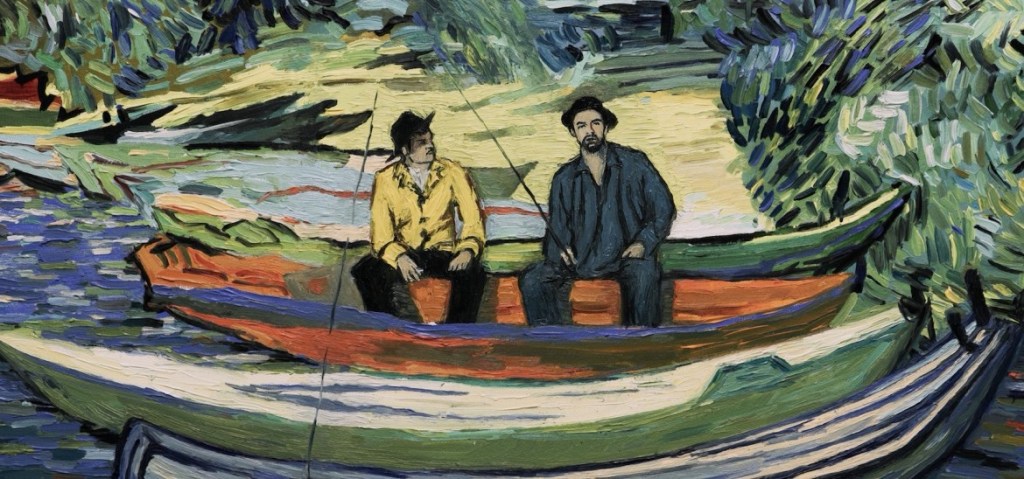
The score complements the visuals beautifully. Never intrusive, it quietly supports the emotion of each scene without competing with either the dialogue or the artwork, allowing the paintings themselves to remain the film’s true centrepiece.

Overall, Loving Vincent is an extraordinary artistic achievement and a clear labour of love. It allows audiences to experience Van Gogh’s world through the very medium that defined his life and to enjoy spotting his famous works, while encouraging them to reflect on the man behind the paintings. Although its ambitious narrative does not always match the brilliance of its visual concept, the film remains unlike anything else in cinema. It is as much a celebration of the artists who created it as it is of the artist who inspired it.
★★★½ (3.5/5)

