
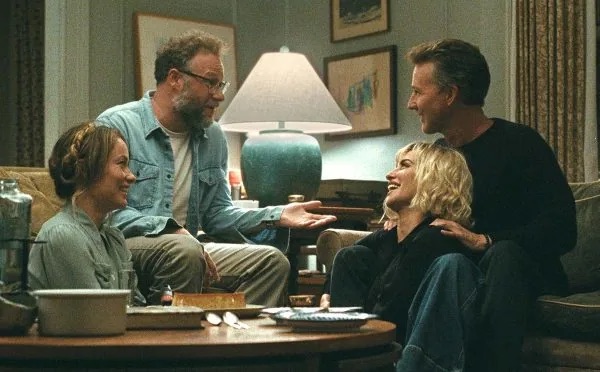
In one sentence: Neighbourly drinks take an unexpected turn, forcing two couples to confront uncomfortable truths about themselves, their relationships and what they really want.
Some evenings have a way of revealing far more than we ever intended. A casual conversation can expose our insecurities, challenge our relationships and force us to confront uncomfortable truths about ourselves. Olivia Wilde’s The Invite takes one such evening and lets the awkwardness unfold in real time.
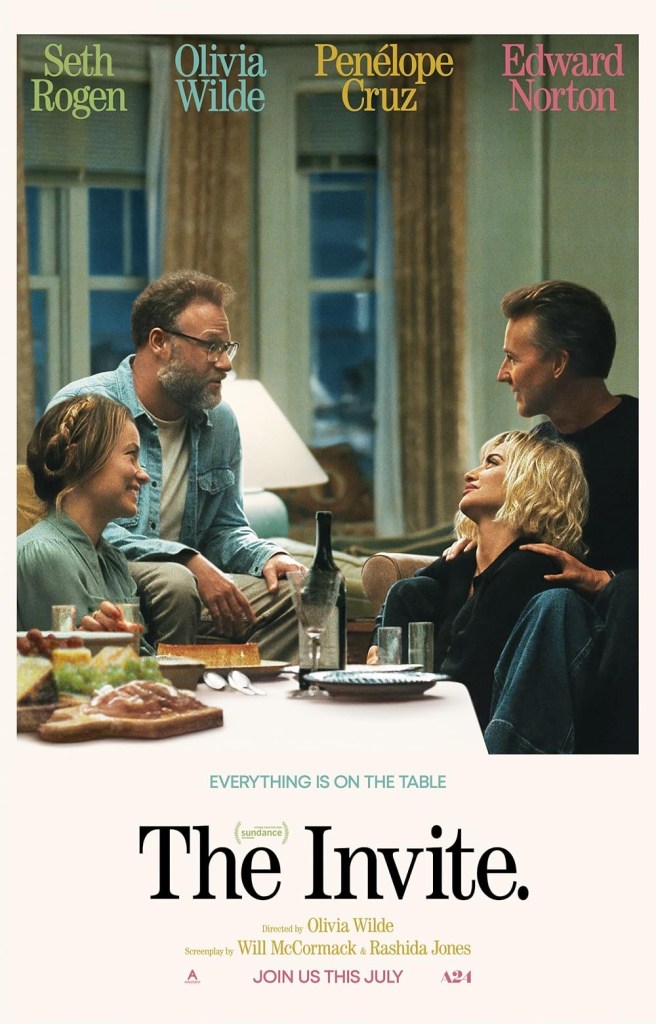
Based on the Spanish film The People Upstairs, itself adapted from a stage play, The Invite stars Olivia Wilde as Angela and Seth Rogen as her husband, Joe. Hoping to become better acquainted with the neighbours upstairs, Angela invites therapist and sexologist, Pina, (Penélope Cruz) and her retired firefighter partner, Hawk (Edward Norton), over for drinks while their daughter is away at a sleepover. Joe is far less enthusiastic, not least because he has long wanted to confront the couple about the noisy nights that regularly disturb their sleep. What begins as an awkward meeting between neighbours gradually develops into an evening of unexpected revelations, flirtation and uncomfortable self-reflection.
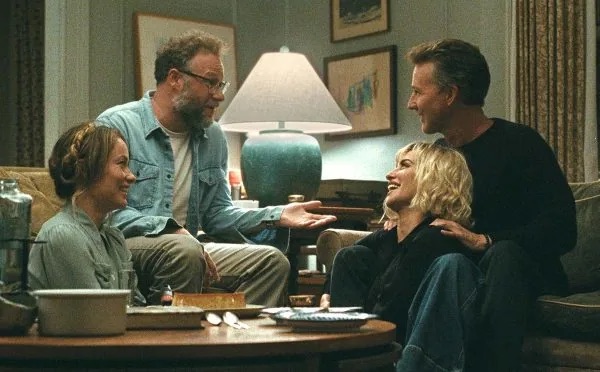
It is easy to see the film’s theatrical origins. Aside from a brief opening scene, the entire story unfolds within Joe and Angela’s apartment, giving the film the intimacy and immediacy of a stage production. Fortunately, the apartment itself is spacious enough that the setting never feels claustrophobic. Instead, the audience becomes a fly on the wall, observing every uncomfortable pause, sideways glance and ill-judged comment as the evening unfolds. At times, the dynamic between the two couples reminded me of a more comedic version of Who’s Afraid of Virginia Woolf? where conversations slowly peel away the facades the characters have built.

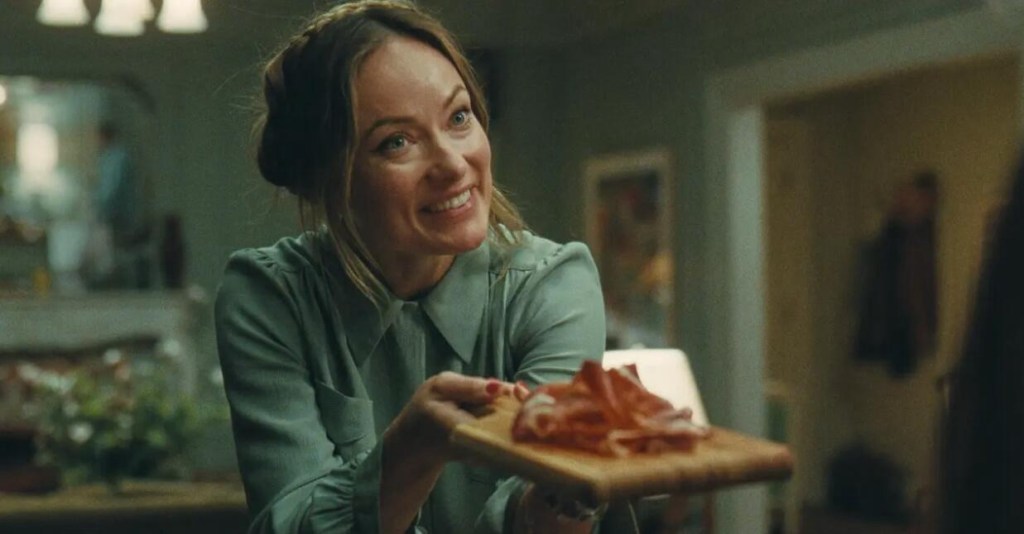
The performances are undoubtedly the film’s greatest strength. With only four principal characters, everything rests on the screenplay and the actors’ ability to sustain the audience’s attention and they do so brilliantly. Seth Rogen is particularly enjoyable, delivering his dialogue with effortless comic timing while convincingly charting Joe’s emotional journey throughout the evening. His dance with Penélope Cruz is one of the film’s funniest moments, perfectly capturing the bewilderment of someone who cannot quite believe what is happening. Olivia Wilde impresses both in front of and behind the camera. As Angela, she portrays a tightly wound, Xanax-dependent people pleaser whose anxiety radiates through every hurried sentence and nervous gesture. Penélope Cruz brings her trademark sensuality and quiet confidence to Pina, creating a character who is both enigmatic and highly perceptive. She seems to read the room long before anyone else does. I also have to mention her striking eye makeup, which beautifully evokes the glamour of classic Hollywood stars like Sophia Loren. Edward Norton is a pleasant surprise, stepping away from many of the more intense roles he is known for to deliver a layered performance that is equal parts relaxed, humorous and quietly insightful. Together, the four actors bounce off one another superbly, creating an entertaining mix of humour, tension and vulnerability.

Music also plays an important role throughout the film. Joe’s abandoned career as a musician becomes a subtle symbol of his own dissatisfaction, with the instruments sitting untouched in his office acting as a visual reminder of the life he feels slipped away. Alongside this, the score uses frantic strings and increasingly chaotic sounds to heighten the awkwardness between the characters. In a film that relies almost entirely on dialogue and performance, the music quietly becomes another character, shaping the emotional rhythm of the evening.

Wilde’s direction keeps the visual storytelling engaging despite the confined setting. Characters are frequently framed through doorways, windows and partially obscured sightlines, creating a voyeuristic feeling that reinforces the sense that the audience is intruding on an intensely private evening. It is a clever way of ensuring the apartment never feels visually repetitive. Colour is also used effectively to create a subtle visual divide between the two couples. Joe and Angela are dressed in shades of blue, while Hawk and Pina wear black. Blue is often associated with stability and familiarity, whereas black can evoke mystery, sophistication and confidence. Whether intentional or not, these colour choices reflect the couples’ contrasting dynamics and almost give them the appearance of wearing their own team colours throughout the evening.
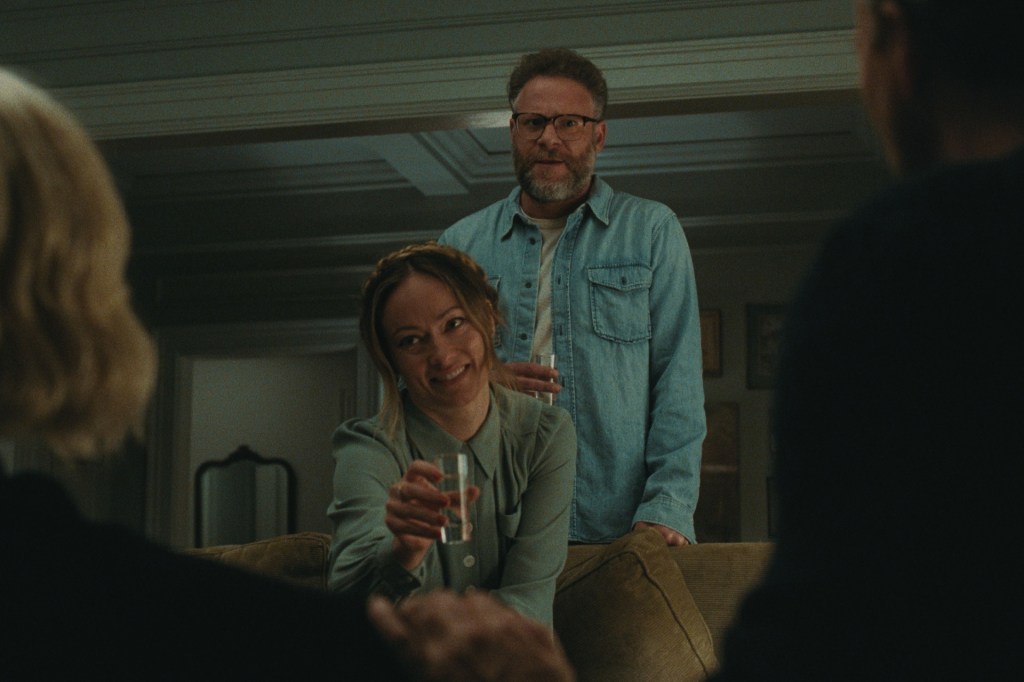
The title itself carries a clever double meaning. It refers not only to the neighbours’ invitation for drinks, but also to another invitation that dramatically alters the direction of the evening. Although this moment is intended to surprise, its inclusion in the trailer means much of the anticipation comes from waiting for it to happen rather than being shocked when it finally does. Even so, the film uses the situation to explore how different people respond when their relationships, insecurities and desires are unexpectedly challenged.

Although marketed as a romantic comedy, I found the label somewhat misleading. There are certainly humorous moments, but they are more likely to provoke a knowing smile than loud laughter. Likewise, romance is far from the film’s defining feature. Instead, The Invite feels more like an intimate relationship drama with strong comedic elements. At its heart, it explores self-worth, communication and the importance of finding fulfilment within ourselves before seeking it from others.
Overall, The Invite is a smart and engaging chamber piece that uses humour, discomfort and excellent performances to explore modern relationships. Beneath its provocative premise lies a thoughtful examination of communication, self-worth and intimacy. It may not be the romantic comedy its marketing suggests, but it is an entertaining and surprisingly insightful evening spent in the company of four vastly different characters.
★★★ (3/5)

