
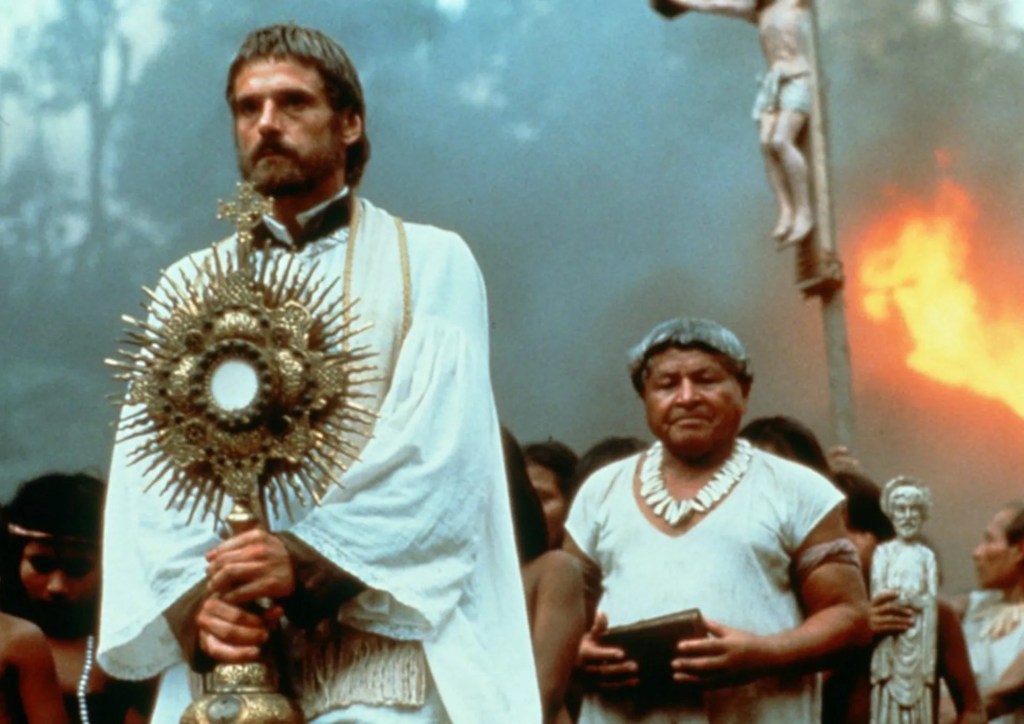
In one sentence: A Jesuit priest and a troubled slave trader find their lives transformed by a mission deep within the South American jungle.
Film scores have the power to elevate a great film or transform an ordinary one. Some become so iconic that they transcend the films they were written for, from the ominous notes of Jaws to the unforgettable theme from The Good, the Bad and the Ugly. I often listen to film soundtracks while working or relaxing and one piece that repeatedly finds its way into my playlists is Gabriel’s Oboe from The Mission. Composed by Ennio Morricone, it is one of the most beautiful pieces of film music ever written and, after years of listening to it, I finally decided it was time to watch the film that inspired it.

Winner of the Palme d’Or, The Mission is set in the mid-eighteenth century above the spectacular Iguazu Falls in South America. Against the backdrop of the 1750 Treaty of Madrid, which transferred Jesuit mission territories from Spanish to Portuguese control, the story follows two very different men. Father Gabriel (Jeremy Irons) is a gentle Jesuit priest who establishes a mission among the Guaraní people through compassion, humility and music. Rodrigo Mendoza (Robert De Niro), meanwhile, is a former slave trader who seeks redemption after murdering his own brother, Felipe (Aidan Quinn), in a fit of jealousy. Together they become devoted to protecting the Guaraní, but their beliefs ultimately lead them down very different paths.

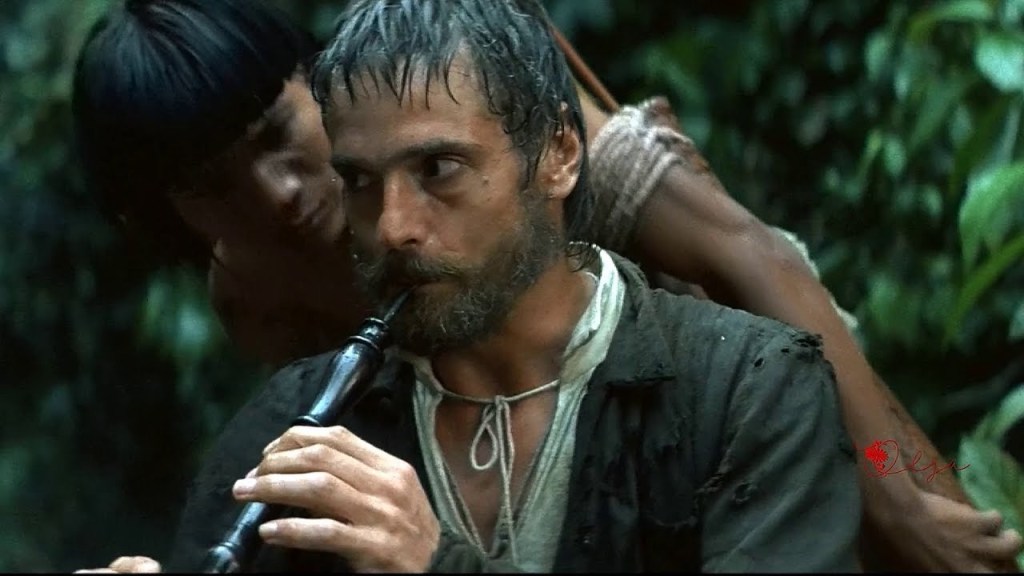
The music is what brought me to The Mission and it remains the film’s greatest strength. Morricone’s score is hauntingly beautiful, with Gabriel’s Oboe soaring whenever it returns throughout the film, particularly during its closing moments. Music is portrayed as a universal language capable of building trust where words cannot. Father Gabriel’s first encounter with the Guaraní through the sound of his oboe is one of the film’s defining scenes, illustrating how compassion can sometimes achieve what force cannot. The score itself cleverly blends European orchestral traditions with Indigenous influences, reflecting the meeting of two very different cultures. Many listeners may recognise the melody through later adaptations such as Nella Fantasia, but for me it is at its most powerful in its original instrumental form. It is, quite simply, a perfect film score.
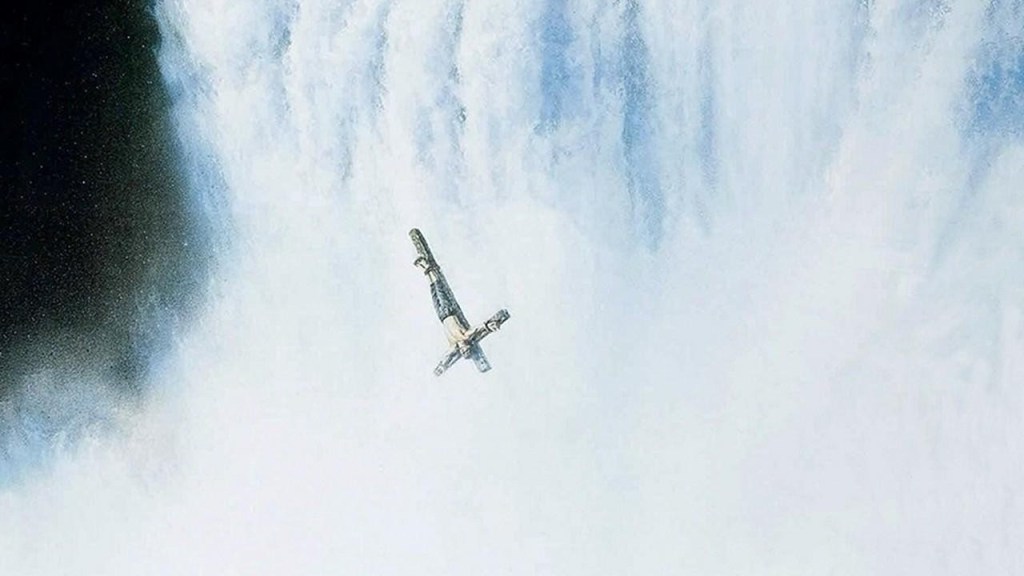
The film itself is a slow burn, but one that rewards patience. Its cinematography is extraordinary, deservedly earning the Academy Award. The South American jungle is presented as both breathtakingly beautiful and relentlessly unforgiving. The opening sequence, in which a crucified priest is swept over Iguazu Falls, is both harrowing and unforgettable. Equally memorable is Father Gabriel’s determined climb up the steep rock face, symbolising both his physical journey and his spiritual commitment to reaching the Guaraní people.
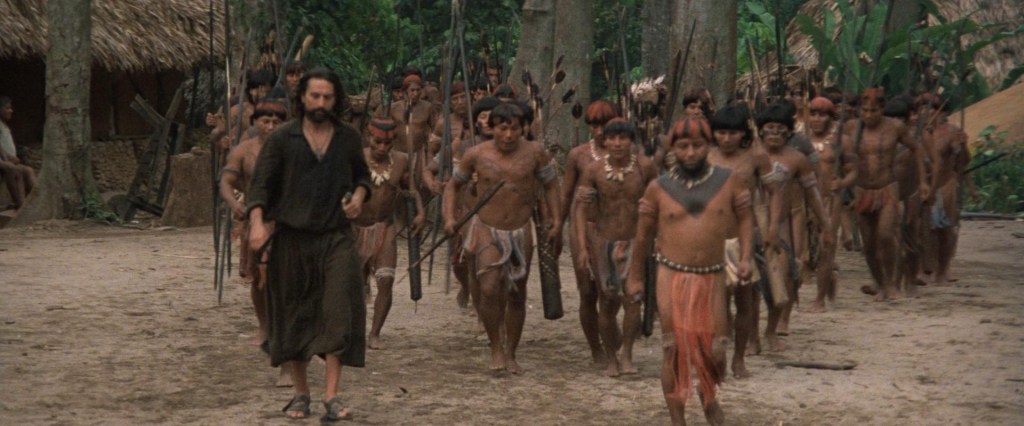
Jeremy Irons delivers a wonderfully understated performance as Father Gabriel. His quiet compassion contrasts beautifully with the fiery Robert De Niro’s Rodrigo Mendoza. Mendoza wishes to change, yet the film continually asks whether a man can ever fully escape the person he once was. Although he seeks forgiveness for an act of terrible violence, he ultimately finds himself returning to violence when faced with injustice. De Niro handles this internal conflict with great sensitivity and the role stands apart from many of the characters he became famous for portraying.

The film’s conclusion presents Father Gabriel and Mendoza with opposing responses to the same moral dilemma. One embraces non-violence while the other chooses armed resistance, yet both paths ultimately arrive at the same tragic destination. Rather than offering easy answers, The Mission asks difficult questions about faith, colonialism, morality and whether violence can ever truly be justified. It is to the film’s credit that it refuses to tell the audience what to think.

The Guaraní characters are portrayed by Indigenous Waunana actors from Colombia. While they are not themselves Guaraní and some criticism has been directed at the film’s use of language, their presence nevertheless lends the film an authenticity that deepens the emotional impact and grounds the story within the culture it seeks to portray.
Overall, The Mission is an absorbing historical drama that combines breathtaking cinematography, outstanding performances and one of cinema’s greatest musical scores. It poses complex moral questions without offering simple solutions and remains every bit as thought-provoking as it is visually stunning. I came to The Mission for Gabriel’s Oboe, but I left with a great appreciation of the film that gave it life.
★★★★ (4/5)

