
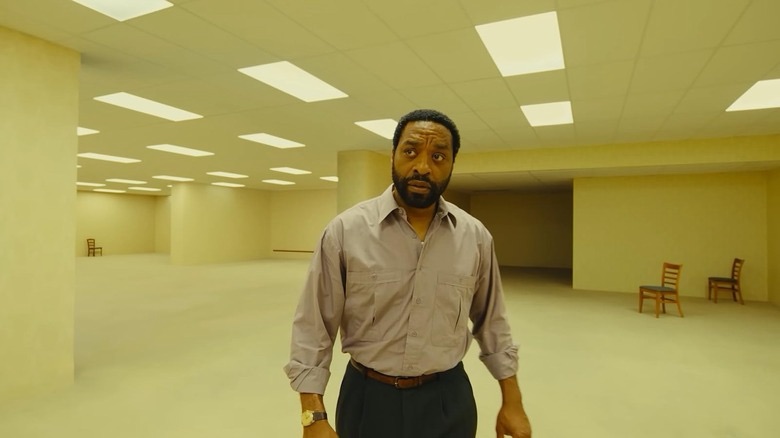
In one sentence: When a struggling furniture store owner discovers a mysterious liminal space hidden behind the walls of his shop, his attempts to understand it draw others into a surreal and increasingly dangerous world.
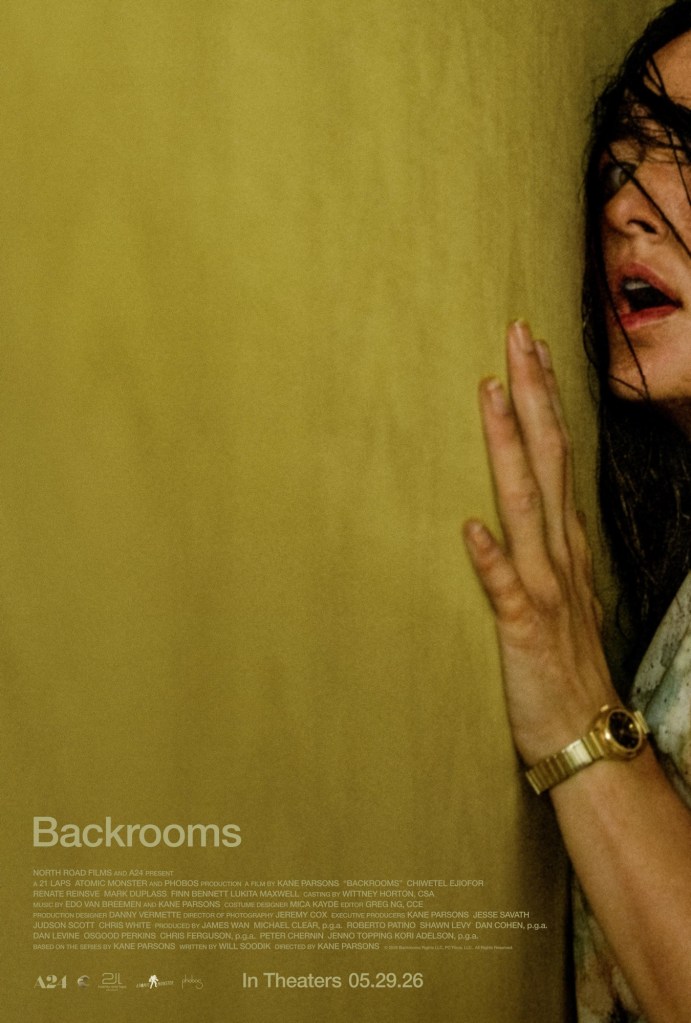
A24’s popularity is growing with each of its movies and its latest film, Backrooms, directed by its youngest director, Kane Parsons at just twenty years old, led to the production company’s biggest opening weekend. Based on Parsons’ successful YouTube series, the movie is designed to be a standalone watch, inviting viewers into his world of the Backrooms.
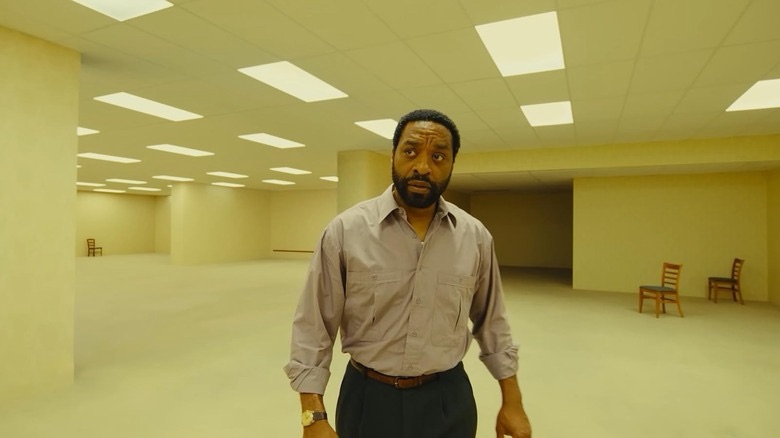
The movie is set in the 1990s and begins with an extended opening set within the Backrooms, following a man trapped there as he searches for an escape. We then follow divorced alcoholic Clark (Chiwetel Ejiofor), a trained architect who manages a furniture store called Captain Clark’s Ottoman Emporium and is living in the shop itself. He attends therapy sessions with Mary Kline (Renate Reinsve) but finds them difficult and shows a real distaste for his ex-wife, who kicked him out of his own home. We discover that the lights have been flickering in the shop and a visit from an electrician reveals a rather unusual electrical board with two strange switches at the bottom. Disturbed one night by the lights once again, Clark investigates and notices a glow within the wall. Stepping through it, he enters the Backrooms. He explores and realises there is something sinister there, taking a stool back with him as proof. During his next therapy session, he tells Mary about the place. Unsurprisingly, she is sceptical, but Clark insists he will return and gather evidence. He takes two employees, Kat (Lukita Maxwell) and Bobby (Finn Bennett), with a camera, but the trip ends in disaster. Bobby is taken by an unknown entity and Clark and Kat become separated. When Mary later receives a call from Clark, she decides to look for him.
This movie’s release built considerable anticipation but, for me, it ultimately falls flat. I have tried to sit with my feelings and understanding of the film for a while and I still struggle to work out what it was trying to say. Some reading afterwards suggests Parsons’ web series is much more detailed and enjoyable than the movie and fills in certain gaps. I, however, like I imagine many audience members, have not watched the series and did not realise that additional knowledge might be helpful. Normally, it is a good thing when a film lingers because it has had a profound effect, but I find this film lingering because I want to understand it and I just can’t, and I am not sure I ever will.
The movie’s opening shows real promise. The handheld camera and VHS-style overlay build tension effectively and feel reminiscent of The Blair Witch Project. However, what follows never quite matches or explains that initial sense of unease. The pacing is particularly problematic. There are long stretches of exploring the Backrooms with very little dialogue and very little reward for the audience. I do not believe films should spoon-feed viewers, but it feels as though this movie does not fully consider the audience’s investment of time.
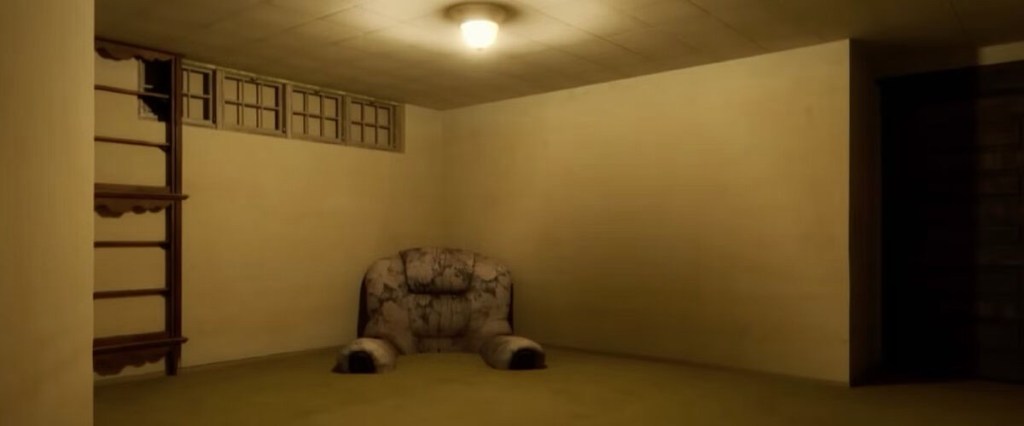
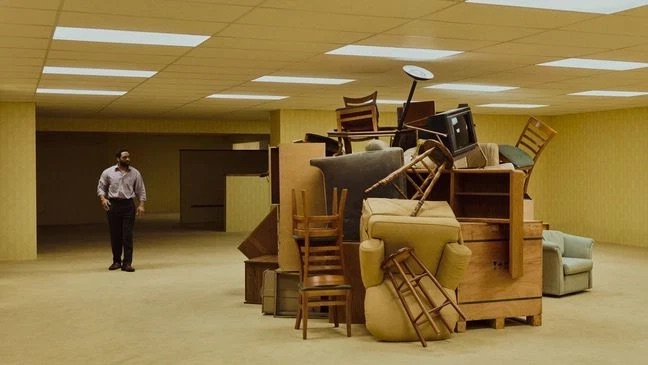
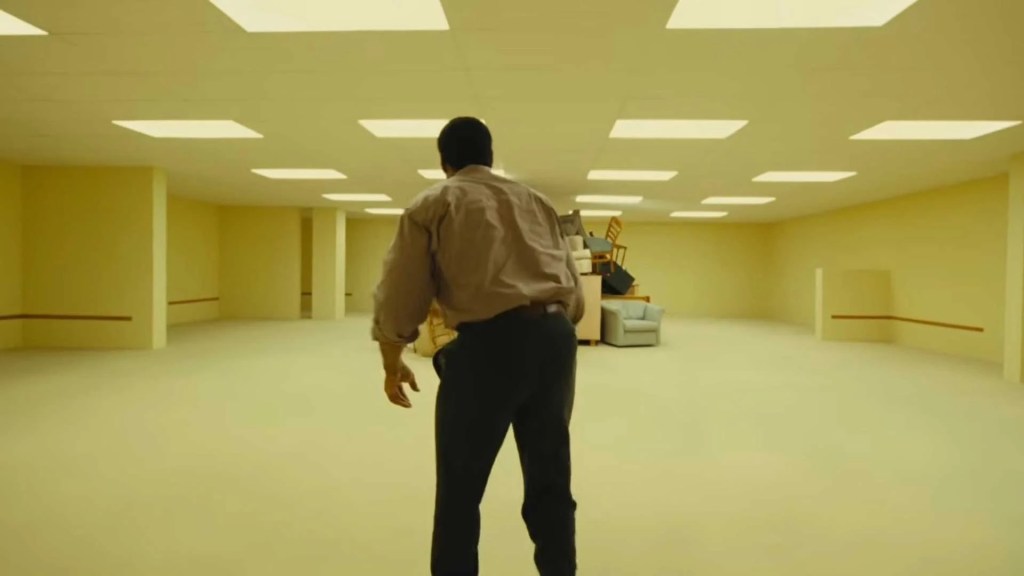
Visually, the film is striking. Its gaudy yellow wallpaper, harsh office-style lighting and unusual use of space are somewhat reminiscent of Severance. The film, however, has a distinctive visual identity and the imagery is undoubtedly what makes the trailer so appealing. Furniture is piled up, sunk into the floor or placed in ways that feel subtly wrong. Nothing is quite as it should be. There is an interesting idea that the Backrooms are built from memories that are familiar but imperfect. The proportions are wrong, faces appear distorted with multiple eyes and strange, random movements and everything feels just slightly off. The hints of Captain Clark’s furniture store appearing in the opening sequence before Clark has even discovered the Backrooms raise questions that never feel adequately addressed. Not fully understanding the concept of the Backrooms is a frustrating experience because a clearer understanding may have helped me better empathise with the film’s characters.
Ejiofor and Reinsve are both excellent actors and deliver strong performances. Unfortunately, their characters feel thinly developed. Although we learn about Mary’s past and know that Clark is divorced, there is little in what we are shown that fully justifies some of their decisions. Clark seems to change very suddenly and there appears to be an interesting idea about therapy and whether people truly want to improve their lives or not, but the film does not explore this deeply enough. Mary is arguably the more fleshed-out character and, in many ways, a tragic one. Both actors do the best they can with the material they are given. The Backrooms themselves feel like a third character. They are living, breathing spaces that drive the story and remain undeniably mysterious. Although never fully understood, there is a sense of trauma and memory woven throughout them.

Ultimately, Backrooms was a disappointing experience. I can see the potential in the concept and there are moments where the atmosphere, visual design and underlying ideas genuinely intrigue. Unfortunately, the pacing, underdeveloped characters and lack of a satisfying payoff prevented everything from coming together into a rewarding viewing experience. I wanted to like it more than I did. While I can understand why the Backrooms concept has developed such a passionate following, this particular interpretation never fully clicked for me. I even heard audible groans at the end of my screening, which suggested I was not alone in my frustrations. For a studio whose films often leave audiecnes with new perspectives or questions about life, this one left me feeling more confused than compelled.
★★ (2/5)

