
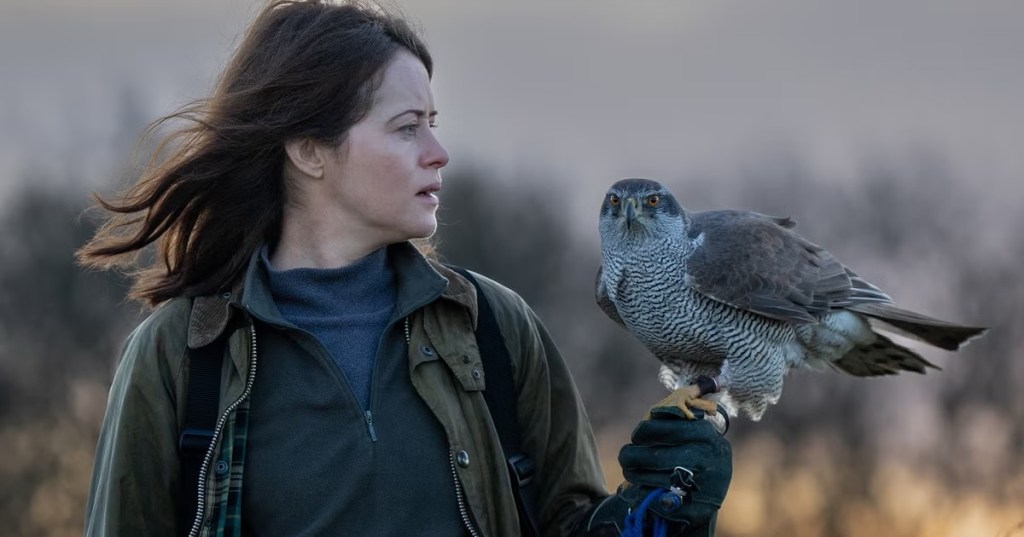
In one sentence: After the sudden death of her father, a grieving woman turns to training a notoriously untameable goshawk, as she struggles to navigate loss, isolation and the slow path toward healing.
Some films explore subjects that are difficult to sit with, such as grief and loss. They are not always easy to watch and often require the right frame of mind, but they hold an important place in cinema. They are stories that move beyond entertainment, offering something more reflective and quietly cathartic.
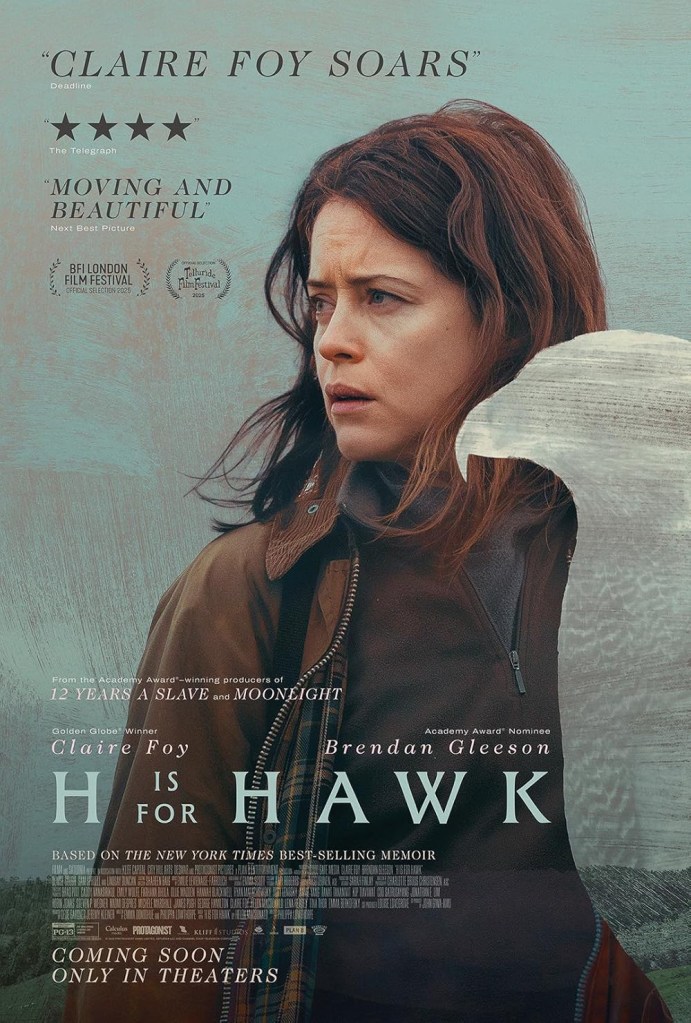
H is for Hawk, based on Helen Macdonald’s memoir, follows Helen (Claire Foy) as she grapples with the sudden death of her father (Brendan Gleeson). Unable to process her grief, her life begins to unravel as her work and relationships fall away. Seeking some form of control or distraction, she adopts and attempts to train a goshawk, one of the most notoriously difficult birds to tame. What unfolds is an unflinching portrayal of grief and the ways people try and often struggle to cope with it.
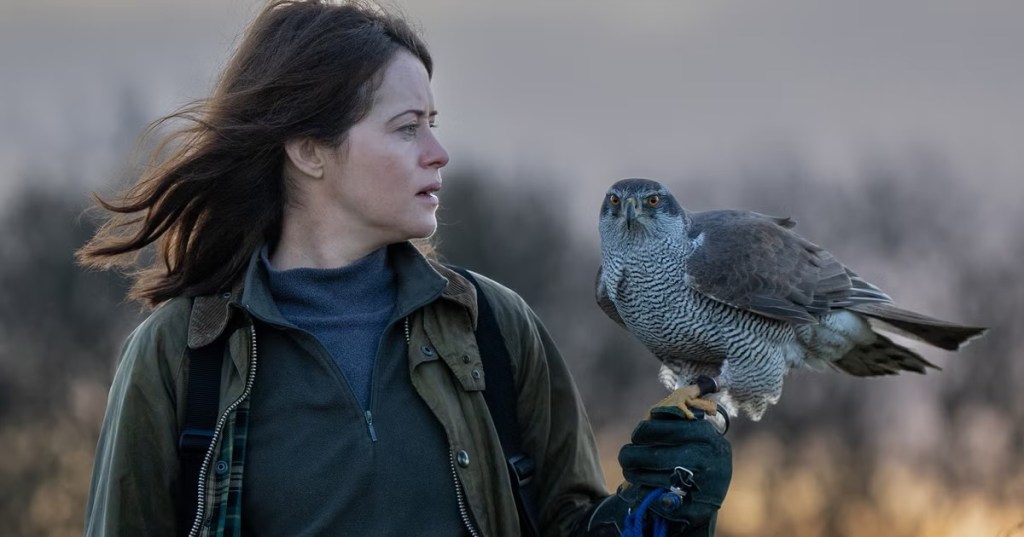
The film carefully shows how grief seeps into every part of Helen’s life. Once engaged and present in her role at Cambridge, she becomes withdrawn and disconnected, missing responsibilities and retreating further into herself. Despite having people around her who care, she pushes them away, isolating herself at a time when she needs support the most. Her focus shifts almost entirely to Mabel, the goshawk. While she provides a temporary sense of purpose, it also delays the inevitable confrontation with her loss.

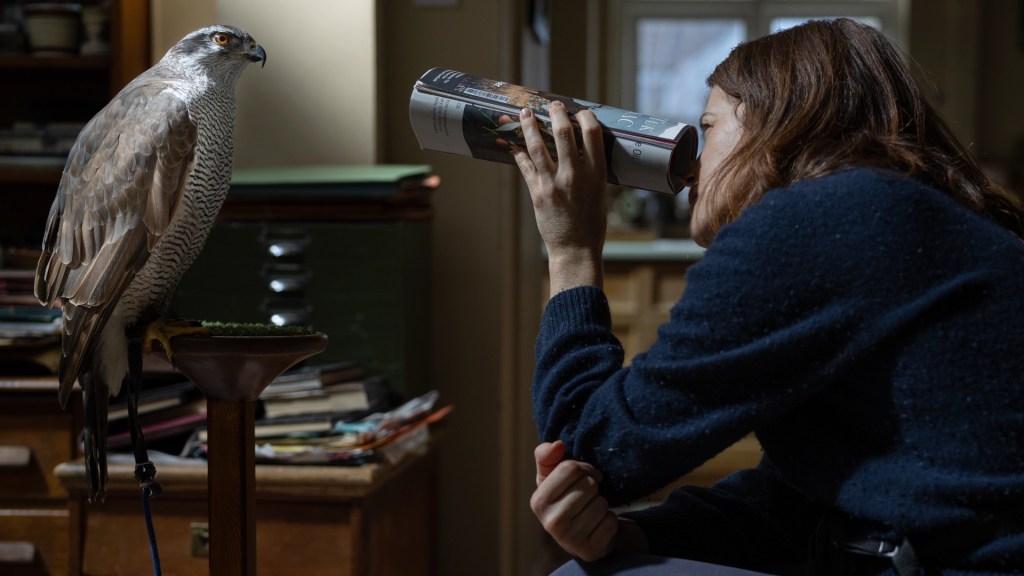
Mabel becomes a central presence. She is both awe-inspiring and intimidating and there are moments where her place within a domestic environment feels uncomfortable and unnatural. The film does not shy away from this tension. Instead, it leans into it, offering insight into falconry while also raising questions about control, connection and the ethics of keeping such a wild creature. Helen’s own observation that hawks are not affectionate animals makes her choice all the more intriguing, suggesting that this relationship is less about companionship and more about something internal.
It is in the outdoor sequences that the film feels most at ease. Watching Mabel hunt, moving with precision and instinct through dense woodland, creates some of the film’s most striking imagery. In one scene, as Helen runs after her through the trees, she appears disoriented and lost, a visual reflection of her internal state. These moments subtly reinforce the idea that while Mabel exists fully in her natural world, Helen is struggling to find her place in hers. The presence of her friend Stuart (Sam Spruell), who guides her through the process, adds an important counterbalance, introducing ideas of trust and release that extend beyond falconry.
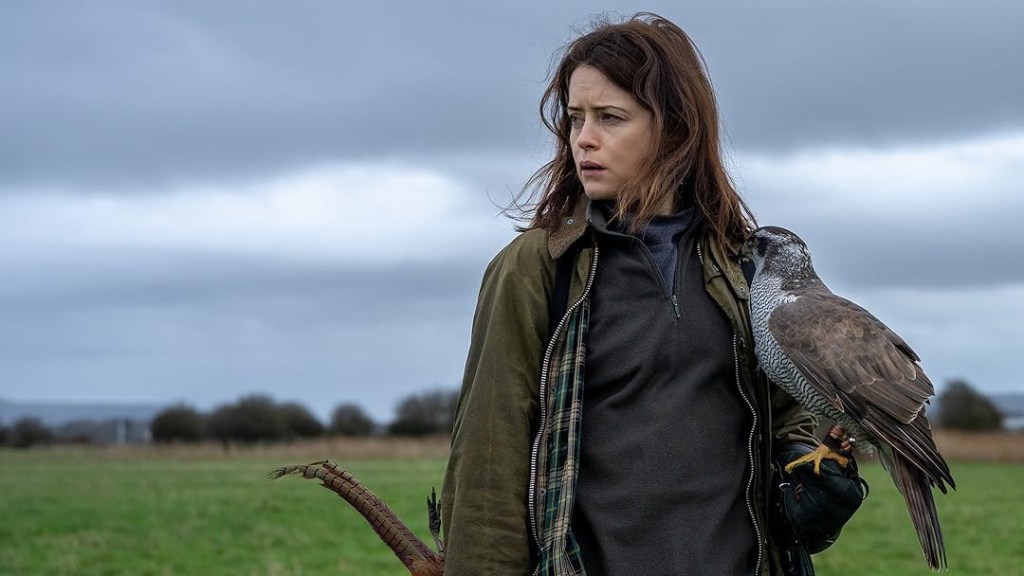
The film moves at a slow, deliberate pace, which will not appeal to everyone. Claire Foy delivers a grounded and understated performance, capturing the quiet erosion of someone dealing with profound loss. Brendan Gleeson’s appearances in flashback bring moments of warmth, though they carry an unavoidable sense of sadness. Denise Gough provides solid support, but it is Mabel who draws the eye, not through overt expression, but through her sheer presence. There is a majesty to her that feels both captivating and distant.

Ultimately, H is for Hawk is a deeply personal story that speaks to something universal. It is not always comfortable viewing and it is unlikely to appeal to all audiences, but it offers a thoughtful and honest exploration of grief and the ways people attempt to live alongside it.
★★★ (3/5)
 Rhiann’s Reels