
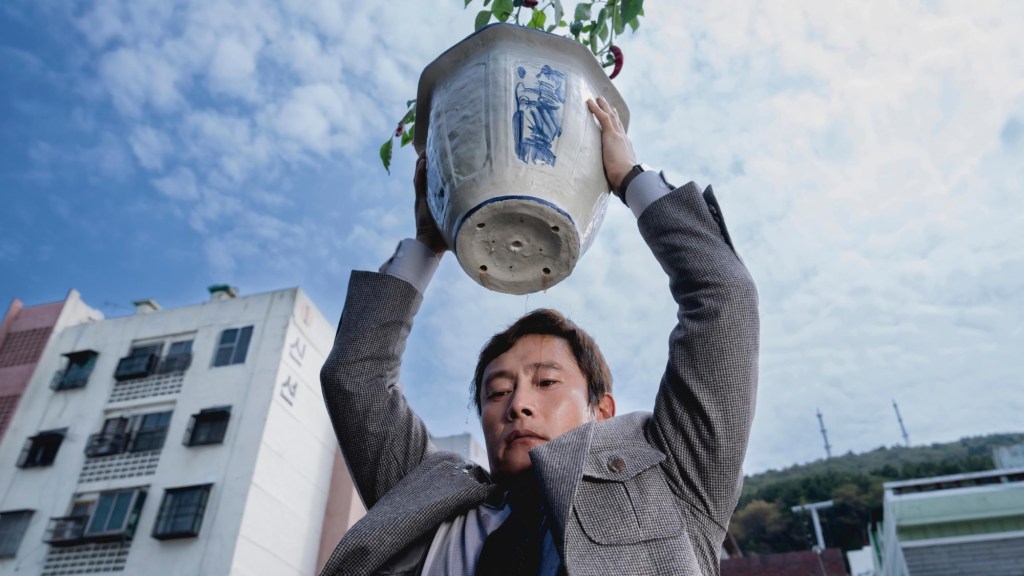
In one sentence: In No Other Choice, a desperate man struggling to find work in an increasingly automated world takes extreme measures to eliminate his job rivals and secure his future.
What happens when you lose your job in an industry that is steadily being replaced by automation? When the competition for a single role becomes so intense that desperation begins to take hold? Korean film No Other Choice explores this very idea, presenting a dark satirical take on modern employment pressures, reminiscent in tone of Parasite. It also shares thematic similarities with the recent film How to Make a Killing, where desperation drives increasingly extreme decisions in pursuit of a large inheritance.

The film follows Man-su (Lee Byung-hun), a man who, by his own account, has it all at the beginning of the story. He has a wife, two children, two golden retrievers and a beautiful home. However, everything begins to unravel when he loses his job as an engineer at a paper factory where he has worked for 25 years. After 13 months of unsuccessful job hunting, aside from a position in a supermarket, his situation becomes increasingly desperate. His wife, Miri (Son Ye-jin), takes on part-time work, their dogs are sent away to live with family and their home is put on the market as the threat of foreclosure looms. Unable or unwilling to consider a different career path, Man-su makes a drastic and disturbing decision to eliminate his competition.
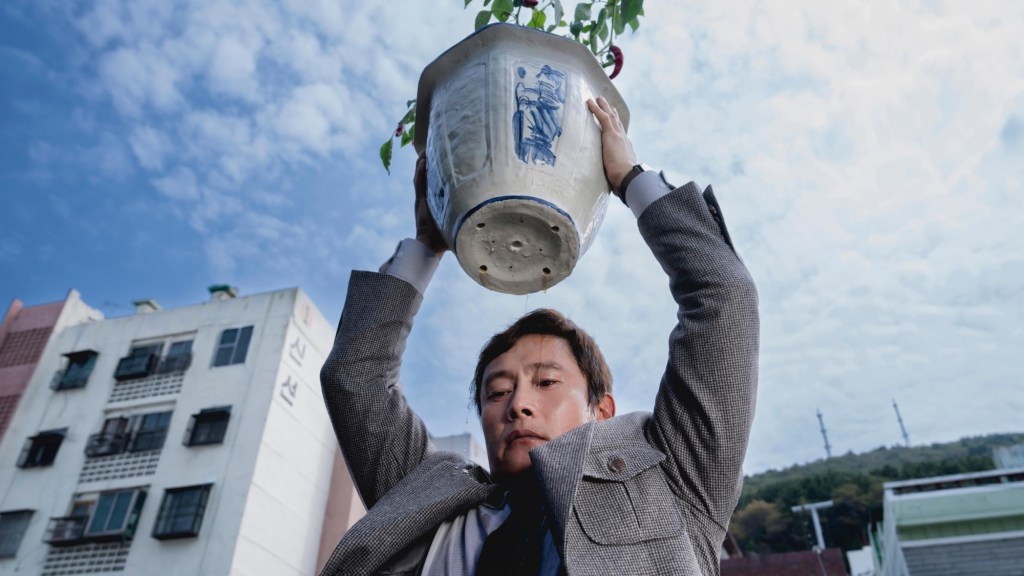
At its core, the film examines the growing impact of technology on employment and identity. What happens to individuals whose skills become obsolete? For Man-su, his sense of self is so closely tied to his profession that he cannot imagine a life outside it. Miri’s question as to why he cannot simply pursue a different line of work is met with resistance, highlighting the outdated notion of lifelong loyalty to a single industry. The film makes it clear that such loyalty is no longer rewarded as efficiency and automation take precedence. While the Man-su’s decisions are exaggerated through the movie’s satirical lens, it effectively captures the fear and instability that can accompany unemployment.
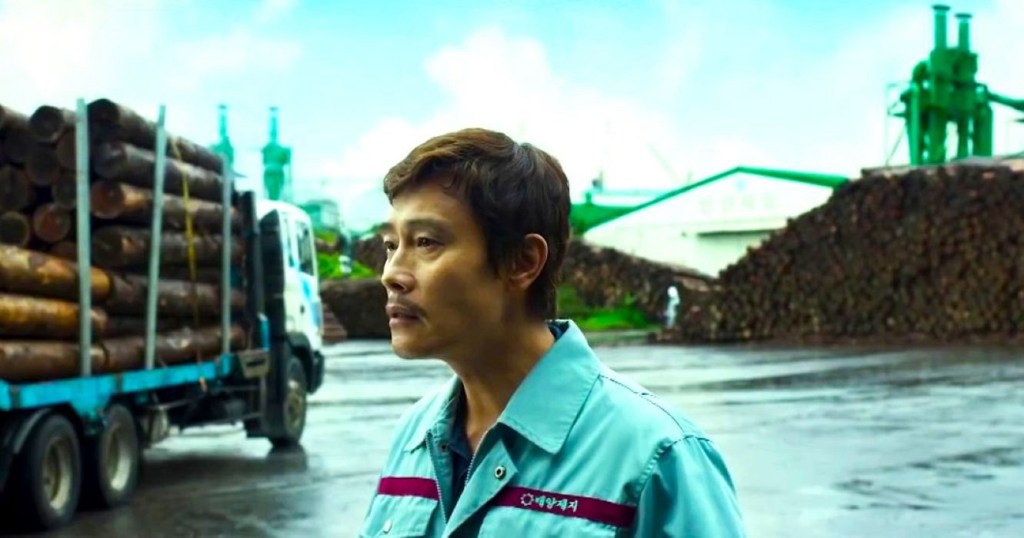
The film also touches on traditional family expectations, particularly the pressure placed on men to be primary providers. Man-su’s inability to fulfil this role contributes to his sense of failure, while Miri’s response offers a more modern perspective. She is pragmatic, capable and willing to adapt, subverting expectations of how her character might behave. Rather than abandoning her husband, she steps up, providing stability in contrast to Man-su’s increasingly erratic decisions.
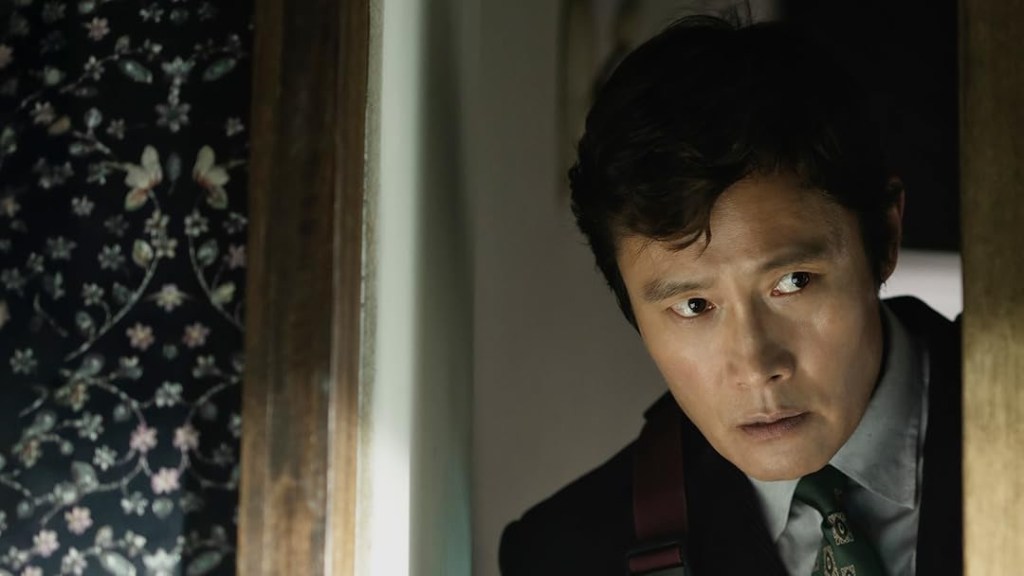
Stylistically, the film leans heavily into dark satire with elements of black comedy, drawing clear comparisons to Parasite. Themes of jealousy and social pressure further reinforce this similarity. However, while I can appreciate the intent, the tone did not fully land for me. The humour often feels uncomfortable and some of the more grotesque moments, including a particularly unpleasant scene involving teeth, detract from the experience. Man-su is portrayed as clumsy and ill-equipped for the path he takes, which may be intended to add comedic value, but these moments did not resonate as strongly as they might for other viewers.
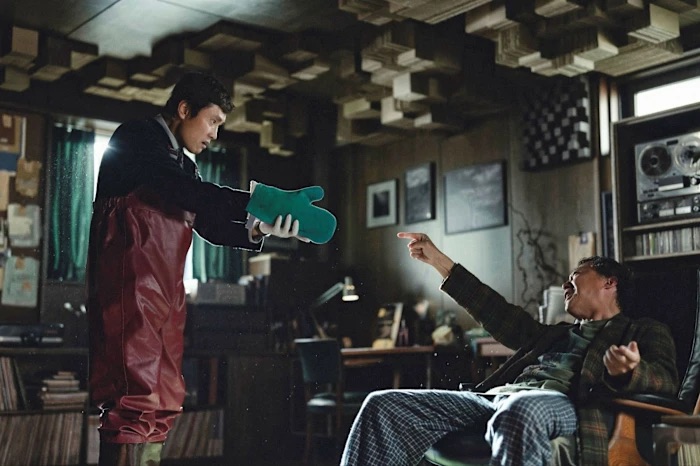
There are, however, elements of visual and symbolic storytelling that stand out. Man-su’s interest in horticulture is woven throughout the film, with early scenes showing blossom falling gently from trees in his garden. This is a possible reflection of life’s fragility and impermanence. As his situation deteriorates, this connection to nature takes on a darker tone, culminating in the use of his arborist skills in unsettling ways. Nature is key here and the film seems to invite us to consider not only the natural world around us, but also human nature itself. There is also an interesting, if underdeveloped, link between his profession in the paper industry and the film’s imagery of trees and deforestation. The closing visuals hint at a broader commentary on industry and environmental impact, though this is not explored in depth. Despite the bleak subject matter, the film is visually striking, with vibrant foliage providing a stark contrast to the darkness of the narrative.

The performances are strong throughout. Lee Byung-hun delivers a compelling portrayal of a man unravelling under pressure, demonstrating a wide range that contrasts with his more controlled role in Squid Game. Son Ye-jin’s Miri is equally engaging, offering a grounded and quietly powerful counterbalance to Man-su. Her character avoids cliché, instead presenting a nuanced and capable figure who challenges traditional expectations.
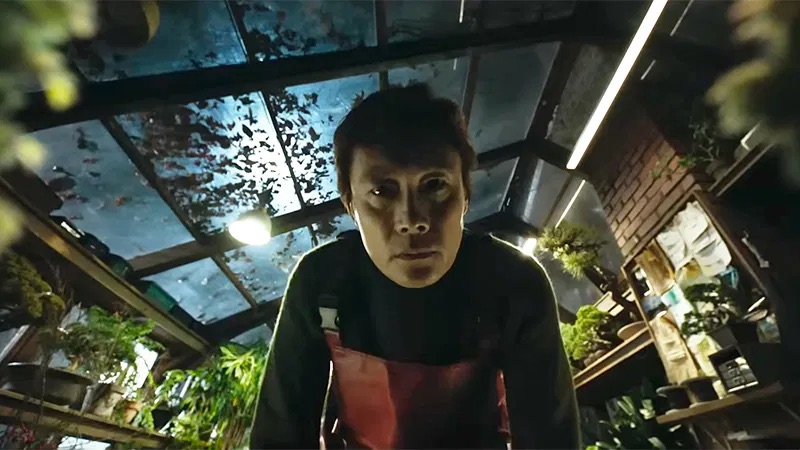
Overall, No Other Choice offers an interesting and relevant exploration of job insecurity, identity and desperation in a rapidly changing world. While its themes are compelling, the tone and pacing did not fully work for me and a tighter edit may have strengthened its impact. However, this may reflect the sense of being lost and the unplanned path Man-su finds himself on. The film is likely to resonate with audiences who appreciate darker satire in the vein of Parasite. Ultimately, No Other Choice never quite lives up to its potential.
★★½ (2.5/5)
 Rhiann’s Reels