
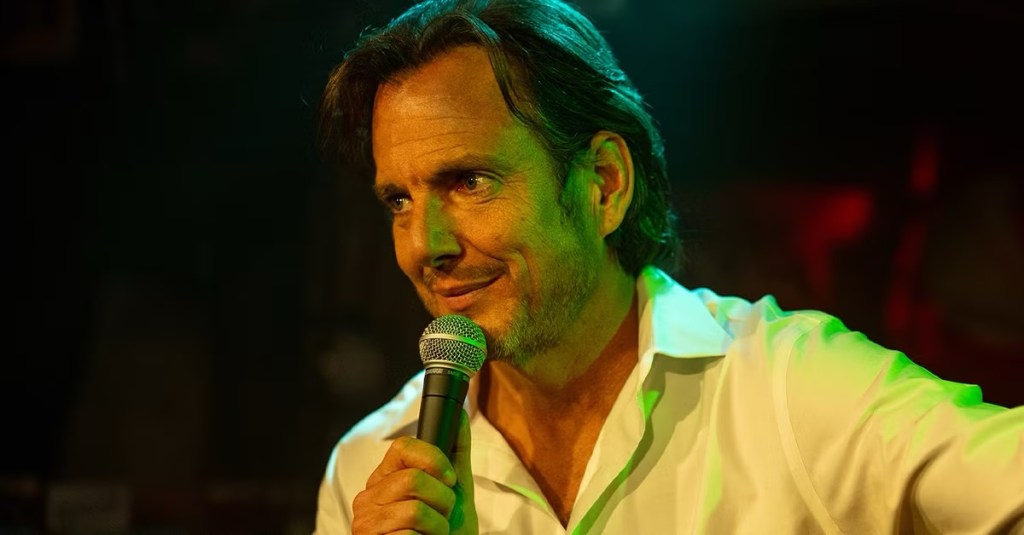
In one sentence: In Is This Thing On?, a recently separated man uses stand-up comedy as a way to rediscover meaning and gain a deeper appreciation for his life and relationships.
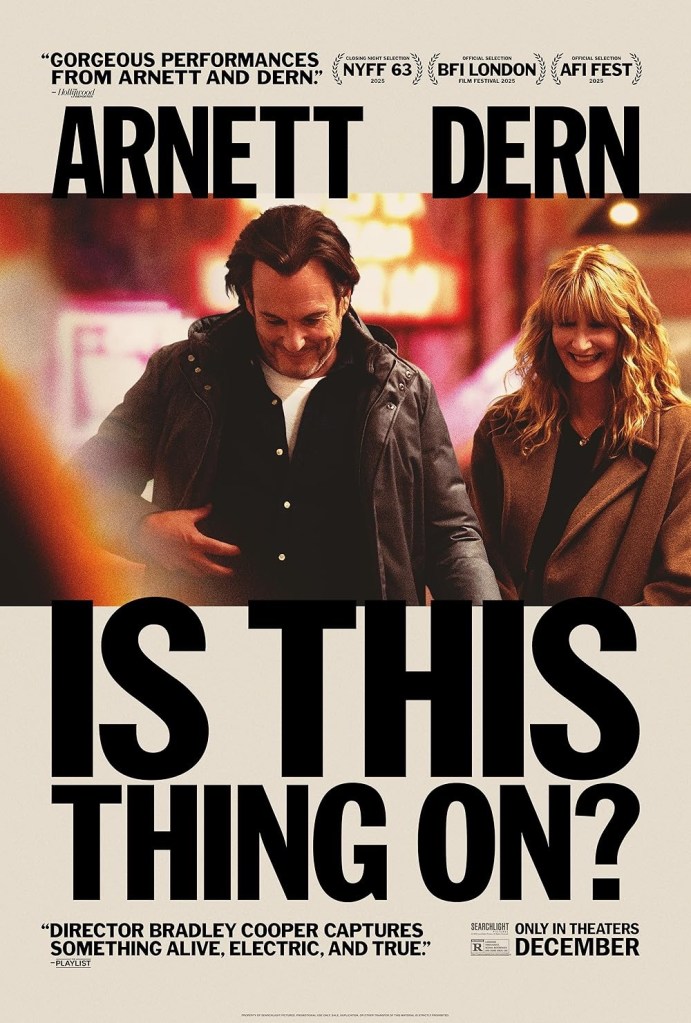
Bradley Cooper takes a very different direction from his previous directorial feature, Maestro, turning his attention to a quieter, more intimate story about reinvention, purpose and second chances. Inspired by the life of British comedian, John Bishop, Is This Thing On? blends British sensibility with Hollywood framing to explore what people need from life and themselves for relationships to truly endure.
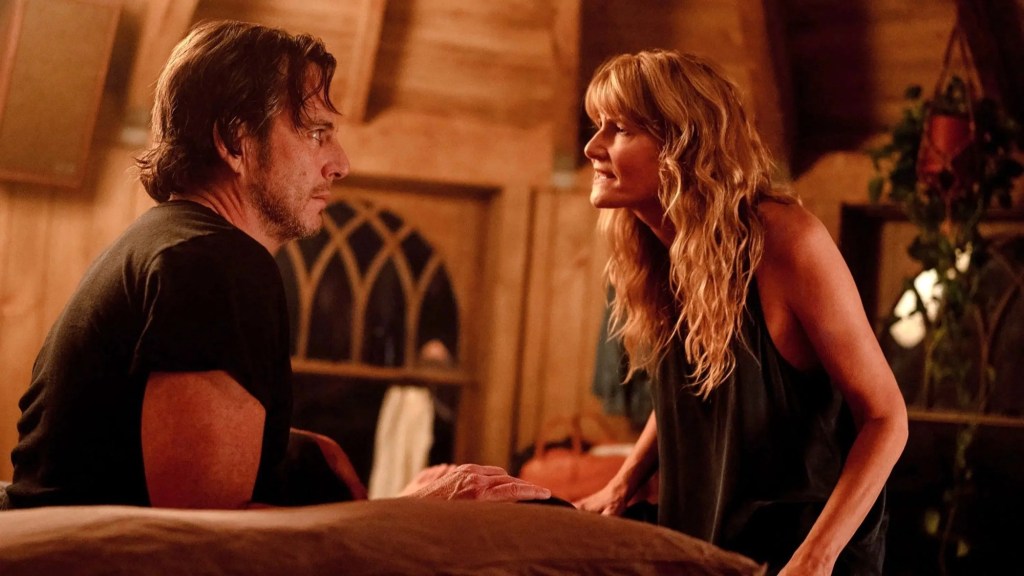
The film follows Alex Novak (Will Arnett), a man who appears quietly lost within his marriage to Tess (Laura Dern). Early on, in a moment that is both understated and decisive, Tess asks, “Shall we call it?”, signalling the end of their relationship. Alex soon finds himself living alone in an apartment, his children and two dogs visiting intermittently, but the sense of loneliness is unmistakable. One evening, he stumbles into a comedy club and for free entry, signs up to perform. His first attempt is far from polished, but it sparks something in him. What follows is a journey of self-discovery, as Alex begins to rebuild his sense of identity while still grappling with the loss of his previous life.
The film explores the idea that family alone cannot be a person’s sole purpose. In a world increasingly shaped by technology and individual focus, this message feels both timely and quietly provocative. The film suggests that personal fulfilment, through hobbies, goals and self-expression, is not selfish, but necessary. This idea is woven throughout, including in the recurring motif of a Chinese New Year celebration at Alex and Tess’ children’s school. The symbolism of the lion dance, representing renewal, wisdom and the chasing away of negative forces, mirrors Alex’s journey. Even his children recognise the importance of having goals, subtly reinforcing the film’s central theme.

Stylistically, the film takes an understated, almost indie approach. The camera often feels observational, positioned just behind the characters, as though the audience is present but never fully involved. The colour palette leans towards darker tones, occasionally interrupted by softer, sunlit moments. One particularly interesting choice is the limited use of music. Outside of key scenes, such as a group rendition of Amazing Grace and the closing use of Under Pressure, the film relies heavily on natural sound. This restraint makes the musical moments feel more intentional and thematically resonant, drawing clear parallels between the lyrics and the emotional arcs of the characters.

The pacing, however, is less consistent. The film has a tendency to meander, with several moments that feel like natural endpoints before the story continues. This lack of structural clarity makes it harder to anticipate where the narrative is heading and slightly diminishes its overall impact. This suggests that Cooper is either experimenting with his directorial voice or consciously adapting his style to suit the material, though the result may not work for all audiences.
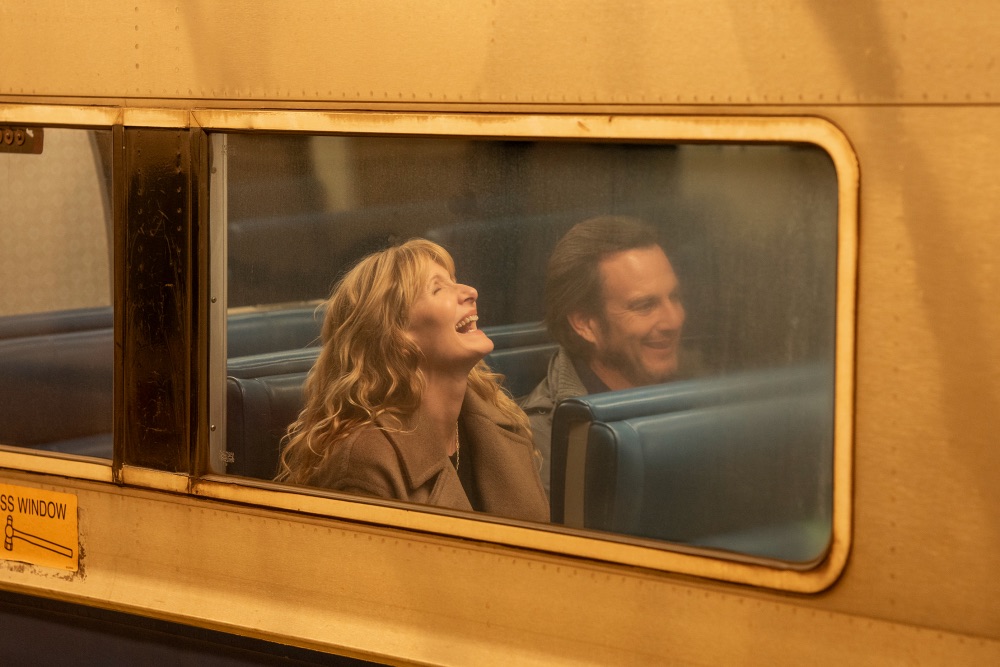
While the film draws clear inspiration from John Bishop’s life, the decision to relocate the story to the United States gives it a slightly different tone. There is a sense that the Hollywood framing adds a touch of gloss to what is, at its heart, a very grounded and relatable journey. However, there is a small nod to Bishop’s Liverpudlian background in one of Alex’s tops.
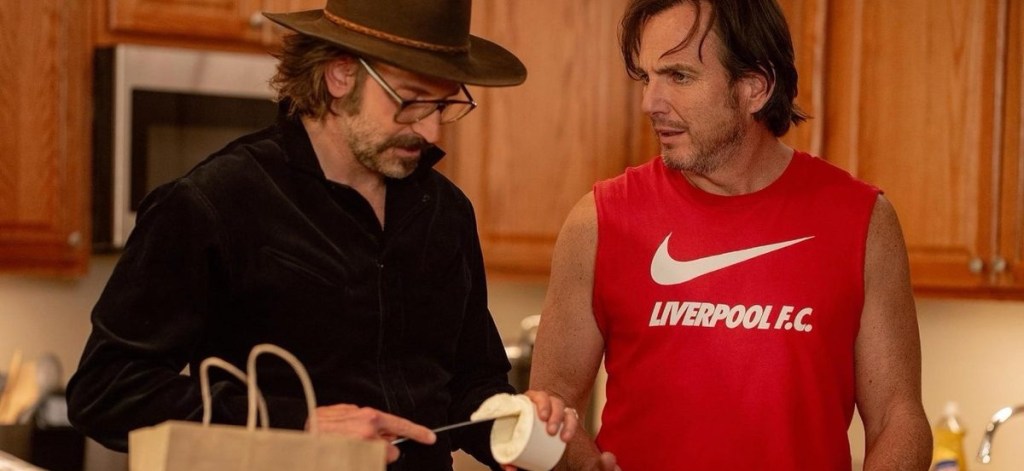
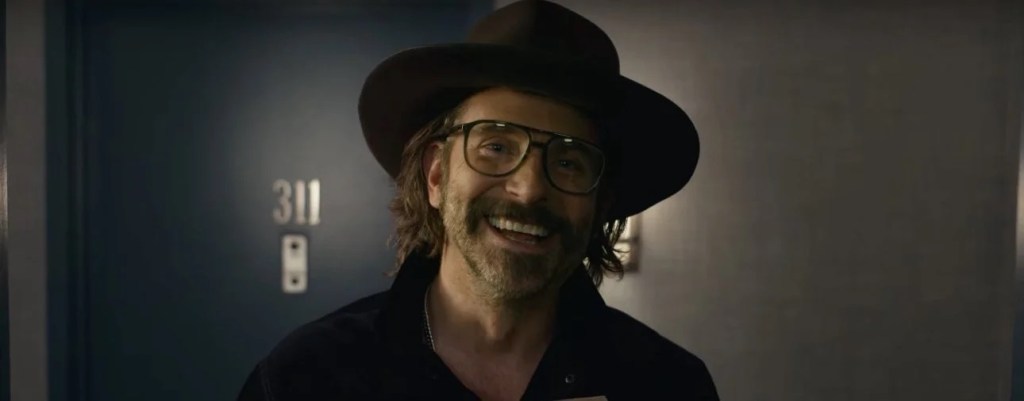
The performances are solid. Will Arnett brings a quiet vulnerability to Alex, capturing the uncertainty and hesitation of a man starting over. Laura Dern provides a grounded presence as Tess, while Ciarán Hinds, in a smaller role as Alex’s father, adds a welcome emotional depth. Bradley Cooper also appears as Balls, a somewhat eccentric figure who serves as a mirror to Alex, a narrative device that encourages reflection, even if the character occasionally feels slightly exaggerated. Sean Hayes, meanwhile, feels underused with his comedic strengths largely untapped.
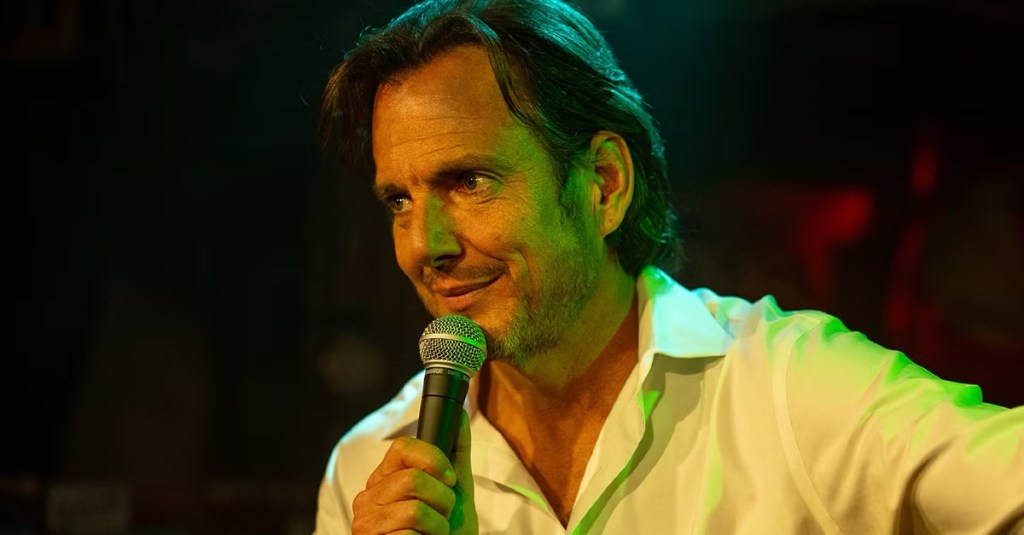
The depiction of the comedy scene is notably warm and supportive. The clubs are portrayed as inclusive spaces where performers are encouraged rather than criticised. While this may feel somewhat idealised, particularly given the mixed quality of Alex’s early sets, it reinforces the idea that he has found a sense of belonging.
Overall, Is This Thing On? is a gentle, character-driven drama that prioritises reflection over spectacle. While it may lack the structure and comedic impact some might expect, it offers a thoughtful exploration of identity, purpose and the possibility of starting again. It is not a film that aims for big laughs, but rather one that quietly suggests that fulfilment can be found in the most unexpected places. Ultimately, it shows that perspective can change everything.
★★★ (3/5)
 Rhiann’s Reels