
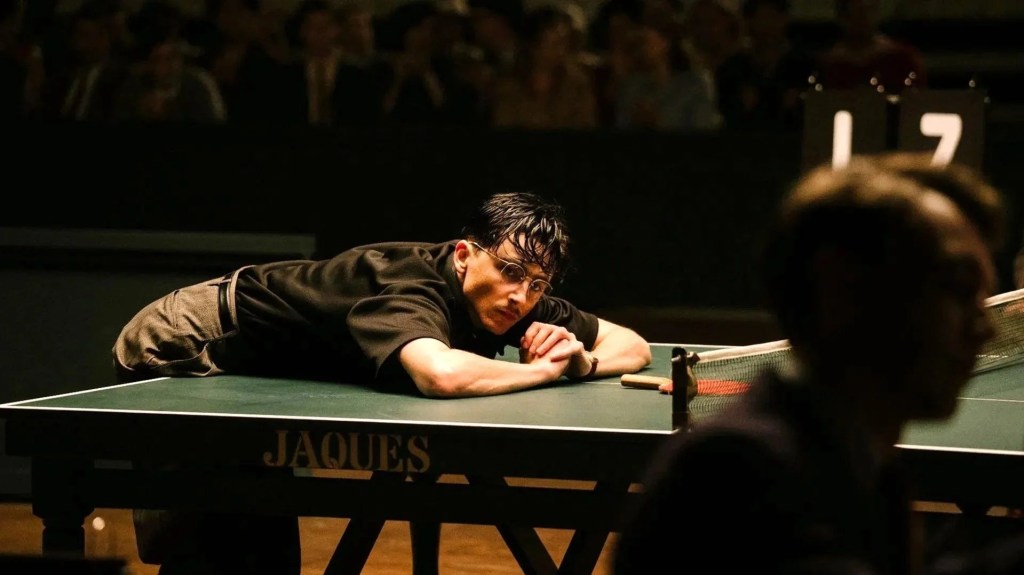
In one sentence: Marty Supreme follows a gifted but egotistical 1950s ping pong prodigy who chases international glory, only to find that his relentless ambition begins to destroy the very relationships and opportunities he believes he deserves.
Napoleon Bonaparte once said “Great ambition is the passion of a great character. Those endowed with it may perform very good or very bad acts. All depends on the principles which direct them.” This quote encapsulates Marty Supreme suits very well. It is a frenetic and chaotic character study centred on a young man whose ambition and talent are undeniable, but whose moral compass is deeply flawed. It is less a traditional sports drama and more an exploration of ego, drive and the damage left in the wake of obsessive self belief.
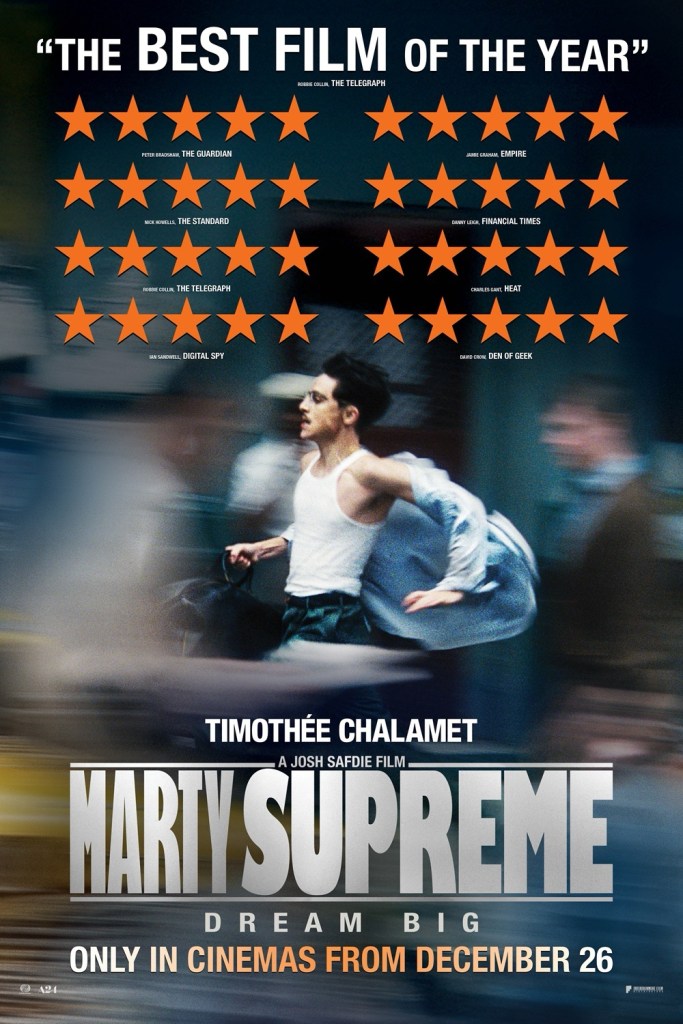
The film follows Marty Mauser (Timothée Chalamet), an American ping pong prodigy in the 1950s who begrudgingly works in his uncle’s shoe shop while saving for a trip to compete in the British Open in London. Before the title sequence even appears, Marty is shown having sex with Rachel (Odessa A’Zion) in the stock room, followed by an unexpected and almost clinical montage of sperm fertilising an egg. The message is clear that Rachel is pregnant.
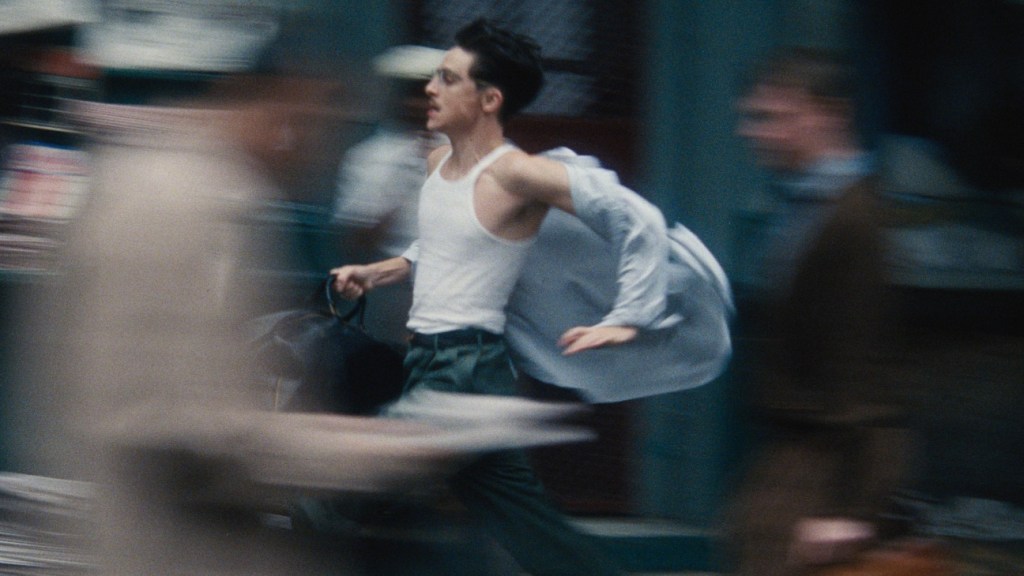
Arriving in London, Marty is stunned to discover that Japanese players are competing following the lifting of travel restrictions. His ego is on full display from the outset. He is dissatisfied with his hotel, he insists on staying at The Ritz alongside tournament officials and somehow gets his way. It is there he encounters Kay Stone (Gwyneth Paltrow), a former Hollywood actress now married to wealthy pen mogul, Milton Rockwell (Kevin O’Leary). Marty pursues her with characteristic audacity. When he ultimately loses the final to Japan’s Koto Endo (Koto Kawaguchi), it becomes the catalyst for the film’s spiralling narrative, which grows increasingly tense across its runtime.
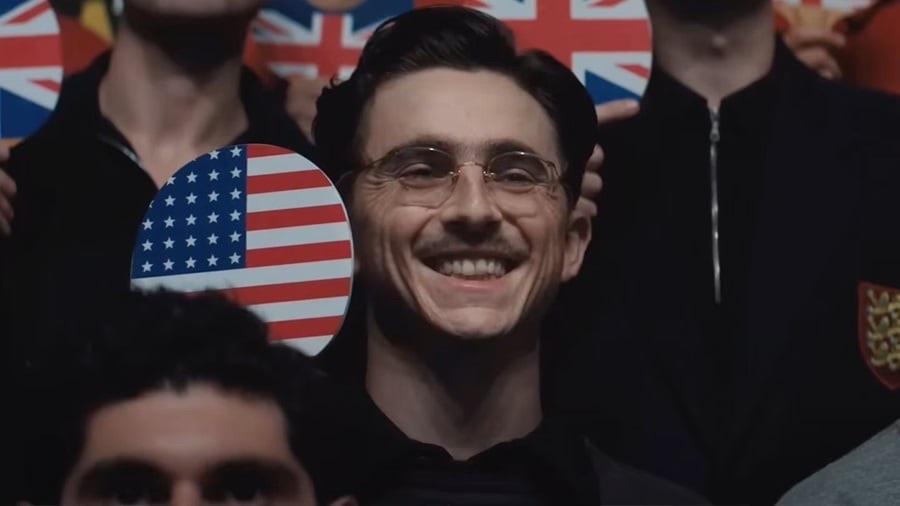
Marty himself is a deeply complex and often dislikeable protagonist. Arrogant and self assured, he initially seems far removed from the traditional underdog archetype. Yet as the film progresses, the life he believes he deserves begins slipping through his fingers and his bravado feels increasingly hollow. Just when you think he has reached rock bottom, he falls further, culminating in a humiliating scene involving a ping pong paddle that strips away any remaining dignity. Marty will sacrifice almost anything in pursuit of success, stepping over family, friends and colleagues alike. We learn of his adoption and modest upbringing, which perhaps fuels his relentless hunger, but his tenacity frequently curdles into something unpalatable. This is not a character you are meant to root for conventionally. Director Josh Safdie and Chalamet clearly lean into this discomfort. There are fleeting glimpses of warmth and vulnerability, but they are quickly extinguished by greed, ego and tunnel vision. The ending feels apt precisely because it forces Marty to confront a world that is no longer solely about him.
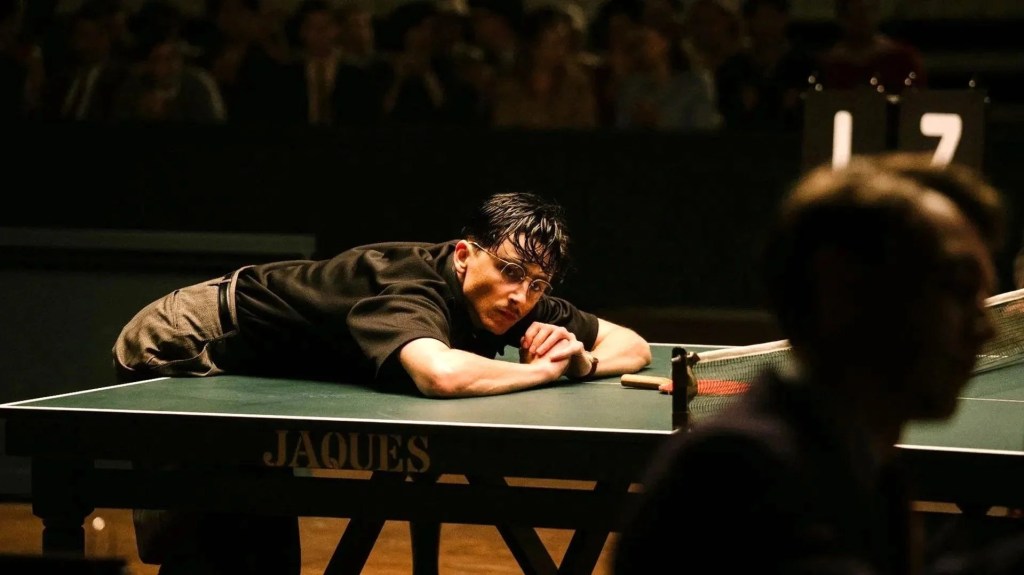
While Marty Supreme could be categorised as a sports drama, sport feels more like a backdrop than the emotional core. There is plenty of ping pong on display, but the film functions primarily as a character study of ambition. At times, the narrative feels scattered, jumping between episodes without always clarifying what we are meant to take from them. The subplot involving Ezra and his mistreated dog is particularly difficult to watch. As a dog lover, I found these scenes uncomfortable, even if they are clearly designed to underline Marty’s moral decline and the collateral damage of obsessive ambition. Arguably, some of these moments could have been trimmed to create a sharper, more focused film.
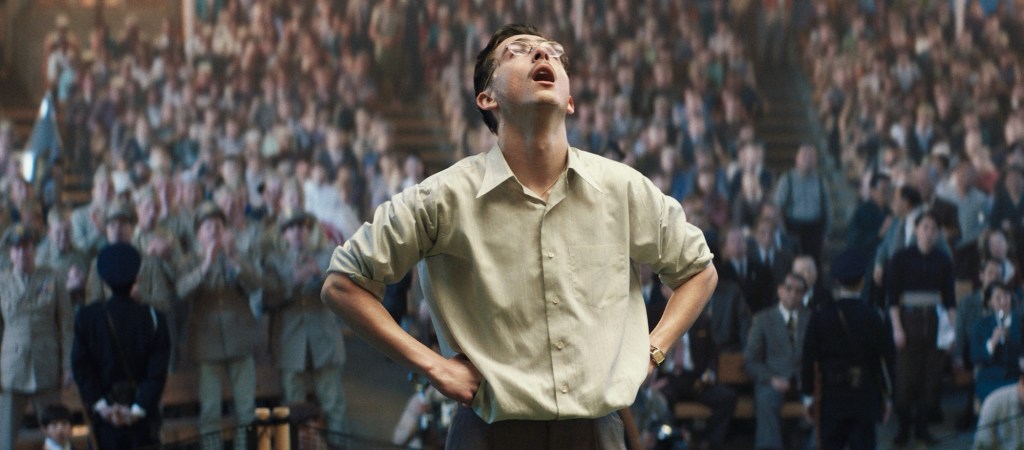
Visually, the cinematography leans heavily into a grey-blue palette, reinforcing the bleakness of Marty’s world. His surroundings feel cold, suppressive and slightly grimy, which is in stark contrast to the warmer, more opulent tones that surround Kay. The aesthetic sits comfortably within the A24 catalogue, aligning with films such as A Different Man and Bodies Bodies Bodies. The soundtrack also makes unexpected choices, bookending the film with Tears for Fears’ Change and Alphaville’s Forever Young, songs that do not belong to the era in which the film is set. These anachronistic selections subtly suggest that the themes of ambition and self destruction transcend time.

The film also engages with the myth of the ‘American Dream’. Marty’s journey suggests that success is neither guaranteed nor cleanly earned. Obstacles appear at every turn, some self inflicted, others circumstantial. Ego proves self destructive and masculinity is interrogated in interesting ways. Marty is physically slight, with bad skin and a monobrow, traits explicitly referenced within the film. Yet he carries himself with cocky confidence. Beneath the bravado, however, lies fragility. It is a compelling portrayal of masculinity teetering between insecurity and entitlement.

Overall, Marty Supreme is a chaotic yet compelling exploration of ambition pushed to its limits. It may feel overlong and occasionally unfocused, but its frenetic energy and Chalamet’s fearless performance make it a worthwhile watch. Some viewers will find its moral murkiness frustrating whilst others may appreciate its unflinching portrayal of a man consumed by his own drive.
★★★½ (3.5/5)
 Rhiann’s Reels