
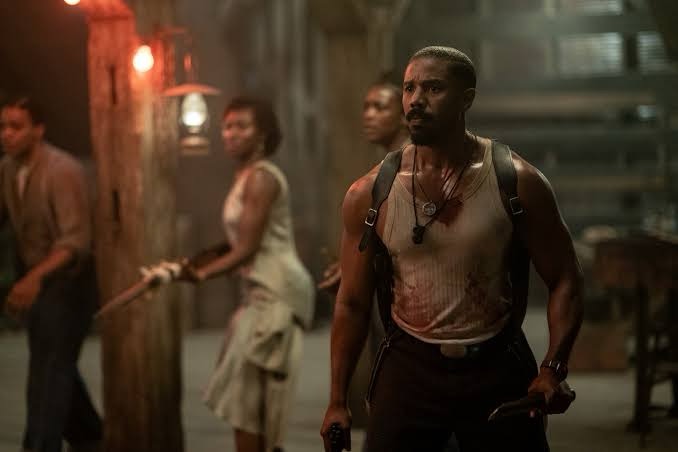
In one sentence: Sinners follows twin brothers who return to 1930s Mississippi to open a blues bar, only to find themselves trapped overnight when a group of vampires seek entry, turning a place of refuge into a desperate fight for survival.
It is not often that a horror film performs strongly at the Oscars, let alone earns a record breaking sixteen nominations. Having watched Sinners previously, I have returned to it in the run up to the Academy Awards to understand why it has resonated so powerfully with critics and audiences alike. The answer, in my view, lies in the fact that this is not a horror designed to make you jump out of your seat, it is one intended to provoke thought.
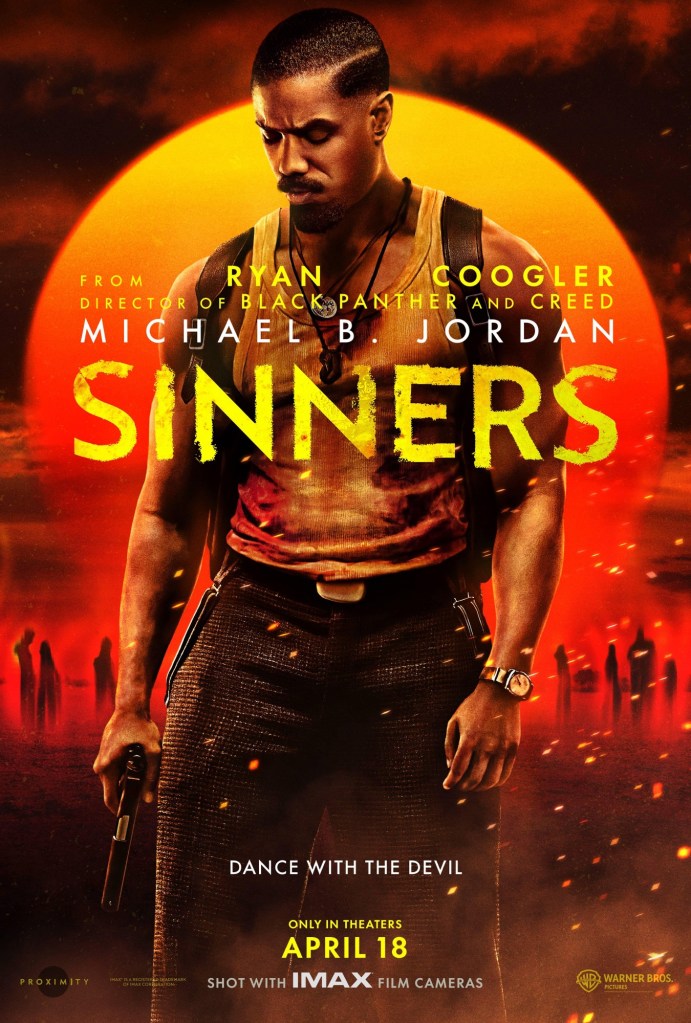
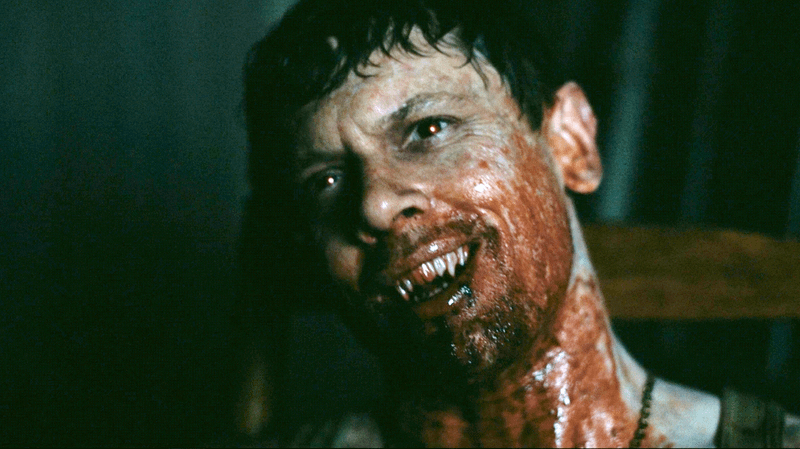
Ryan Coogler’s film is set in 1930s Mississippi during the Jim Crow era and follows twin brothers, Smoke and Stack (both played by Michael B. Jordan), who return home to open a blues bar for their local community. Their dream is short-lived when a group of vampires, led by Remmick (Jack O’Connell), are attracted by the blues music and arrive seeking entry. Bound by vampire lore, they cannot enter without invitation and attempt to gain access through charm, manipulation and even Irish folk singing. Inevitably, the evening descends into a tense fight for survival.
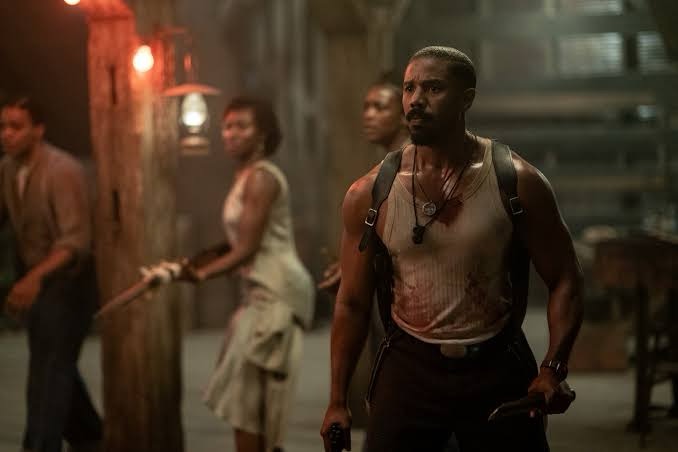
Race relations form an essential backdrop to the story, with the vampires functioning as manifestations of collective trauma, violence and exploitation. While early vampire cinema, most notably Nosferatu, used the creature to reflect post-World War I trauma, Sinners embraces a far more visceral approach. The film is unapologetically gory, its bloodshed underscoring both the brutality of the period and modern audiences’ increased tolerance for on-screen violence. The invitation motif becomes particularly significant as the bar represents a rare sanctuary where the community can exist freely and the moment that boundary is breached signals the collapse of safety itself. By presenting vampires in human form, the film underscores that the greatest horrors are not inflicted by monsters, but by people.
Music plays a central role, grounding the film firmly in its setting while serving as a narrative engine. The blues performances radiate warmth, resilience and cultural identity, while the Irish folk music introduces an eerie contrast. Whether intentional or not, the Irish connection may even nod to Bram Stoker’s heritage. Music is not merely atmospheric here. It shapes character, community and ultimately the film’s climax. Miles Caton’s performance is particularly striking. His voice is rich and soulful and it is remarkable to find out he learned guitar specifically for the role.
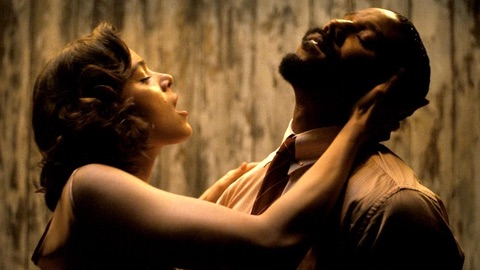
The performances across the ensemble are consistently strong. The film invests considerable time in character development before unleashing its horror elements, allowing the audience to form attachments. For me, the first half lingers slightly too long, but the slower pacing pays dividends once the tension escalates. Michael B. Jordan delivers an impressive dual performance, creating two convincingly distinct personalities while introducing an uncanny doppelgänger element that complements the supernatural themes. Jack O’Connell is compelling as a menacing villain. Despite the sizeable cast, the film never feels overcrowded , though as with many vampire stories, not everyone survives long enough to leave a lasting impression.
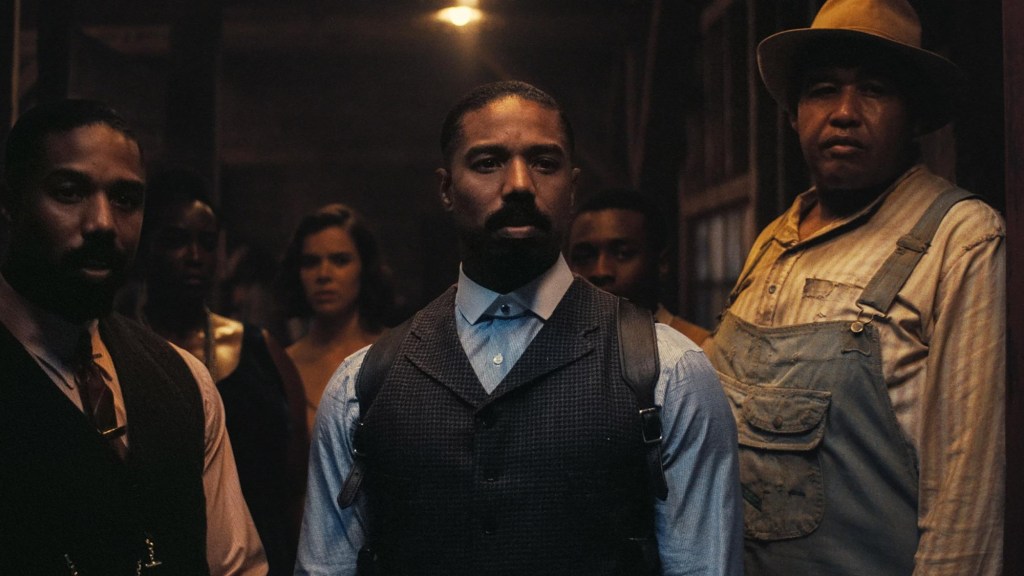
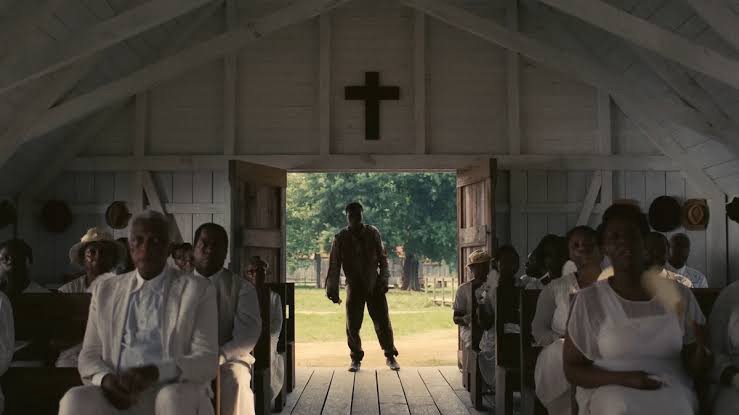
Religious symbolism also runs throughout the film. The title itself invites reflection, while traditional vampire lore, including the protective power of the cross, reinforces the spiritual dimension. Sammie’s church scenes further emphasise this tension between faith, survival and moral judgement. Ultimately, the question of who the true sinners are becomes deeply tied to the historical context and the film’s broader commentary.
Although undeniably violent, Sinners is not primarily frightening in the conventional sense. Its horror lies more in what it represents than in what it shows. This depth likely explains its success during awards season. Beneath the blood and spectacle lies a film that engages with history, trauma and identity, encouraging audiences not just to react, but to reflect.
★★★★ (4/5)
 Rhiann’s Reels