
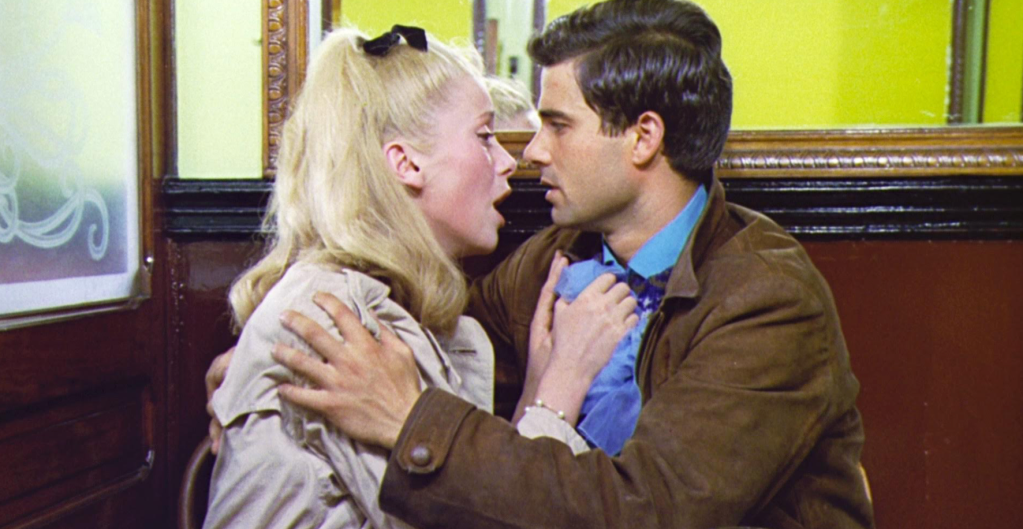
In one sentence: A pair of young lovers are separated by war and circumstance, discovering that first love does not always survive the realities of adulthood.
Few films suit a grey, rain-soaked day quite like The Umbrellas of Cherbourg. With its constant drizzle, luminous colours and one of cinema’s most beautiful soundtracks, this 1960s classic feels less like a film you watch and more like one you sink into. It is a gentle cinematic downpour that washes over you and leaves you completely drenched in emotion.
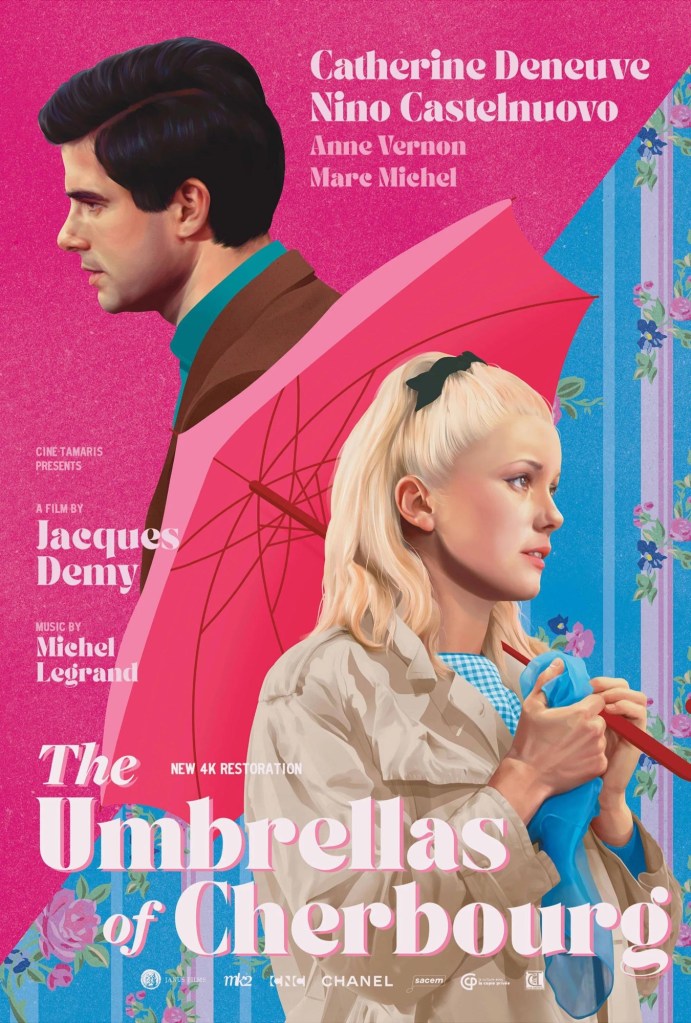
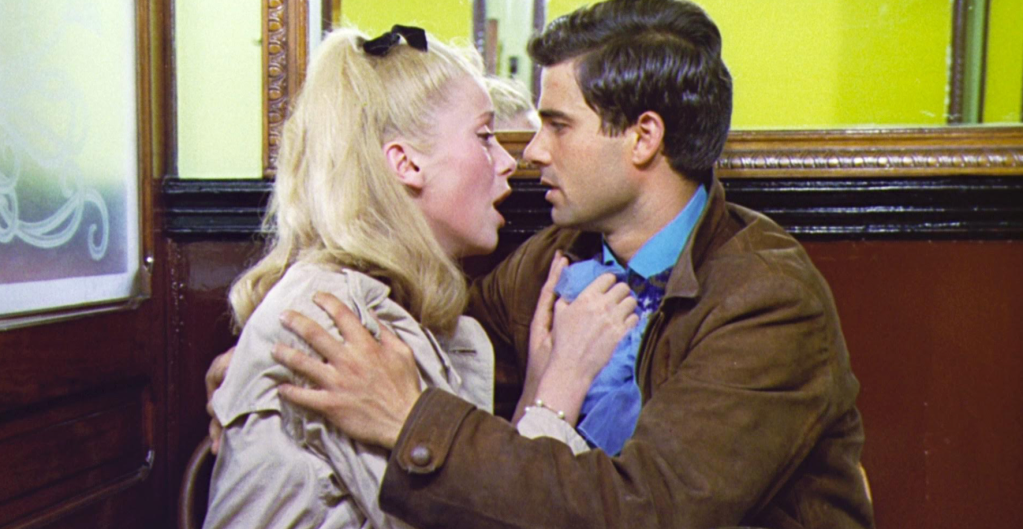
Jacques Demy’s film tells the story of Geneviève (Catherine Deneuve) and Guy (Nino Castelnuovo), two young lovers who want nothing more than to be together. Geneviève’s mother, Madame Emery (Anne Vernon), disapproves of Guy, a mechanic who lives with his ailing aunt, hoping instead for a more secure match for her daughter and someone who might help rescue her struggling umbrella shop. Her preferred suitor is the wealthy jeweller Roland Cassard (Marc Michel), but teenage Geneviève is determined to follow her heart. On the eve of Guy’s departure to fight in Algeria, the couple consummate their love and Geneviève soon discovers she is pregnant, setting in motion a quietly devastating romantic tragedy that hangs over the film like a gathering storm cloud.
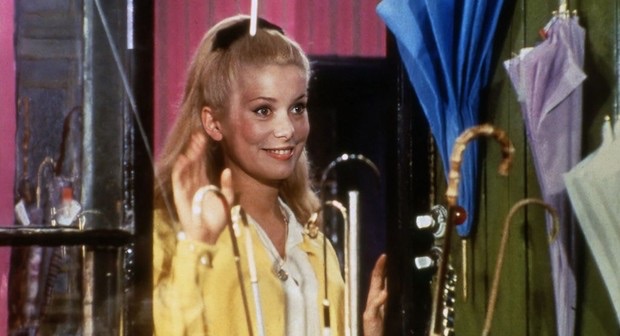
The film is entirely sung with every line delivered through music in a style closer to opera than to a conventional musical. This unusual approach may initially surprise audiences, especially as there are no spoken interludes, but it creates a seamless emotional flow. While subtle nuances of speech can occasionally be lost, they are more than compensated for by Michel Legrand’s extraordinary score, which pours feeling into every scene. The film won the Palme d’Or at Cannes in 1964 and Legrand’s music received an Academy Award nomination. Even those unfamiliar with the film will likely recognise its melodies. Interestingly, much of the singing is dubbed, something that might normally feel jarring, but here the performances remain convincing and emotionally resonant.
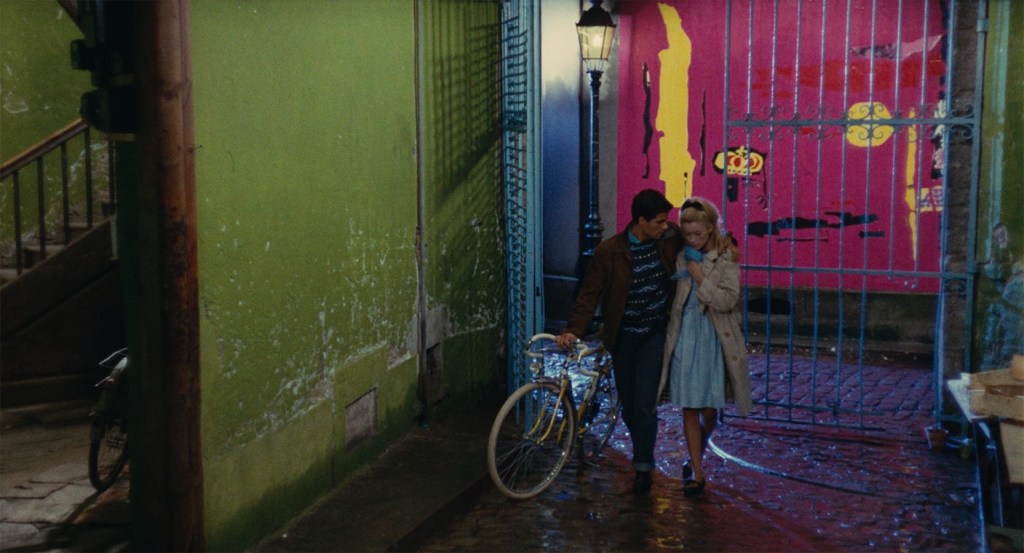
Colour and costume are central to the film’s identity. Against the persistent rain, the palette consists of pastels and vibrant tones that brighten even the greyest skies. Many costumes were created by Chanel and Catherine Deneuve looks breathtaking throughout; her coats and wedding dress in particular are unforgettable. It is easy to see why this film propelled her to international stardom.
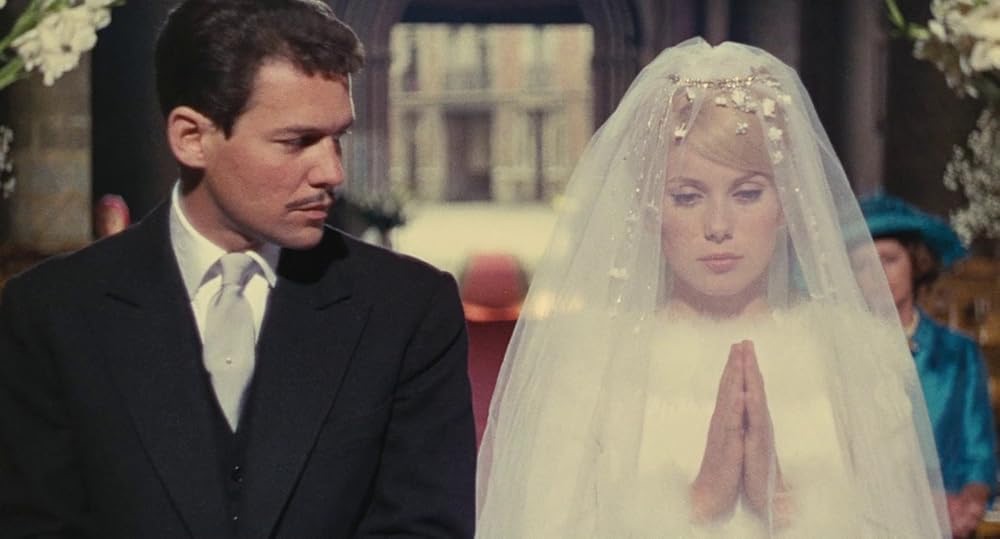
Beneath its dazzling surface, the film explores themes of young love confronted by harsh reality. War, financial pressure and family expectations gradually erode the romantic idealism that initially defines Geneviève and Guy’s relationship. Time passes, people change and practical decisions begin to outweigh emotional ones. There is a persistent sense of longing for what might have been that lingers like the last drops of rain after a storm. Despite its vibrant visuals, the overall tone is deeply melancholic, hinted at from the outset by the opening image of dark umbrellas beneath the rain. This is not a musical filled with sunshine and spectacle, but one that embraces the beauty of heartbreak and the inevitability of emotional weather.
Overall, The Umbrellas of Cherbourg is a stunning piece of cinema that showcases French style at its most refined in fashion, design and music alike. It offers a distinctly European perspective on romance, it is tender, unsentimental and quietly realistic. Its haunting score and poignant story ensure it will continue to pour into the hearts of audiences for generations, making it the perfect film for a rainy day.
★★★★★ (5/5)
 Rhiann’s Reels