
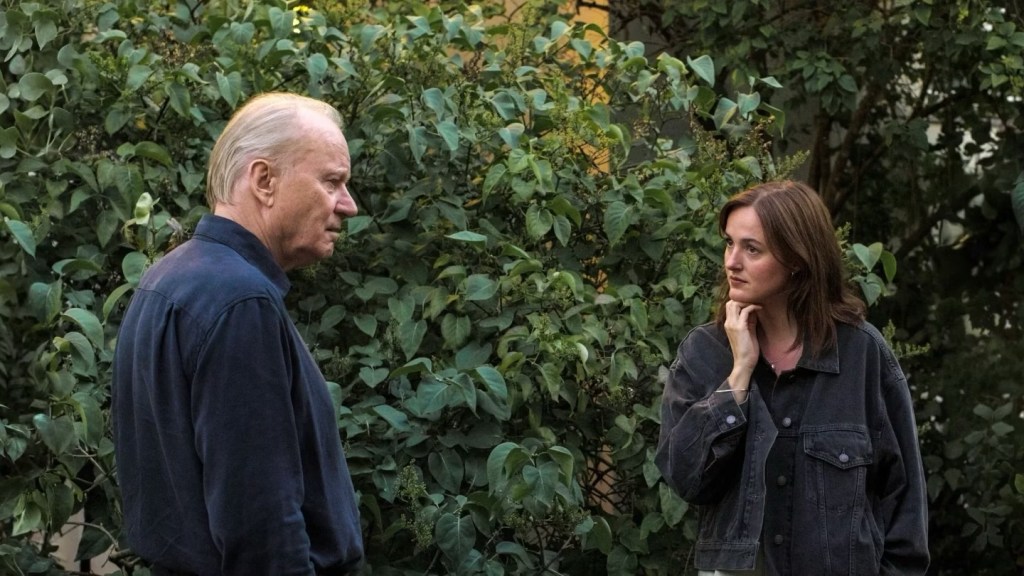
In one sentence: Sentimental Value follows a troubled theatre actress forced to confront her past when her estranged filmmaker father returns home with a deeply personal script that reopens old wounds.
Joachim Trier joins forces with Renate Reinsve once again after The Worst Person in the World in another gentle but powerful film about relationship dynamics, this time focusing on family and the long shadow childhood can cast over adulthood.
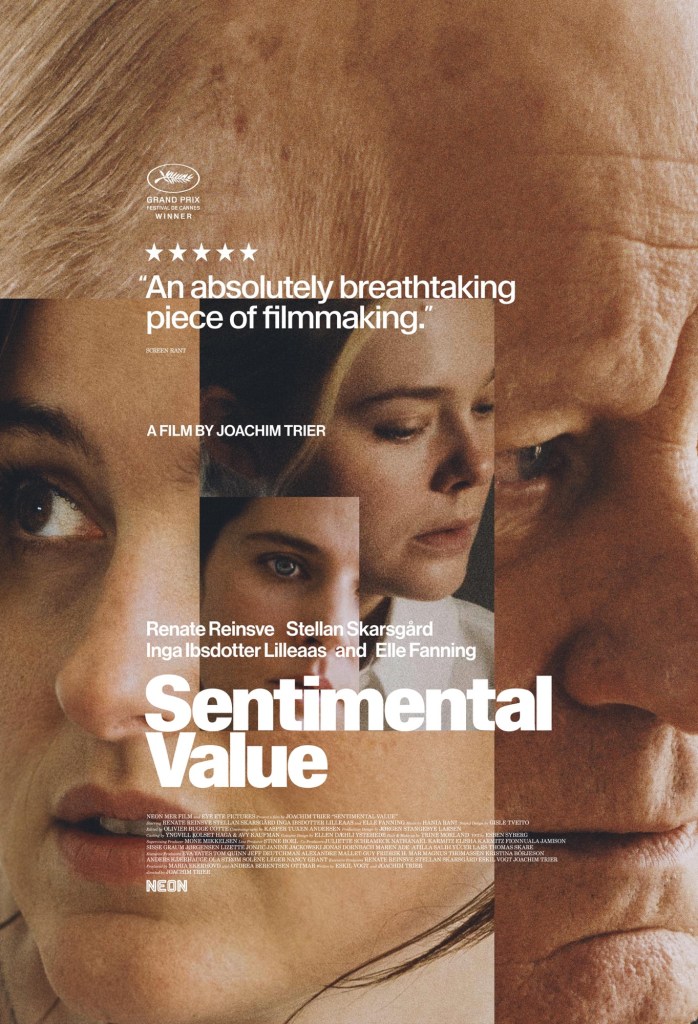
Sentimental Value follows theatre actress Nora Borg who, although incredibly talented, is clearly suffering. She experiences panic attacks and is engaged in an affair with a married man (played by her The Worst Person in the World co-star Anders Danielsen Lie). It soon becomes clear that her turbulent upbringing is at the heart of her struggles. Her famous director father, Gustav (Stellan Skarsgård), abandoned Nora and her sister Agnes (Inga Ibsdotter Lilleaas) when they were young and following their mother’s death, he returns with a script he believes to be his finest work. He wants Nora to play the lead role, but she refuses, prompting him to cast famous American actress, Rachel Kemp (Elle Fanning), instead. This decision becomes the catalyst for a quietly devastating exploration of family wounds, unresolved grief and the lingering impact of Gustav’s own mother’s suicide when he was a boy.
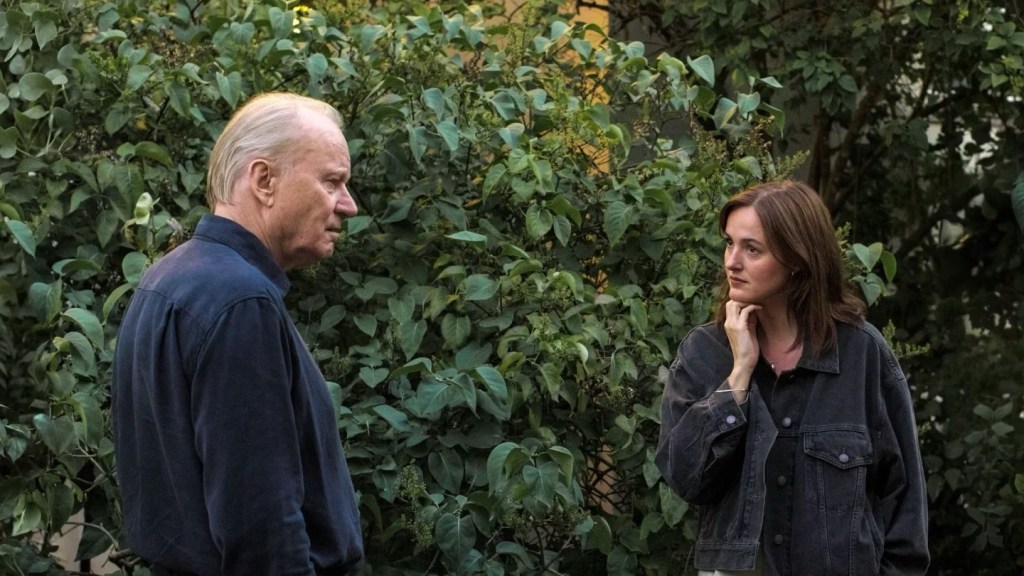
The film is beautifully acted with a striking sense of restraint. This restraint becomes especially noticeable in scenes with Elle Fanning, whose luminous presence contrasts sharply with the melancholy of the Nordic characters. The Borg family carry the weight of years of unresolved conflict, visible in their posture, their silences and even the way they breathe. Renate Reinsve delivers a superb performance as a woman unable to outgrow the emotional damage of her childhood. Lilleaas plays Agnes with grounded authenticity and the sisters’ relationship feels painfully real. It is strained yet undeniably bonded. Skarsgård is typically excellent as Gustav, portraying a man grappling with past choices, artistic relevance and trauma.

The family home becomes a character in its own right. Its unusual design and eventual transformation feel both mournful and cathartic, symbolising the family’s fractured history and tentative movement toward renewal. Giving emotional weight to an inanimate space adds a compelling dimension with the house acting as a silent witness to decades of pain and memory.
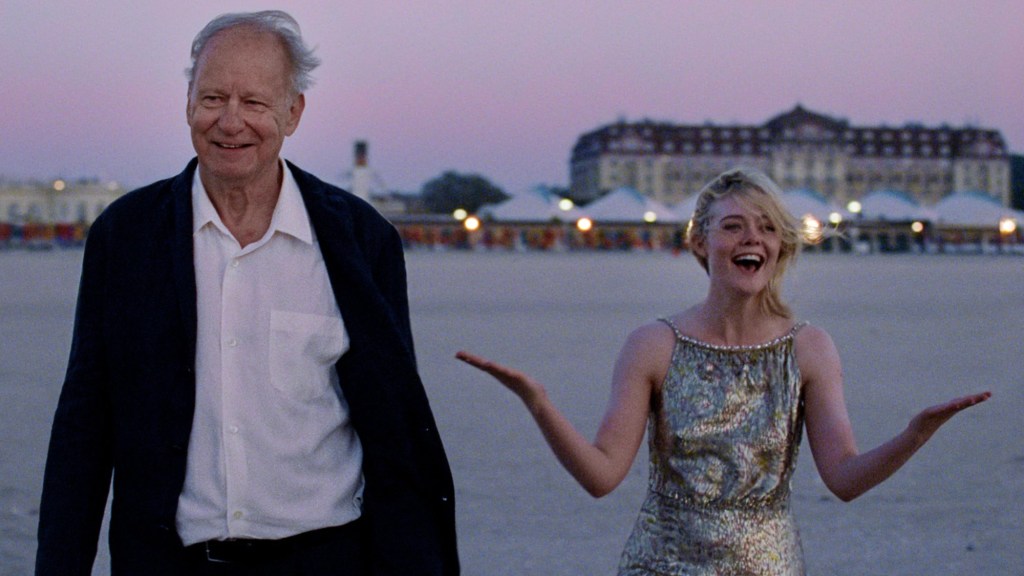
The pacing is deliberately slow and markedly anti-Hollywood and some viewers may struggle with its subtlety. However, the film gathers momentum in its final act where its emotional threads begin to coalesce. Visually, the cinematography is reminiscent of The Worst Person in the World as even under blue skies, the palette feels cool and subdued, mirroring the emotional frostiness between characters. The film also shifts between present reality and scenes from Gustav’s films, a device that is at once disorienting and illuminating, offering insight into the family’s past while blurring the boundary between art and lived experience.
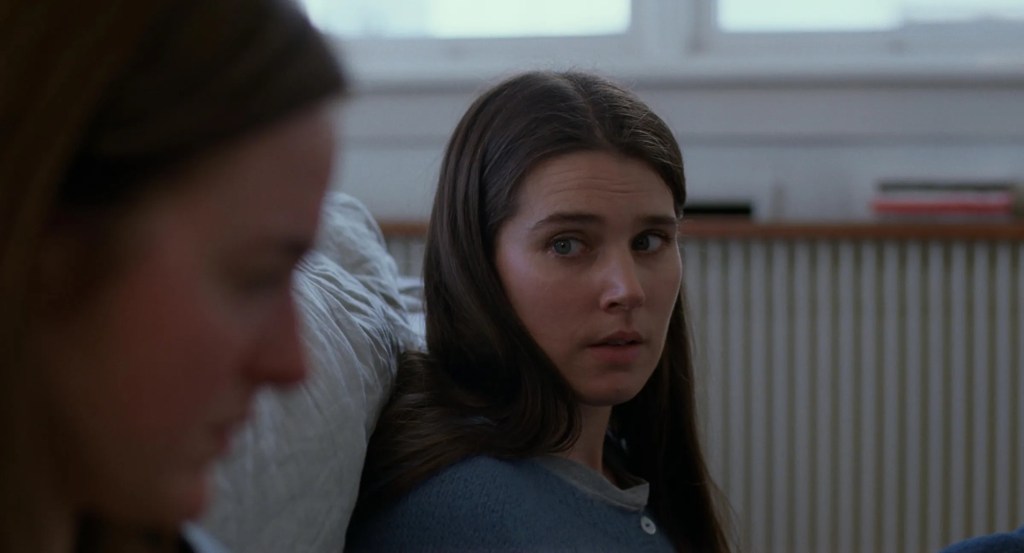
Overall, Sentimental Value is a refreshing kind of Oscar-nominated film. It is quiet, introspective and emotionally potent. It showcases many of the strengths of Nordic cinema that I greatly admire. While the pacing did not always work perfectly for me and some stylistic choices felt jarring, it remains a worthwhile watch, even if its experimental nature will not appeal to everyone.
★★★½ (3.5/5)
 Rhiann’s Reels