
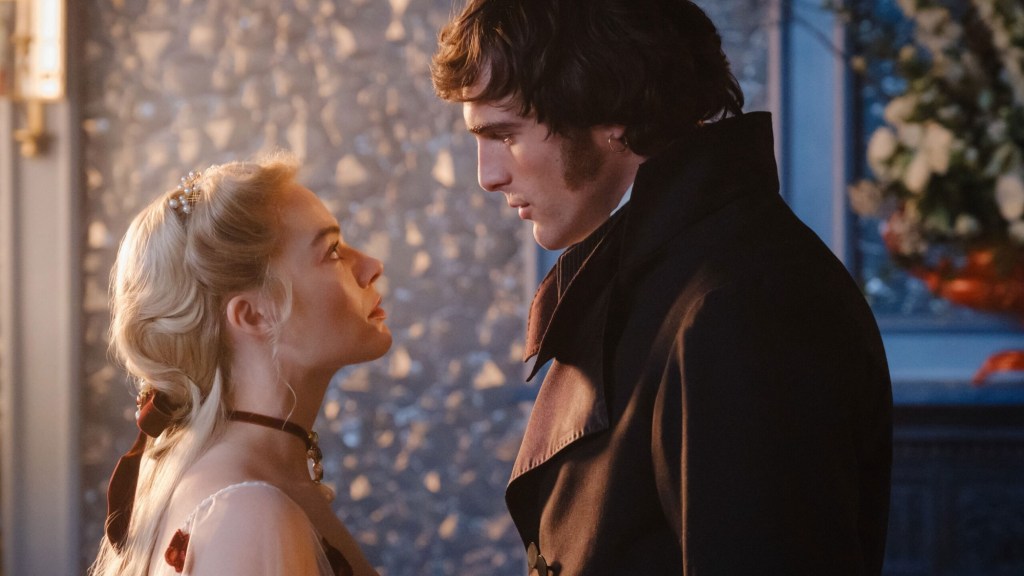
In one sentence: In Emerald Fennell’s bold reimagining of Wuthering Heights, the fierce bond between Cathy and the brooding Heathcliff is tested by ambition, betrayal and the pull of social status on the Yorkshire moors.
Emerald Fennell offers her own provocative take on Emily Brontë’s gothic classic, delivering a version that is visually bold, narratively streamlined and unmistakably stamped with her signature style.
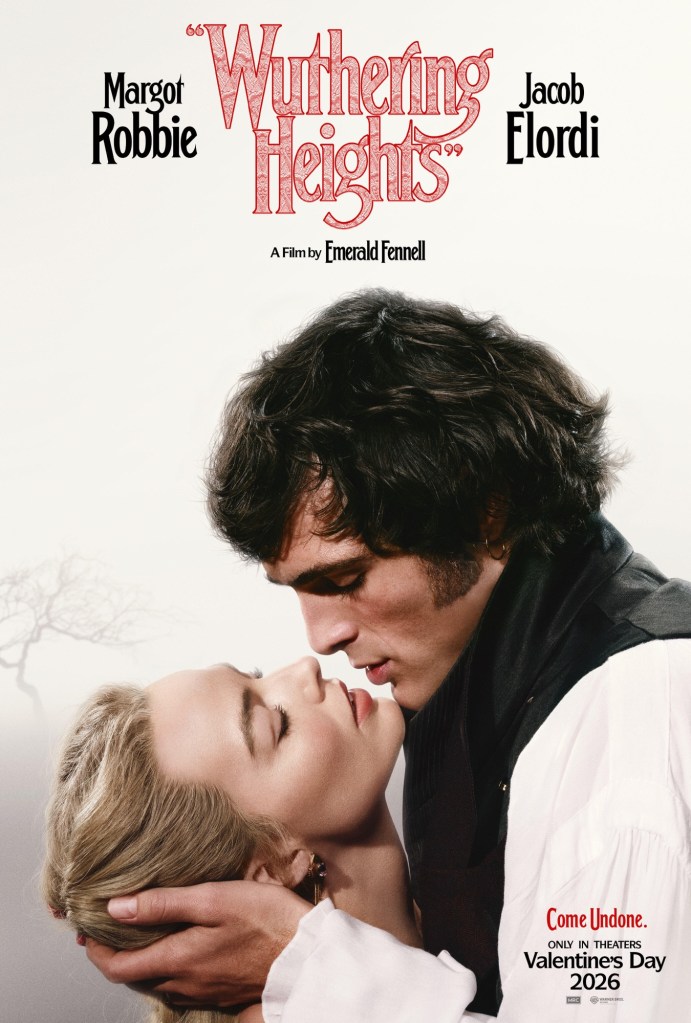
This adaptation takes considerable liberties with the source material, presenting a condensed and highly interpretive retelling. We follow young Cathy (Charlotte Mellington) and Nelly (Vy Nguyen) living at Wuthering Heights with Cathy’s volatile, drunken father, Mr. Earnshaw (Martin Clunes) on the Yorkshire moors. One day he brings home a young orphaned boy (Owen Cooper), whom Cathy names Heathcliff after her deceased brother. The two quickly form an intense and inseparable bond, with Heathcliff becoming both companion and protector against her father’s violence, while Nelly is pushed to the sidelines.

As they grow into adulthood, Cathy (Margot Robbie) and Heathcliff (Jacob Elordi) share an undeniable connection but struggle to articulate their feelings. Their relationship is passionate yet turbulent, complicated further when Cathy is seduced by the wealth and status of her new neighbour Edgar (Shazam Latif). and agrees to marry him. Heathcliff leaves Wuthering Heights the night Cathy realises the magnitude of her mistake, setting the stage for a dramatic reunion years later.

Rather than a sweeping gothic romance, Fennell delivers a version steeped in provocation. Several moments appear designed to shock rather than seduce, from the startling opening hanging to a series of overtly sexual encounters, including a masturbation scene and a lingering finger-sucking moment that emphasise both raw physicality and emotional build-up. These choices create a relationship that feels intense and volatile, as if the film is determined to challenge expectations rather than indulge in traditional romanticism.
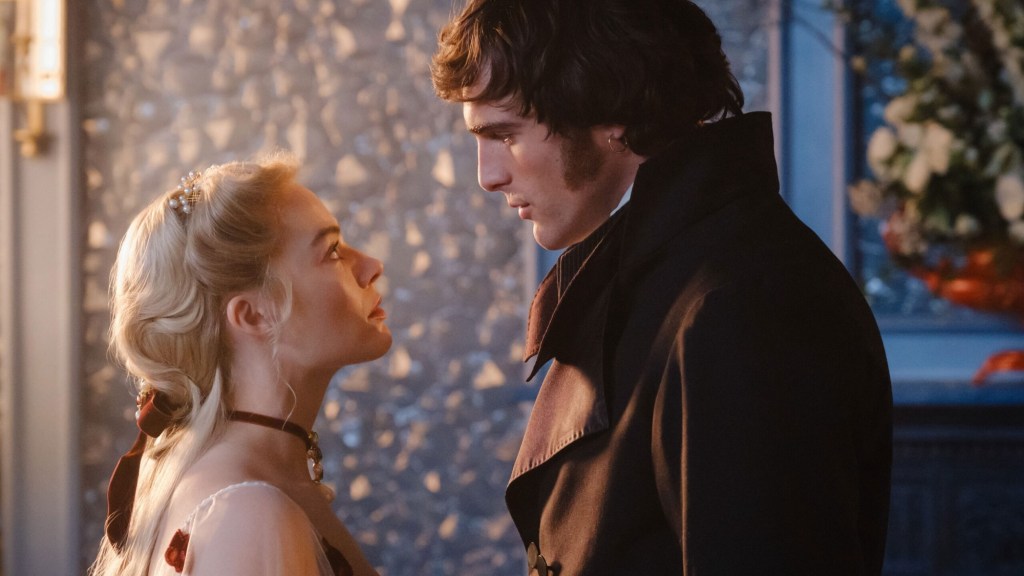
The performances vary in effectiveness. Jacob Elordi is exceptional as Heathcliff. He captures the character’s brooding intensity, physical presence and wounded vulnerability with remarkable conviction. His accent work is excellent and he brings a magnetic gravitas that anchors the film. Margot Robbie, however, feels miscast in the role of Cathy. She reads older than the character and her distinctly southern accent is not strong and undermines the film’s sense of authenticity. Perhaps Florence Pugh or Millie Bobby Brown might have made a more suitable casting choice. Paired with a portrayal of Cathy that is impulsive and selfish, the character becomes grating. Shazad Latif offers a compelling Edgar, bringing dignity and restraint, while Hong Chau delivers a strong, grounded Nelly. Isabella (Alison Oliver) is also portrayed with intriguing intensity, hinting at depths the film only partially explores.
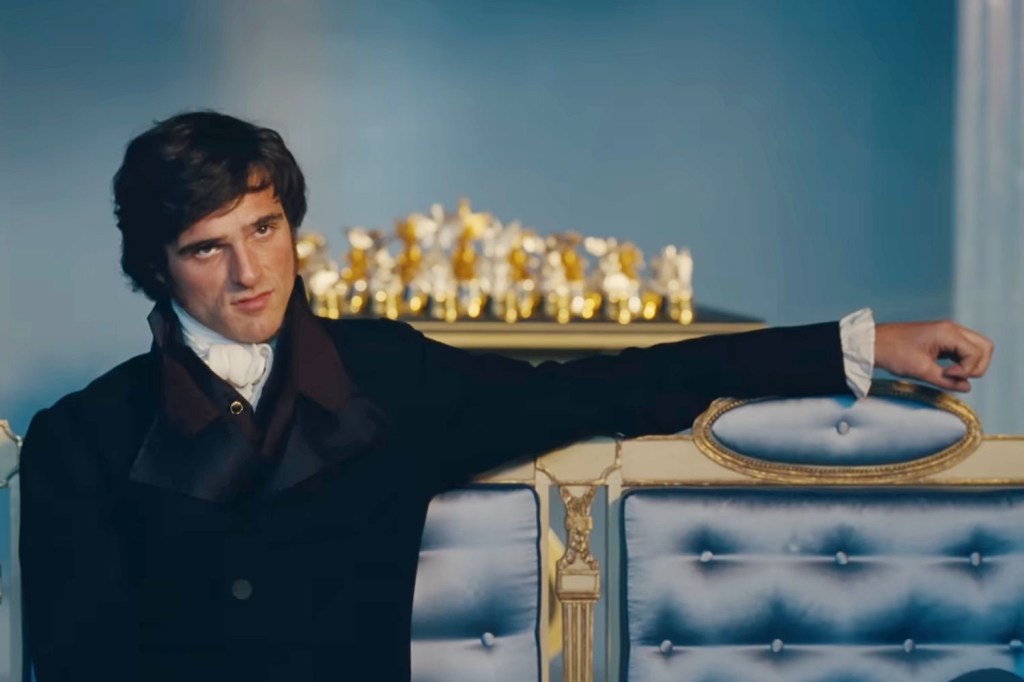
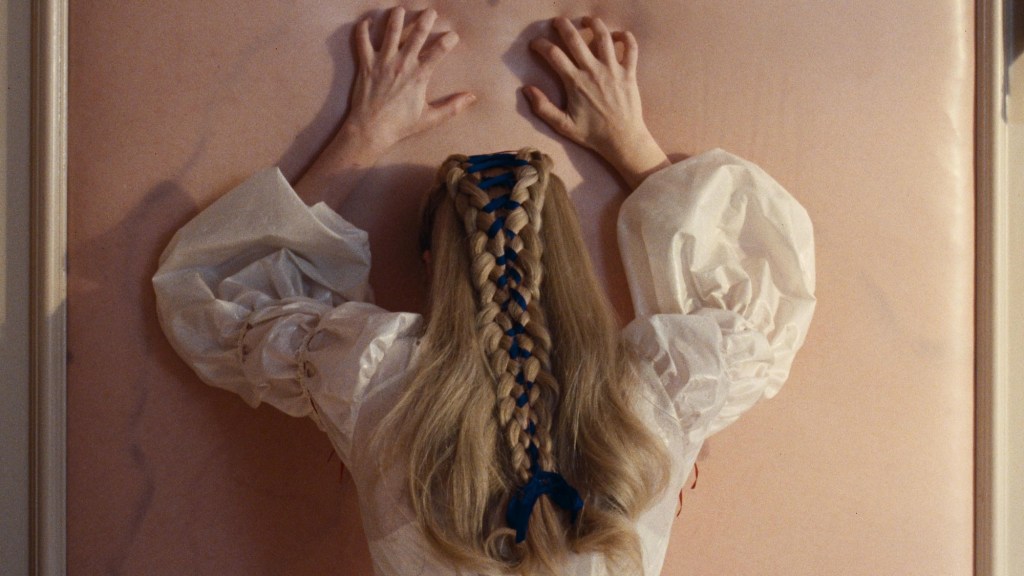
Visually, the film is striking and very deliberately stylised. Historical accuracy is secondary to atmosphere, with bold colour palettes, exaggerated interiors and theatrical production design creating an almost surreal tone. Wuthering Heights itself feels stark and cold, while Edgar’s home contrasts with a lush, dreamlike garden that borders on fantastical. The persistent use of red across costumes and decor clearly signals passion, danger and doom, reinforcing Cathy’s early suggestion that their love is destined for tragedy. Combined with plenty of rain, mist and sweeping moorland vistas, the film retains a strong gothic atmosphere despite its modern sensibilities.
Although it deviates greatly from the novel, the film remains engaging throughout its lengthy runtime. For viewers who do not typically gravitate toward period dramas, it still offers enough emotional intensity and visual spectacle to sustain interest. Ultimately, Jacob Elordi’s performance is the film’s greatest strength. Without his commanding presence, the adaptation would have felt hollow. While imperfect and occasionally indulgent, it succeeds in creating a memorable, if divisive, interpretation of a beloved classic.
★★★★ (4/5)
 Rhiann’s Reels