
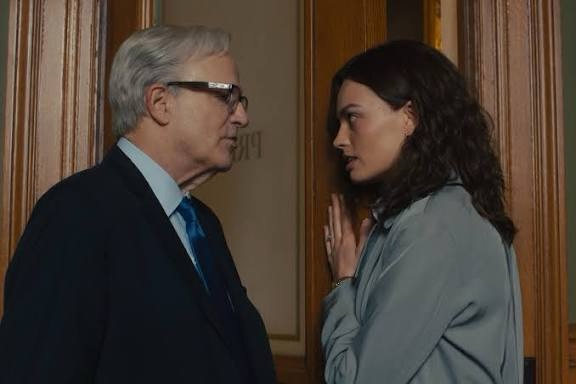
In one sentence: Thrust into leadership by circumstance, Ella McCay struggles to balance public responsibility with private chaos as everything threatens to collapse at once.
Some films try to balance ambition, emotion and quirk in equal measure, but Ella McCay struggles under the weight of its own intentions. What aims to be a warm, character led dramedy instead becomes a crowded and confused portrait of a woman pulled in too many directions at once.
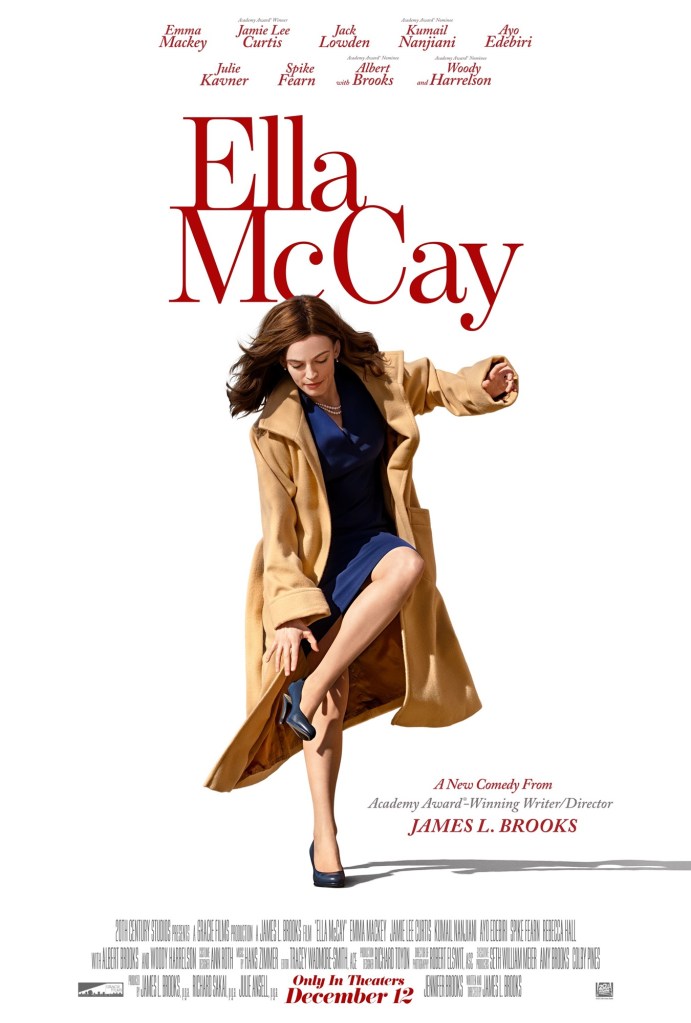
Ella McCay tells a rather complicated story of a young woman, Ella (Emma Mackey), who becomes governor of her state by default, triggering a scandal that quickly threatens to overshadow her work. Ella’s personal life is no less chaotic. she has a philandering father (Woody Harrelson), a flamboyant and volatile aunt (Jamie Lee Curtis), an agoraphobic brother (Spike Fearn), and a passive, emotionally draining husband (Jack Lowden) who seems more like a burden than a partner. Ella is deeply passionate about helping her community, but the film repeatedly asks whether she will even be given the space to do so before her private life implodes under public scrutiny.

The marketing frames Ella McCay as a quirky, 90s style dramedy, but with its sprawling cast and overlapping storylines, the film feels oddly dated and unfocused. In a contemporary political climate where far greater scandals barely register, Ella’s central controversy feels surprisingly minor. She is earnest and idealistic, yet oddly incapable of navigating the social manoeuvring required of her role, making her seem ill-suited for a world where persuasion and compromise are essential. This is highlighted by her relationship and contrast with the departing governor (Albert Brooks). Alongside her political storyline, the film piles on family drama and workplace dynamics, but none of these threads are explored with enough depth. Characters feel quirky for the sake of it rather than grounded or believable and even a talented performer like Ayo Edebiri is underused, reduced to a thinly sketched supporting role.
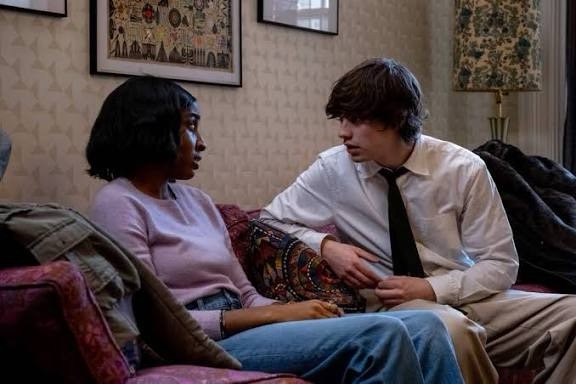
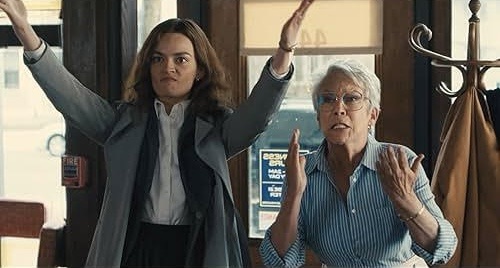
It has been a long time since I watched a film that felt this tonally confused. While it is clear what James L. Brooks is aiming for, the execution veers into saccharine territory, particularly in heightened scenes such as the screaming scene between Mackey and Curtis. The character of state trooper Nash (Kumail Nanijani), who appears endlessly kind, intuitive and quietly devoted to Ella, feels like a narrative safety net and perhaps even a future romantic saviour but this is never explored.
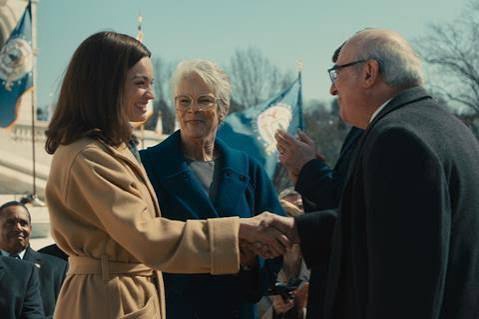
The film gestures toward commentary on how passion is often framed as unprofessional or excessive in women, but this theme never fully crystallises. Ella’s enthusiasm, including her oddly earnest fixation on the ‘tooth tutors’ initiative, is meant to be endearing, yet her obsession becomes grating. While she faces genuine and unfair obstacles, particularly from her controlling and clichéd husband, who demands increased power or threatens to leave, it is hard to fully invest in her journey when the film itself seems unsure how it wants us to feel about her.
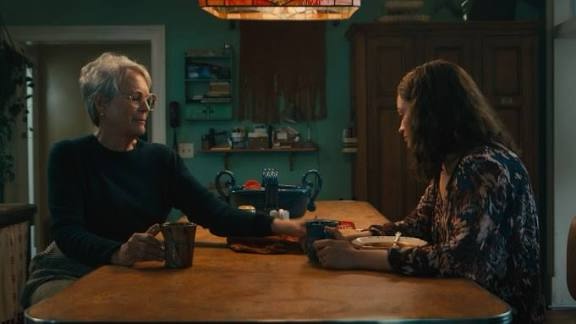
One of the film’s weakest elements is its handling of Ella’s past. Flashbacks depict a teenage Ella using little more than a fringe to signal her younger age, undermining scenes that are meant to have emotionally weight. The decision not to cast a younger actor strips these moments of credibility, pulling the viewer out of the story at key points.
Overall, Ella McCay is an unsuccessful attempt to revive a style of film that no longer resonates in the way it once did and perhaps for good reason. With too many characters, too many tones and too many ideas competing for attention, the film never finds a clear identity. Despite its impressive cast, it feels unfocused and underwhelming, resulting in a watch that is more confusing than fulfilling.
★★ (2/5)
 Rhiann’s Reels