
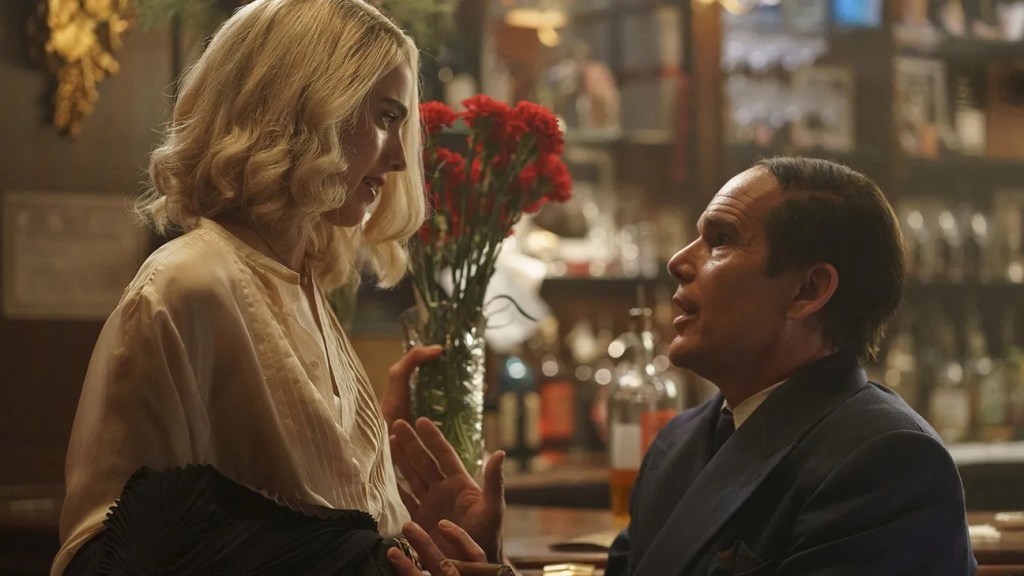
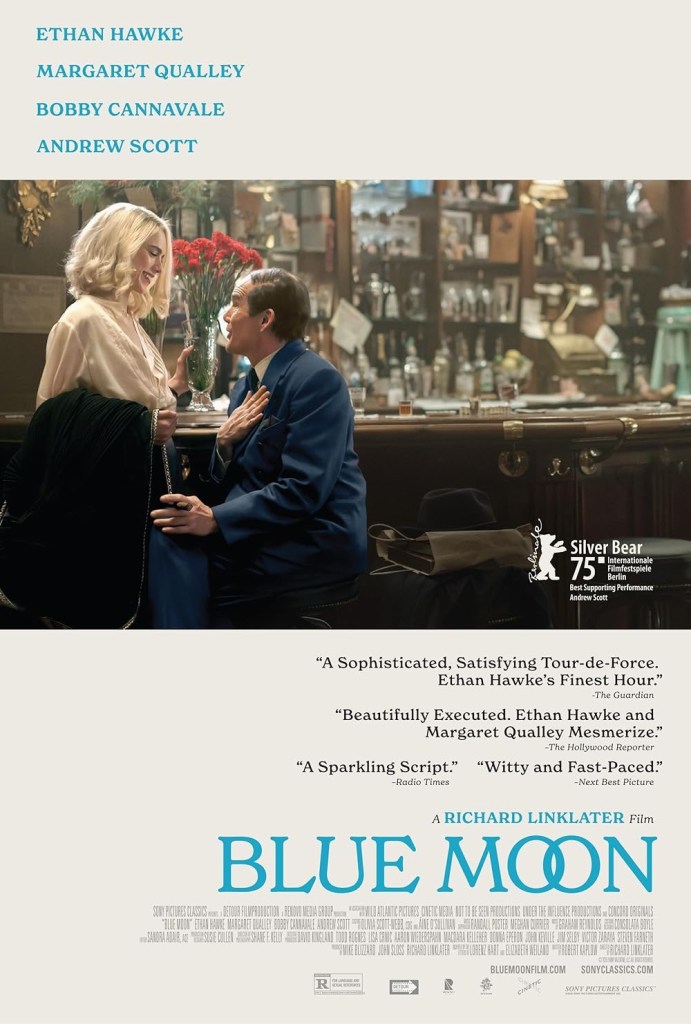
In one sentence: Set over the opening night of Oklahoma!, Blue Moon follows lyricist, Lorenz Hart, as he spends a lonely evening in a hotel bar reckoning with professional displacement and unrequited love.
Most people are familiar with Rodgers & Hammerstein, the legendary composer–lyricist duo behind The Sound of Music, The King and I and Oklahoma!. What is perhaps less widely remembered is that before Hammerstein, Richard Rodgers was partnered with Lorenz Hart, the lyricist responsible for many of the era’s most enduring songs, including the iconic Blue Moon. Richard Linklater’s movie, named after their most famous song, centres on Hart (Ethan Hawke) during the opening night of Oklahoma! and unfolds almost entirely in real time as he spends the evening in a hotel bar awaiting the show’s celebratory party.
The film opens with two striking contradictions: Hart is described in different quotes as both the happiest and the saddest man. We then see him alone late at night, drunk, curled up on a rain-soaked street. Shortly afterwards, a radio announcement reveals that Hart has died from complications related to pneumonia. From the outset, we know his fate and the film invites us to sit with this knowledge as we observe him during a deeply uncomfortable night.
Blue Moon offers a revealing portrait of a man caught between pride and devastation. Hart had spent years composing with Rodgers, even appearing alongside him on the cover of Time magazine, only to see his collaborator move on with Oscar Hammerstein and achieve enormous success with Oklahoma!. Hart is therefore many things at once; jealous, bitter, insecure, proud of his past work, outwardly happy for his friend and inwardly furious with him. He is flamboyant, flirtatious and highly strung, projecting confidence and bravado, yet Hawke’s performance makes it clear that this front is fragile. No matter how much he talks with patrons and the very suave bartender, Eddie (Bobby Cannavale), his hurt is impossible to disguise.
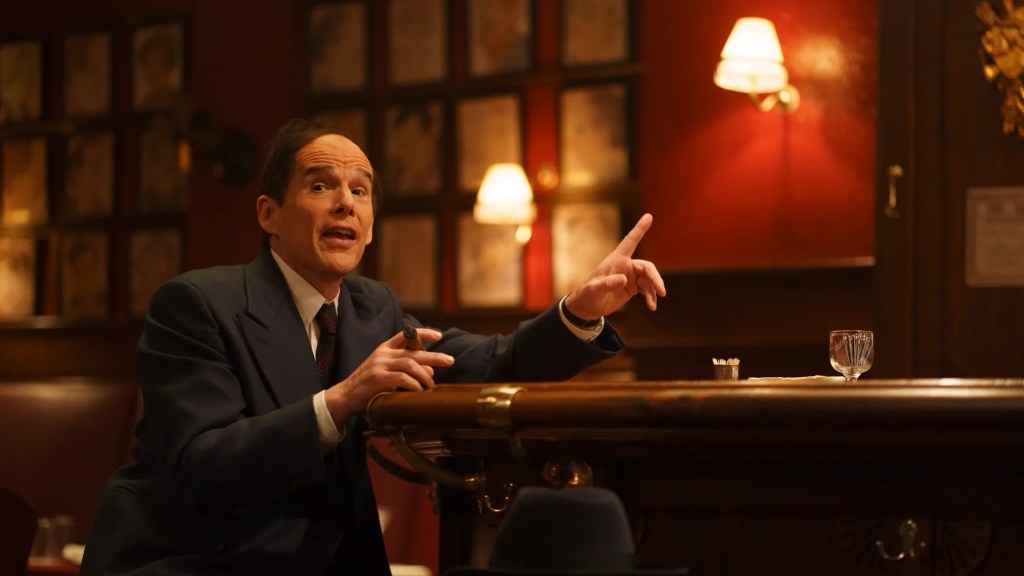
Ethan Hawke delivers a remarkable performance. Physically, he is almost unrecognisable. He is noticeably shorter, with brown eyes instead of his trademark baby blues and sports an unflattering combover. His posture, gestures and vocal inflections complete the transformation. Combined with the film’s fly on the wall approach, Hawke makes Hart feel entirely real, as though we are simply observing two hours in Hart’s life rather than watching a performance.
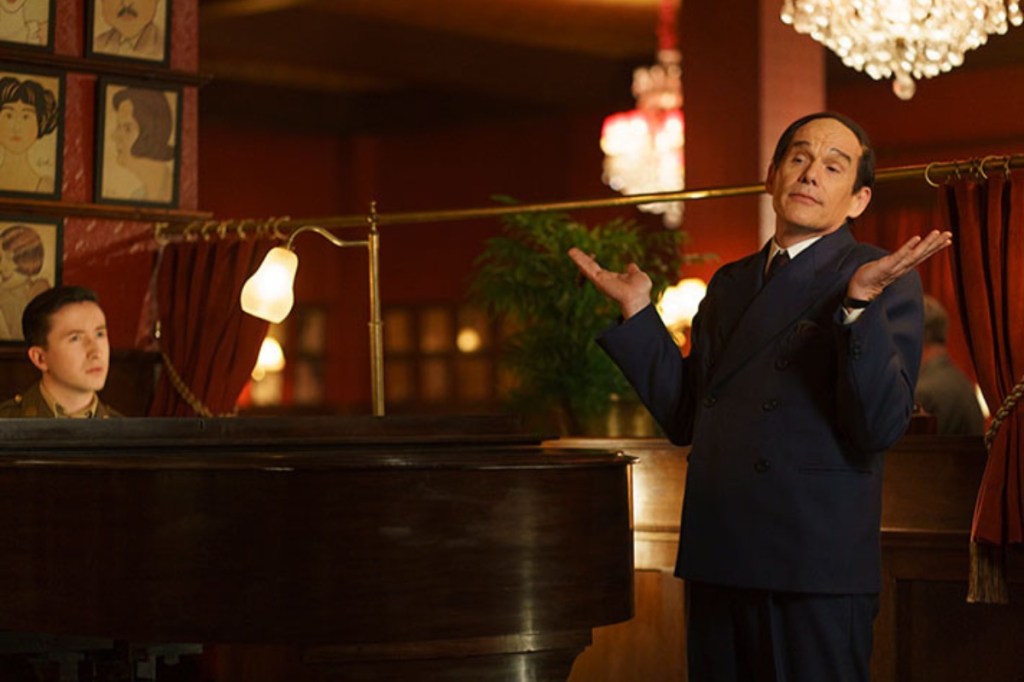
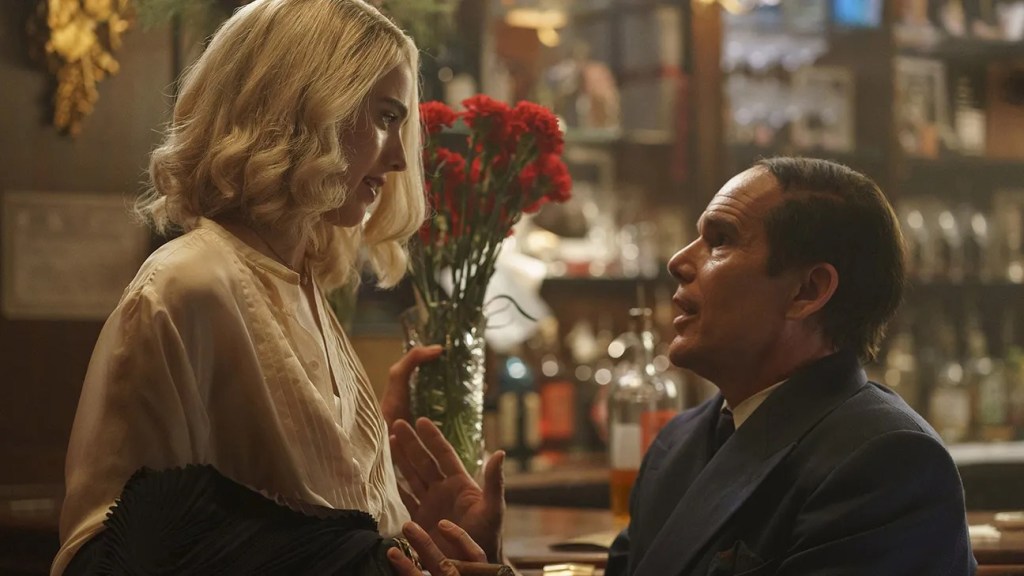
The film suggests that Hart enjoyed recounting his successes, yet dismisses conversation about Blue Moon itself, perhaps because it represents a moment of relevance he is clinging to as his confidence erodes. He frequently mentions a young female student, Elizabeth (Margaret Qualley) he claims to be in love with and for a while it is unclear whether she even exists. When she does appear, it becomes evident that the affection is entirely one sided. Despite Hart’s undeniable talent, the imbalance of the relationship is painfully clear. The film also addresses Hart’s bisexuality, which he is rather open about for the time, portraying him as forward-thinking and comfortable with his identity.
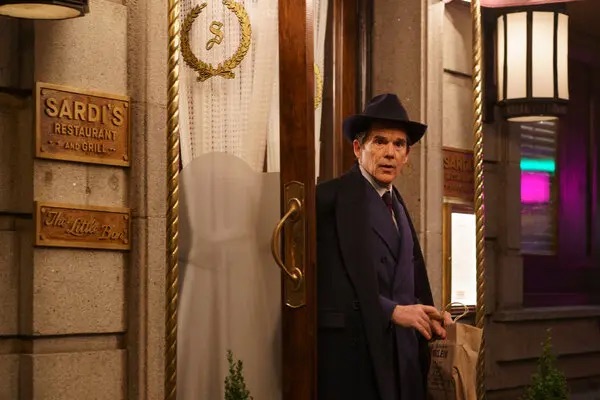
Through encounters with Richard Rodgers (Andrew Scott), the film gradually reveals that while Rodgers’ decision to move on was not without regret, Hart’s unreliability played a significant role in their professional breakdown. There is a strong sense that Hart has, in many ways, authored his own misfortune.
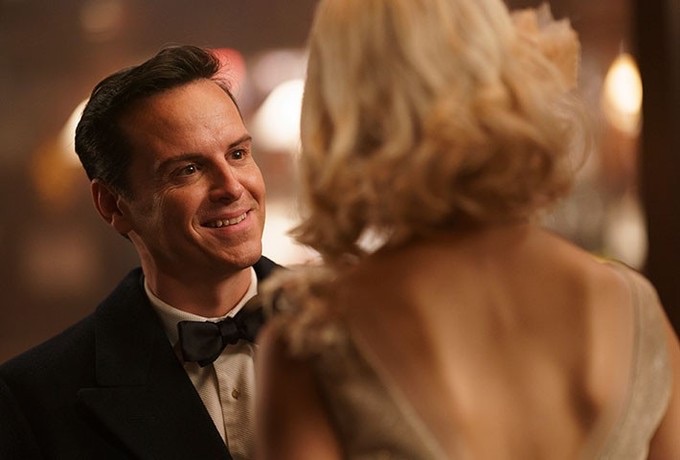
Visually, the film is sumptuous. The rich, dark colour palette captures the smoky luxury of the period, and the immaculate costuming evokes a time when attending the theatre was a formal event rather than a casual outing. Hart’s fondness for capes and dramatic attire only adds to the atmosphere, creating a world that feels both glamorous and suffocating.
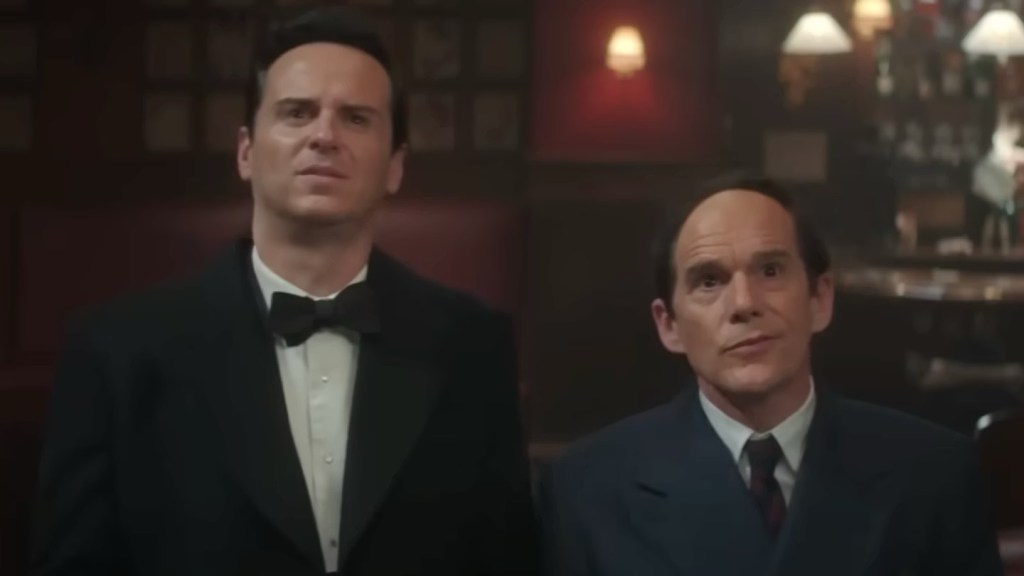
The real-time structure, however, is not entirely effective. While this single night does reveal Hart as a complex and contradictory figure, it also presents him almost exclusively at his lowest point. As a result, the film risks doing a disservice to the magnitude of his achievements, focusing more on his decline than his brilliance, even if his achievements are discussed.
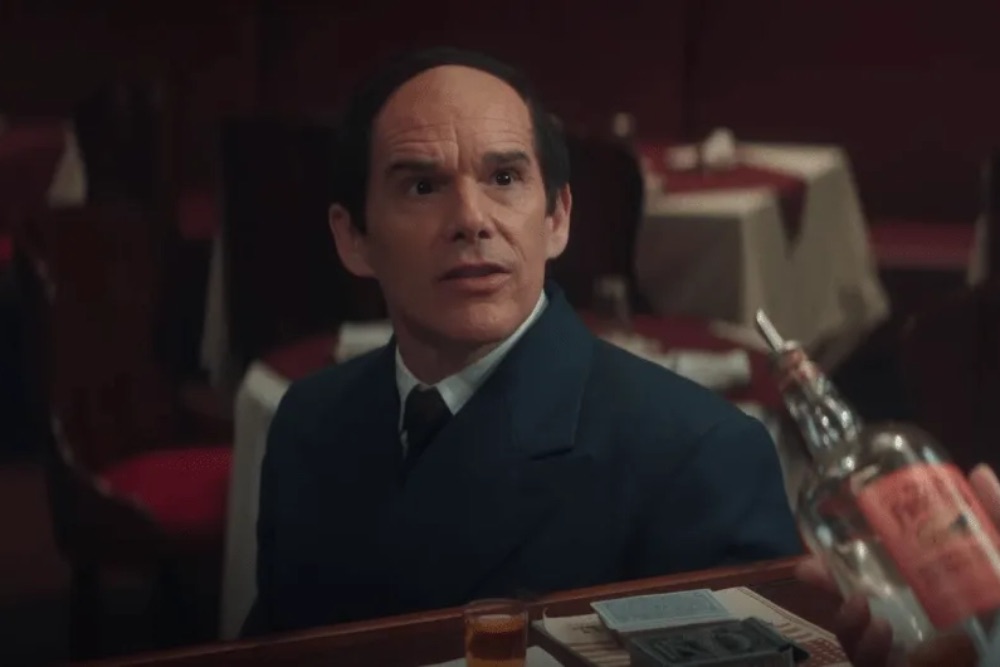
Overall, Blue Moon is an absorbing character study, anchored by an acting masterclass from Ethan Hawke and beautifully crafted visuals. However, its bloated dialogue and extended conversations caused my attention to drift at times. It is easy to see why Hawke has earned an Academy Award nomination even if the film itself ultimately falls short of the same distinction.
★★½ (2.5/5)
 Rhiann’s Reels