
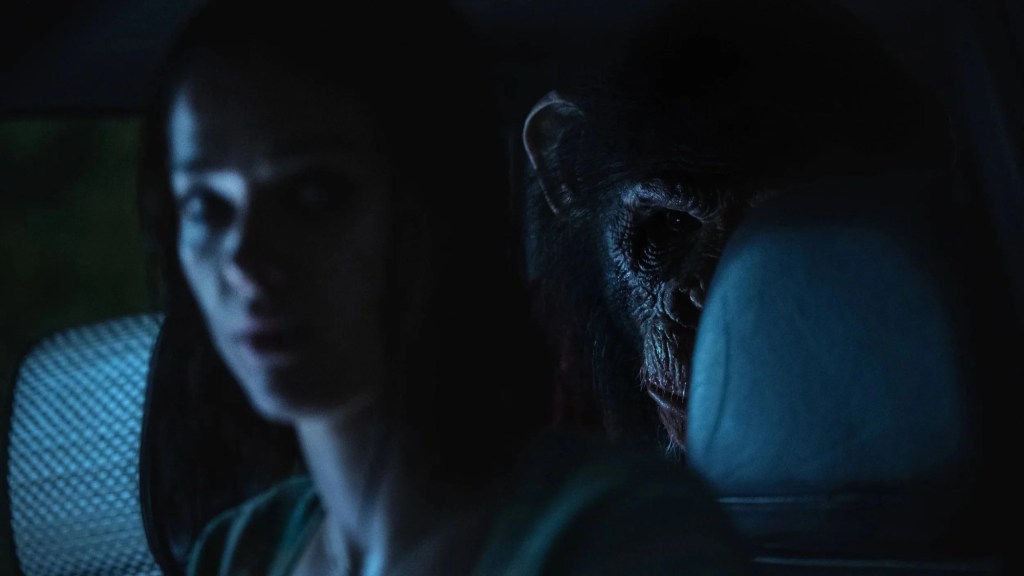
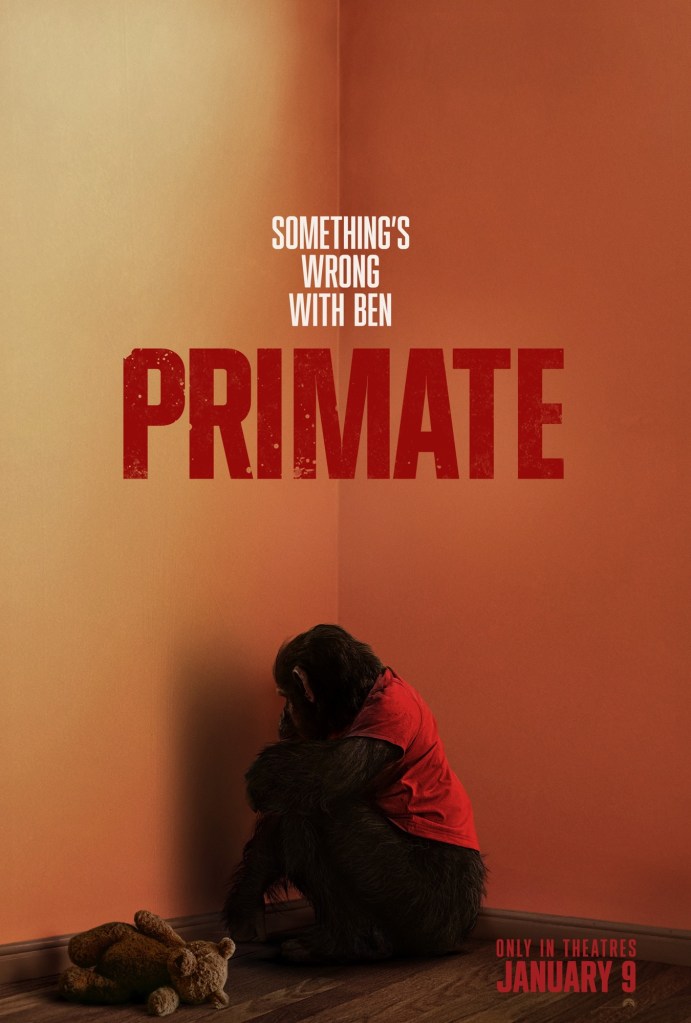
In one sentence: Primate follows a family whose pet chimpanzee contracts rabies, turning a quiet weekend in their remote Hawaiian home into a brutal fight for survival.
Horror remains one of cinema’s most popular genres and there is rarely a shortage on the big screen. Primate is the latest and taps into a very primal fear by imagining what happens when a domesticated wild animal turns, delivering a grisly, tension-filled film centred on a pet chimpanzee who goes on a murderous rampage.
The film opens with a stark explanation of hydrophobia and its fatal consequences, quickly revealing it to be rabies, before launching into a shocking sequence in which a vet (Rob Delaney, in a brief cameo) attempts to medicate Ben, the family’s pet chimpanzee. The encounter ends brutally with his face being ripped off, showcasing the film’s gore and practical effects, before the story rewinds thirty-six hours, leaving the audience fully aware of the danger ahead.
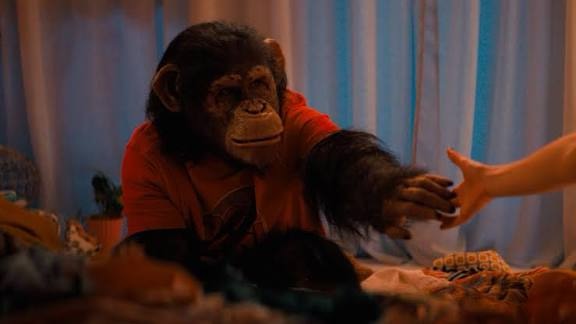
We then follow Lucy (Johnny Sequoyah), Hannah (Jess Alexander) and Kate (Victoria Wyatt) as they travel to Lucy’s family home in Hawaii, where they meet Lucy’s sister Erin (Gina Hunter), her deaf father Adam (Troy Kotsur) and Ben (Miguel Torres Umba), a chimpanzee raised lovingly since infancy by Lucy’s late mother, a speech therapist. Initially affectionate and intelligent, Ben begins to show troubling signs of aggression, dismissed as unease around strangers, until a dead mongoose and a bite wound signal something far more serious and Ben is to stay locked in his enclosure. When Adam leaves for the weekend, the young women are left alone with Ben and the tension steadily builds until the narrative catches back up with its violent opening.
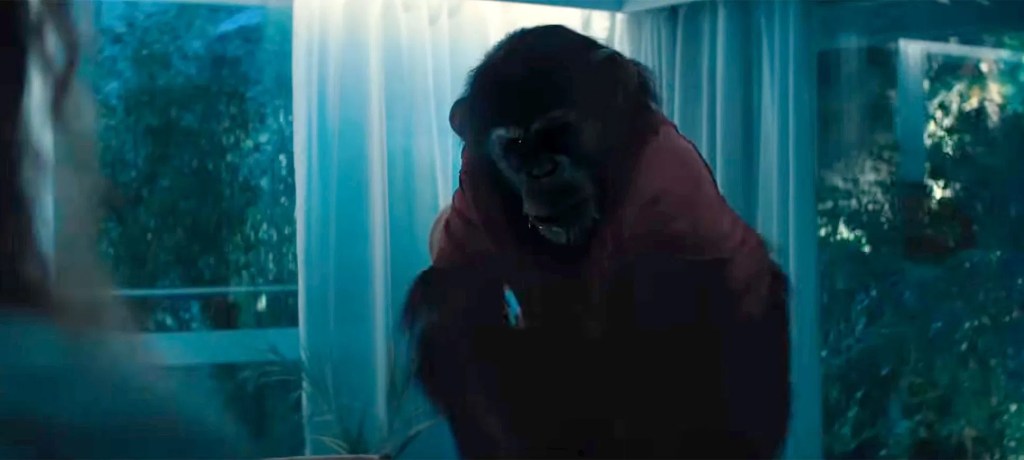
The film leans heavily into familiar horror and creature feature tropes including ominous music, sudden shocks, poor decision-making and an abundance of gore. Ben’s strength is portrayed with disturbing realism, demonstrated in scenes of extreme violence that are not for the squeamish. There are moments that recall classics of the genre, including a tense hiding place sequence reminiscent of Jurassic Park. This is a film designed to make its viewers jump out of their seats.
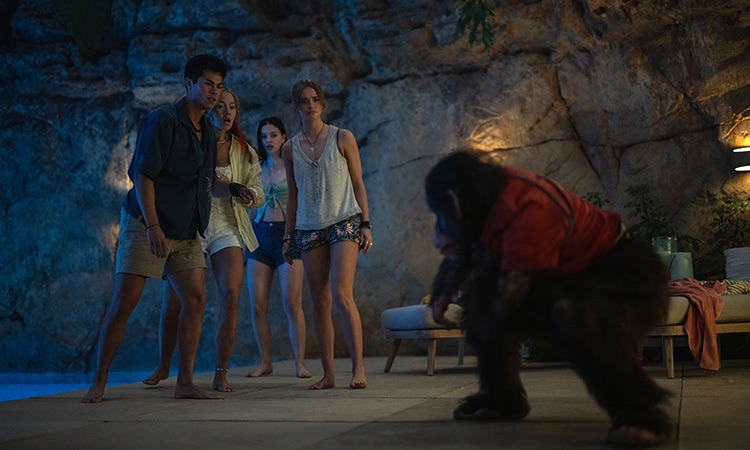
The practical effects are a highlight, with Ben realised largely through physical performance rather than CGI. While there are moments where the illusion falters slightly, the choice gives the chimpanzee a tangible presence that heightens the sense of threat. The film also uses sound very effectively, particularly through Adam’s deafness. Extended silences and the use of sign language add an extra layer of tension and perspective, making certain scenes especially unsettling.
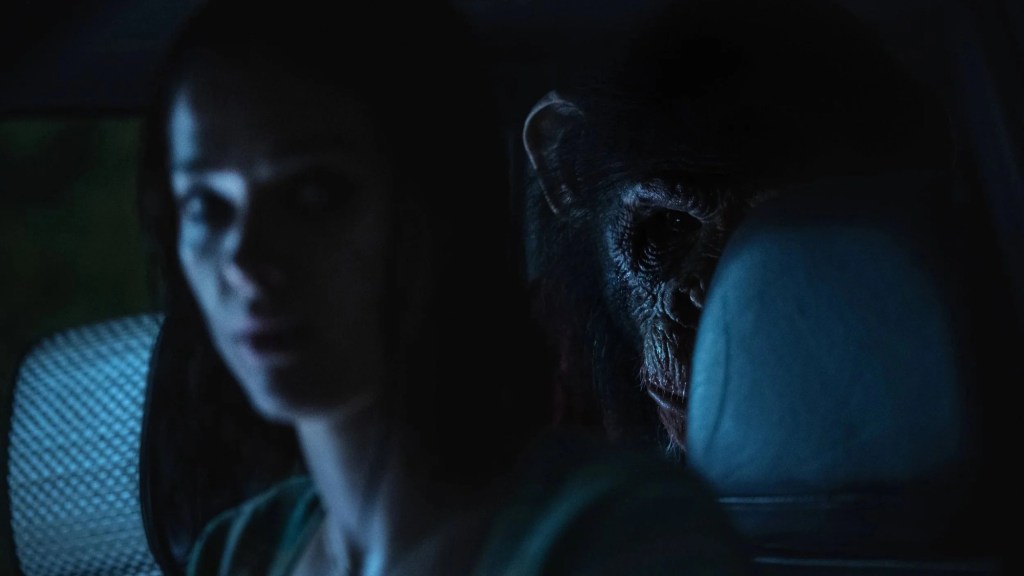
Where the film feels less confident is in its explanation for Ben’s violence. By attributing his rampage to rabies that could be inspired by Stephen King’s Cujo, Primate sidesteps a potentially more unsettling exploration of the ethics and dangers of keeping wild animals as pets. Leaning into the inherent unpredictability of chimpanzees might have offered a more original angle, rather than relying on infection as the primary catalyst.
Overall, Primate is a solid, gruesome horror film that delivers exactly what its premise promises. It builds tension effectively, offers memorable shock moments and will likely satisfy horror fans, even if it doesn’t bring anything particularly new to the table.
★★★ (3/5)
 Rhiann’s Reels