
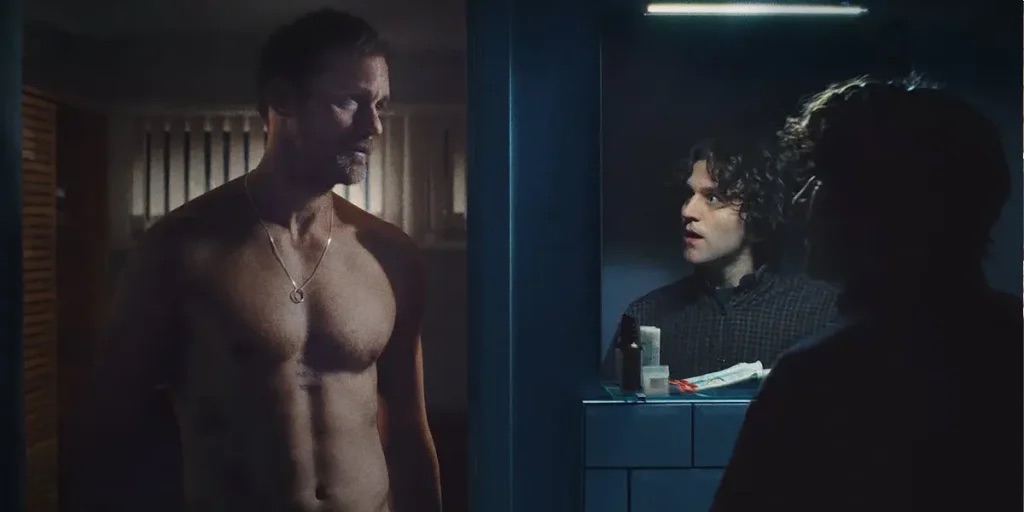
In one sentence: Pillion shows a shy, sheltered man who enters into a consensual dom/sub relationship with an aloof biker, forcing both characters and audience to confront uncomfortable questions about power, intimacy and choice.
Queer romance has increasingly found space in mainstream cinema, which is both welcome and necessary. Pillion, adapted from Adam Mars-Jones’ novel Box Hill, offers a very different angle by placing a BDSM dom/sub relationship at the centre of what is framed as a dom-com. It is a film that asks the audience not for approval, but for attention.
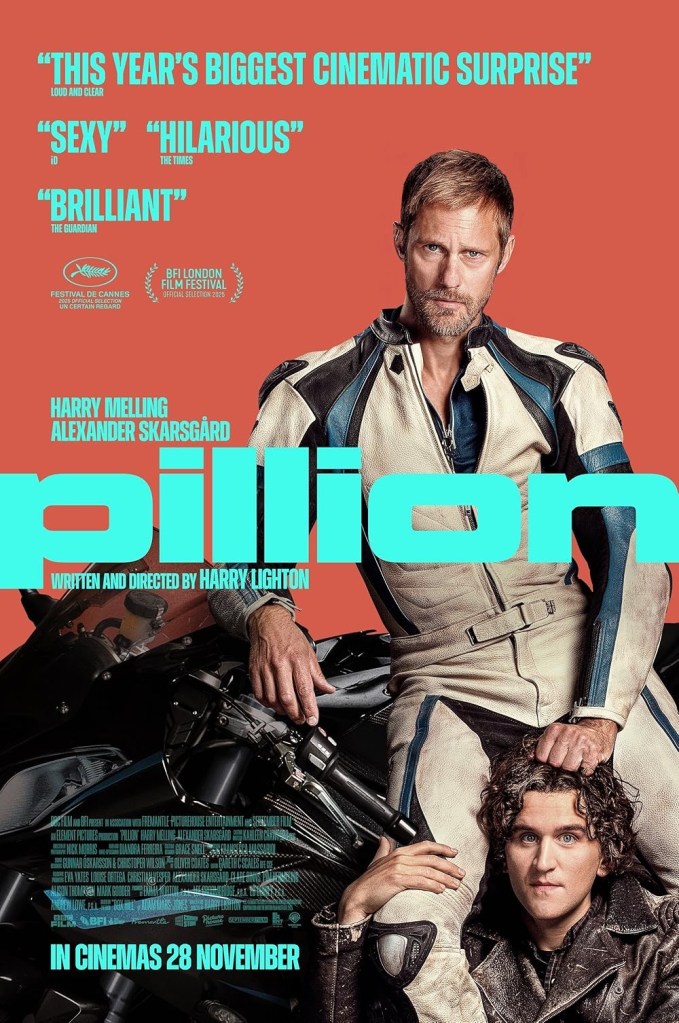
The story follows Colin (Harry Melling), a quiet, unassuming man who lives with his supportive parents, works as a parking enforcement officer and sings in a barbershop quartet. His life is sheltered and emotionally contained. This changes when he meets Ray (Alexander Skarsgård), a striking biker whose confidence, physical presence and sexual authority could not be more different from Colin’s. The two enter a consensual dom/sub relationship in which Ray holds absolute control. Colin cooks for him, is instructed where to stand, sleeps on a rug beside the bed and wears a padlock necklace, while Ray carries the key as a symbol of ownership.

This dynamic will feel uncomfortable for many viewers and it is not difficult to understand why. Watching someone submit so completely can read as sad or troubling if you do not share or understand the desire. Colin’s terminally ill mother, Peggy (Lesley Sharp), who struggles to accept the relationship, feels like a proxy for the audience, voicing confusion and concern that mirrors our own. Ray, meanwhile, appears to treat his Rottweiler with more visible affection than he does Colin, which only sharpens the discomfort. Yet the film does not present this relationship as a cautionary tale or a spectacle. Instead, it offers an unflinching look at a dynamic that exists largely out of public view.

What makes Pillion compelling is its interest in motivation. Colin seems driven by a mixture of longing, insecurity and disbelief that someone as attractive as Ray would be interested in him. Ray is more opaque, presenting as controlling and emotionally distant, though fleeting moments suggest a more human interior beneath the dominance. The imbalance between them is striking, but the film repeatedly insists that this is chosen rather than imposed, complicating any easy moral judgement.
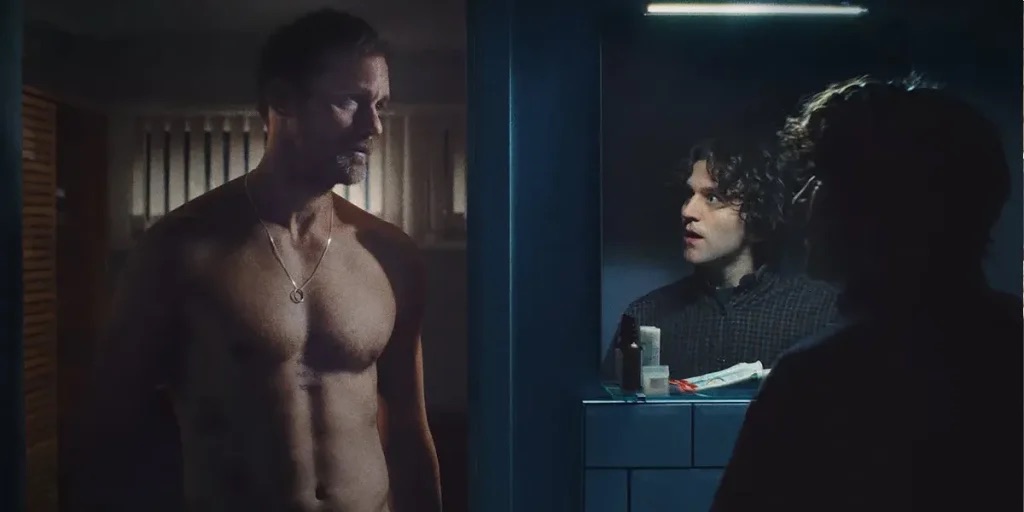
The sexual scenes are explicit and deliberately stripped of glamour and the actors have described them as essential to understanding the characters. Director, Harry Lighton, has been clear that the intention was not to sanitise or soften the lifestyle for comfort, nor to frame it through a heterosexual lens.

Stylistically, the film leans into a muted, grey British realism. Ray’s flat is ordinary rather than aspirational and the pacing is deliberately restrained, at times edging into slowness. Any tenderness emerges late and quietly and some viewers may struggle to find romance in what is largely an exercise in power dynamics. That said, the performances are excellent. Melling brings vulnerability to Colin, while Skarsgård’s physicality and restraint make Ray both magnetic and unsettling. Their differences in size, demeanour and presence heighten the tension and keep the relationship visually and emotionally compelling.

The title itself is telling. A pillion is the rear seat on a motorcycle, a place defined by trust and imbalance. Colin quite literally takes that position in Ray’s life, and the film uses it as a metaphor for chosen submission, identity and belonging.

Overall, Pillion is a film unlike anything u have seen. It presents a queer relationship with honesty and without compromise, inviting viewers into a world they may not understand or personally choose, but one that undeniably exists. It will challenge, unsettle and divide opinion, but its refusal to dilute or explain itself is part of what makes it so distinctive.
★★★ (3/5)
 Rhiann’s Reels