

In one sentence: Permission follows a long term couple who, on the brink of engagement, agree to explore other relationships, only to discover that freedom comes with unexpected consequences.
How can you be sure your partner is the one? Permission confronts this question head on. Anna (Rebecca Hall) and Will (Dan Stevens) are a couple who have only ever been intimate with each other. When Will is preparing to propose, their friend Reece (Morgan Spector) challenges them with the provocative idea of experiencing other people before committing to each other for life. What begins as a theoretical discussion soon becomes a lived experiment, one that Anna in particular cannot stop thinking about.
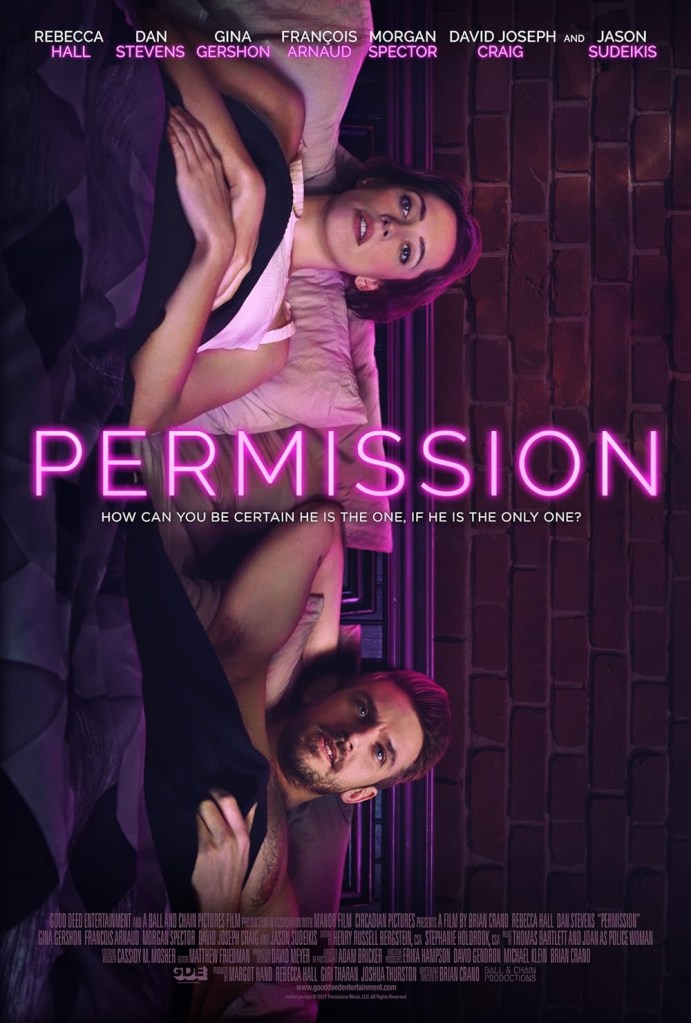
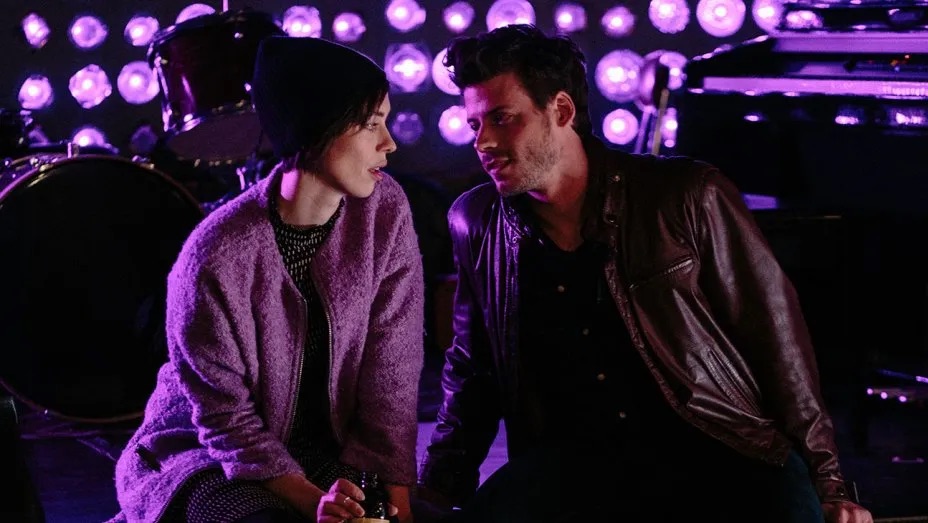
The film presents a couple who are deeply comfortable with one another, but perhaps too comfortable. Anna pats Will on the back after sex, squeezes his spots and the pair watch TV over talking. For a young couple, they feel settled but quietly unfulfilled. Once permission for an open relationship is granted, the balance shifts quickly. Anna dives into an intense connection with musician Dane (François Arnaud), while a dejected Will attempts to even the score with rich older woman, Lydia (Gina Gershon). A brief but memorable appearance from Jason Sudeikis as a weary parent adds another layer to the film’s quiet examination of adulthood and life choices as Anna’s brother Hale (David Joseph Craig) and his partner, Reese, wrestle with differing views on commitment and children.

The film touches thoughtfully on monogamy and polyamory, showing how even agreed freedom can affect people very differently. Anna and Will’s shared experience of ‘firsts’ fractures as they begin discovering themselves outside their relationship. Through Dane, Anna experiences desire untethered from history, while Will explores impulses that are both liberating and questionable. Trust is an important theme throughout the movie, playing out in ways that feel equally predictable and unexpectedly raw.
Tonally, however, Permission struggles. Its slow-burn pacing works well for introspection but occasional attempts to inject comedy feel misplaced. The film never quite settles into one genre. The performances are consistently strong but Dan Stevens feels underused in the more frivolous moments, though he shines when the film allows him space to sit with jealousy and sadness. Rebecca Hall is excellent as Anna, convincingly portraying a woman pulled between personal growth, loyalty and the fear of choosing the wrong life.

Visually, the film is restrained but one standout moment sees Anna and Dane standing on opposite sides of a pillar before their first intimate encounter and then Anna crosses the divide. It quietly signals a boundary being irreversibly crossed. Set in New York, the film deliberately avoids iconic landmarks, giving the story a lived-in and intimate feel that suits the movie well.
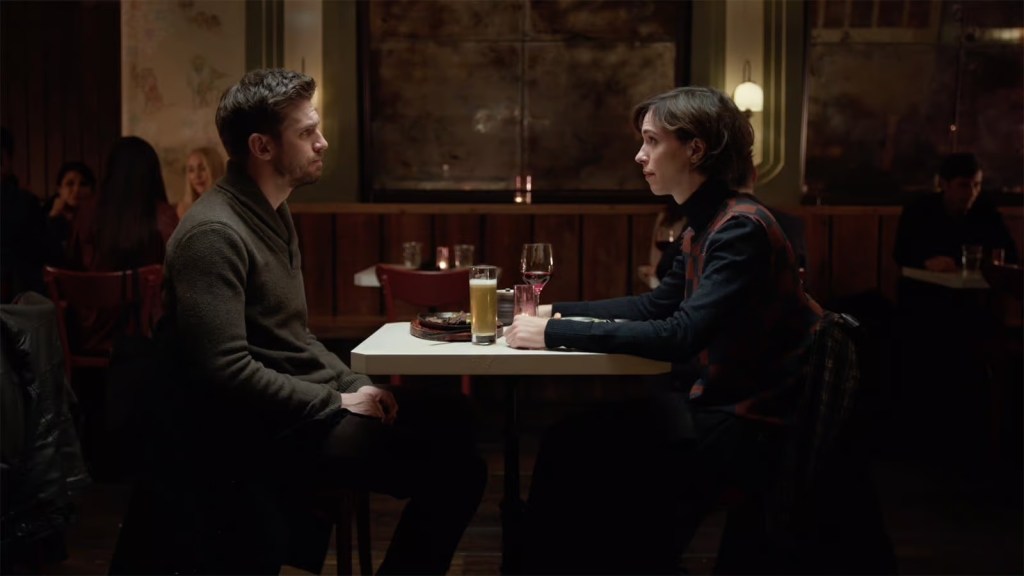
Ultimately, Permission is an intelligent and honest examination of modern relationships, supported by strong acting and thoughtful moments of visual storytelling. However, its uneven tone and languid pacing prevent it from fully realising its potential. The questions it raises are compelling, even if the answers it offers feel somewhat diluted by its execution.
★★★ (3/5)
 Rhiann’s Reels