
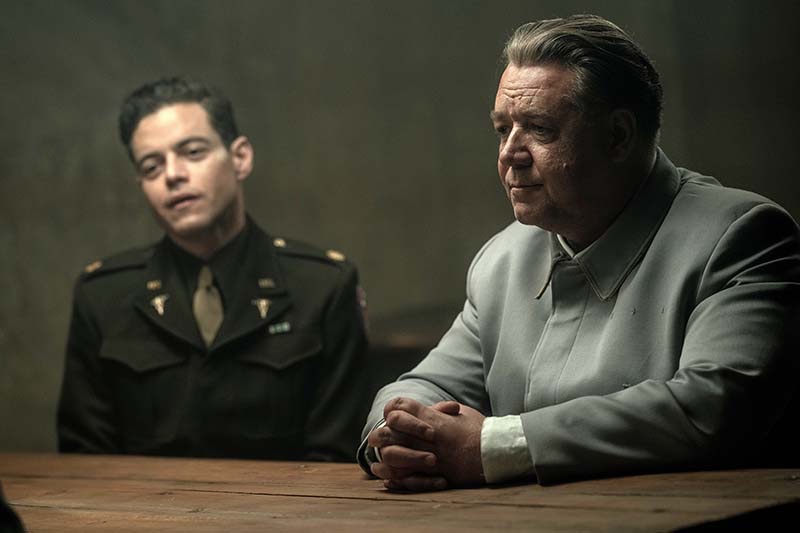
In one sentence: Set in the aftermath of the WWII, Nuremberg follows American psychiatrist, Douglas Kelley, tasked with assessing captured Nazi leaders, as psychological power games and moral dilemmas shape the world’s first attempt to prosecute evil through law.
When I first learned of Nuremberg, I was not convinced it would be a movie for me. I am something of a purist when it comes to authentic representation and Russell Crowe as Hermann Göring initially felt like a Hollywood choice rather than an authentic one. I was very wrong. This is an excellent film that presents an incredibly important moment in history in an intriguing, intelligent and compelling way.
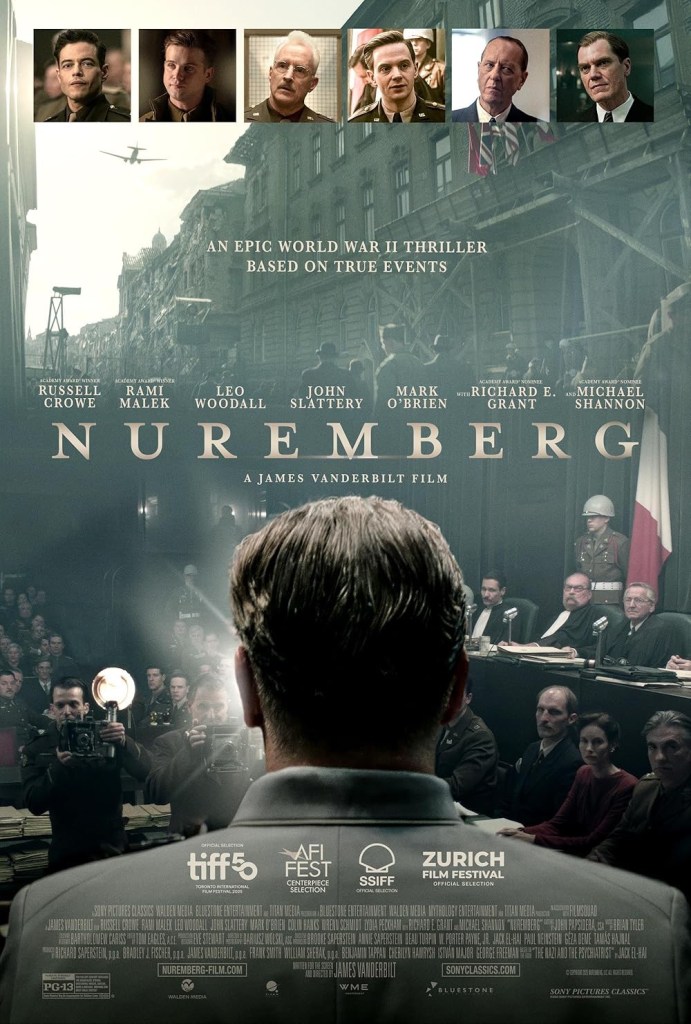
The film follows American psychiatrist Douglas Kelley (Rami Malek) who is summoned to assess the most prominent Nazi leaders who neither fled nor took their own lives before the end of the WWII. Kelley is joined by Sergeant Howie Triest (Leo Woodall), who serves as his translator. Together they attempt to understand the minds behind some of the most atrocious crimes in human history, work that is vital to the success of the groundbreaking Nuremberg Trials. Nothing like this had ever been attempted before and this uncertainty is embodied by Justice Robert H. Jackson (Michael Shannon) who is determined to pursue justice through law rather than revenge.
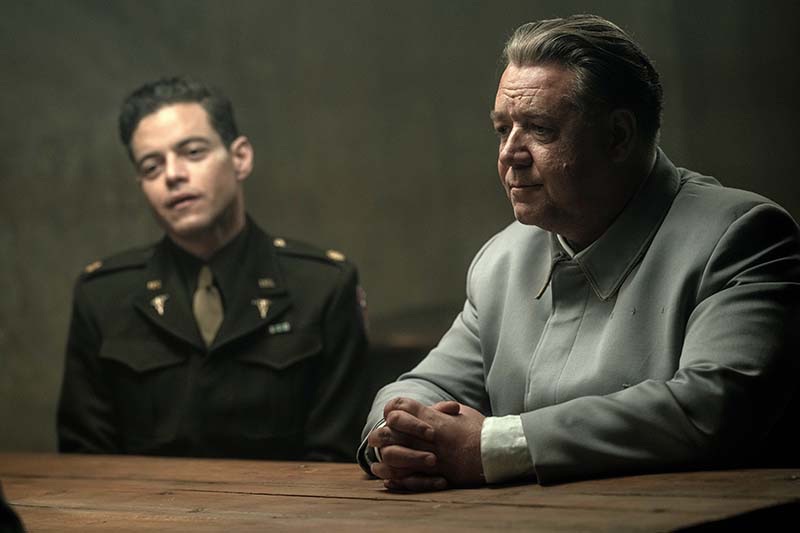
You might ask why a dramatic film is needed when a documentary could present the facts more directly. However, Nuremberg demonstrates how dramatic cinema can provide a fresh and engaging angle, posing moral questions and exploring psychological complexity while still honouring historical truth. In doing so, the movie brings history to life for audiences and reinforces the importance of remembering it.
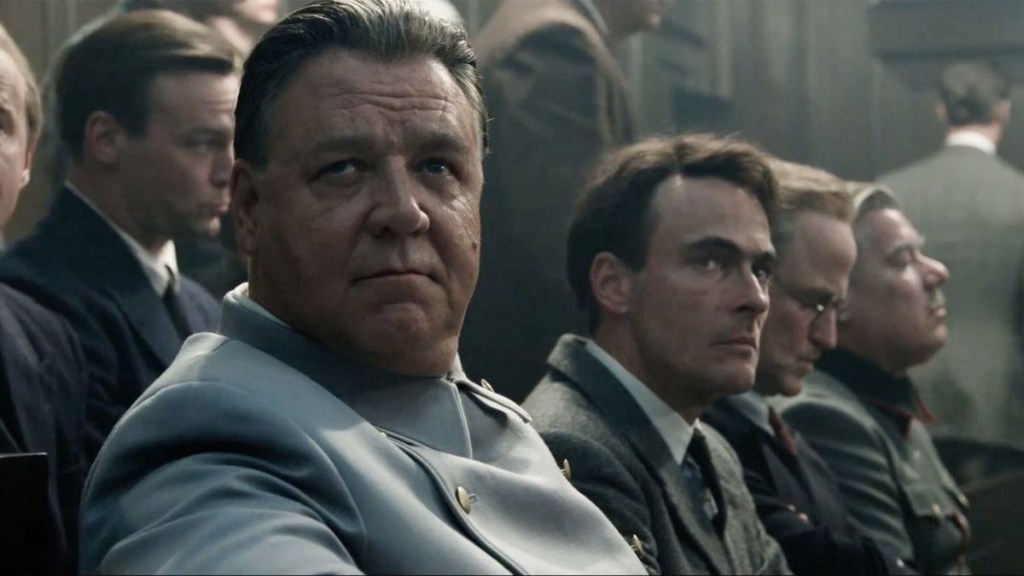
Having visited Nuremberg last year and toured the Palace of Justice myself, this film vividly brought those spaces back to life. The relationship between Kelley and Göring is particularly fascinating. Kelley’s task is monumental and Göring proves to be a complex and unsettling subject. Their interactions evolve into something resembling a wary friendship that sees Kelley even becoming involved with Göring’s family. Malek and Crowe share remarkable chemistry, their scenes unfolding like a battle of wit that occasionally edges towards mutual respect. It is a chilling demonstration of the charisma Göring must once have possessed, a charm capable of manipulating both individuals and an entire nation.
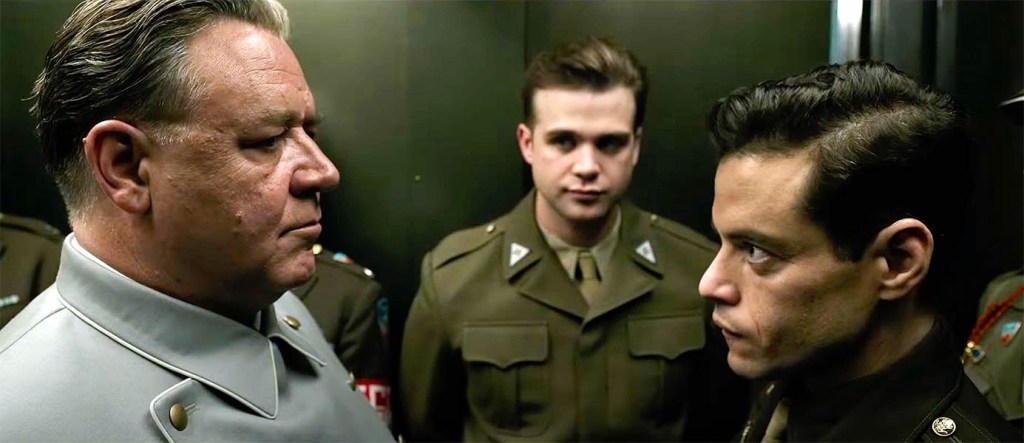
Crowe’s performance genuinely surprised me. His accent is convincing, his German is strong and he captures Göring’s narcissism with unsettling ease. While Crowe’s career has not consistently reached the heights of his earlier work, this performance is a reminder of his formidable talent. It may well mark the beginning of a long-overdue career renaissance.

The film does lean into some familiar war-film tropes, such as flirtatious women with questionable motives, knowing nods between characters and a muted colour palette. However, the elements work here, grounding the film firmly within its genre while still allowing it to feel fresh. Despite its substantial running time of nearly two and a half hours, the pacing remains strong, carrying the viewer through a detailed psychological, moral and historical journey.

Like The Zone of Interest, Nuremberg reminds us that those responsible for unimaginable evil were human beings. This realisation is deeply disturbing, as it reinforces the idea that such atrocities are not the work of monsters but of people making ideological choices. The inclusion of real documentary footage from the concentration camps is harrowing but essential, grounding the film in undeniable reality and reinforcing the necessity of the trials themselves.
Overall, Nuremberg is an outstanding film about a pivotal and powerful moment in history. Its performances elevate the material and its commitment to linguistic authenticity avoids the familiar Hollywood trap of defaulting to English. It is absorbing and important cinema.
★★★★½ (4.5/5)
 Rhiann’s Reels