

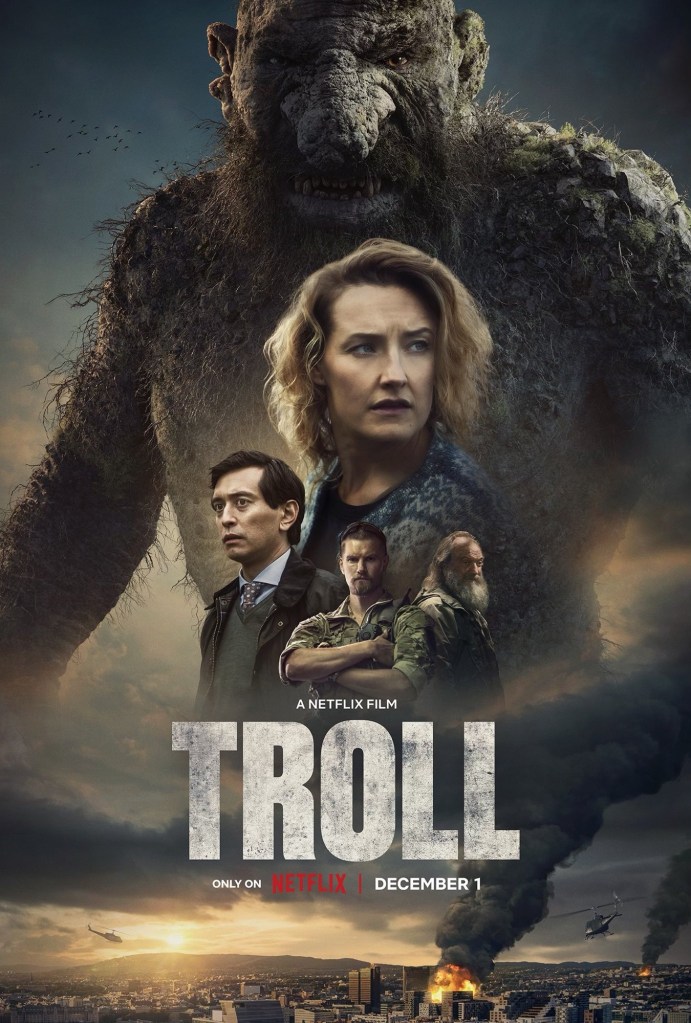
In one sentence: Troll is a Norwegian creature feature that brings ancient folklore and large-scale action together in a dramatic, monster-driven narrative.
Cinema has always had a fondness for creature features and the ongoing success of the Kong and Godzilla franchises proves that audiences still enjoy watching things get bigger, louder and more destructive. Norway took its own swing at the genre in 2022 with Troll and no, this is not the singing, vibrant-coloured variety. This troll is ancient, giant and deeply rooted in Norwegian folklore. As someone with a strong interest in Nordic culture, I was intrigued to see how such a familiar Hollywood format would be filtered through a distinctly Scandinavian lens.
The film opens beautifully with Tobias (Gard B. Eidsvold) sitting atop a cliff with his young daughter, Nora, against a backdrop of vast and breathtaking Norwegian landscape. It is the kind of scenery that immediately inspires travel plans. Tobias teaches Nora about trolls, explaining that they are born in darkness, die in light and are made of the earth itself. He encourages her to believe not with her head, but with her heart. This early scene does an effective job of grounding the story in folklore and introducing a more traditional understanding of the mythical creature.
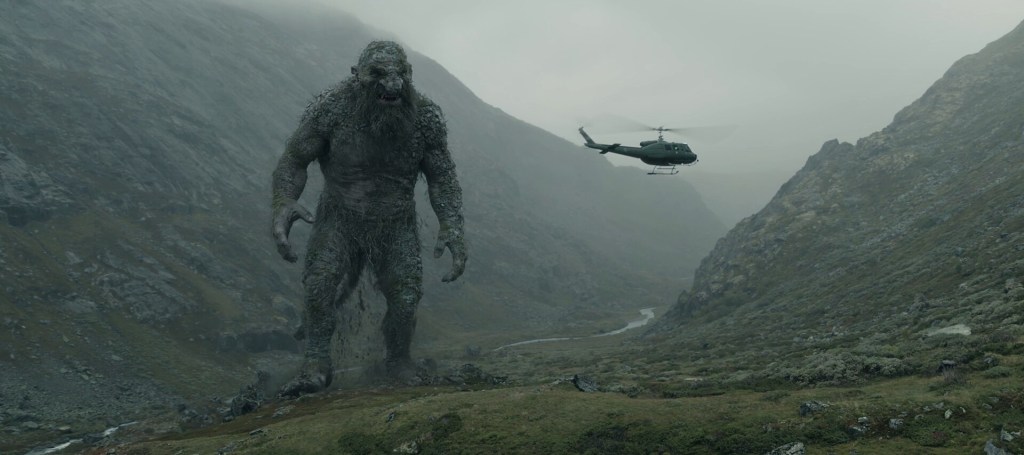
Years later, Nora (Ine Marie Wilmann) is a palaeontologist, and when a mysterious force begins tearing through the Norwegian countryside, the audience is already one step ahead thanks to the title. With the help of her estranged father, her colleague Andreas (Kim Falck), and military Captain Kris (Mads Sjøgård Pettersen), Nora attempts to stop the creature before it reaches Oslo and causes catastrophic damage.

As with many films of this type, there is a familiar government and military subplot. One faction favours immediate destruction, while others begin to understand the creature’s tragic origins. Structurally, there is little here that feels new. You could almost swap the troll for King Kong or Godzilla without much adjustment. However, what Troll does well is embed Nordic folklore into a globally recognisable format, offering audiences a glimpse into Norwegian myth while keeping it accessible.

The film is entirely in Norwegian, which may deter some viewers, but I am a firm believer in watching films in the language they were made. It is refreshing to see a production resist the temptation to cast English-speaking actors and dilute its cultural authenticity. The use of native language strengthens the film and grounds it firmly in its setting.
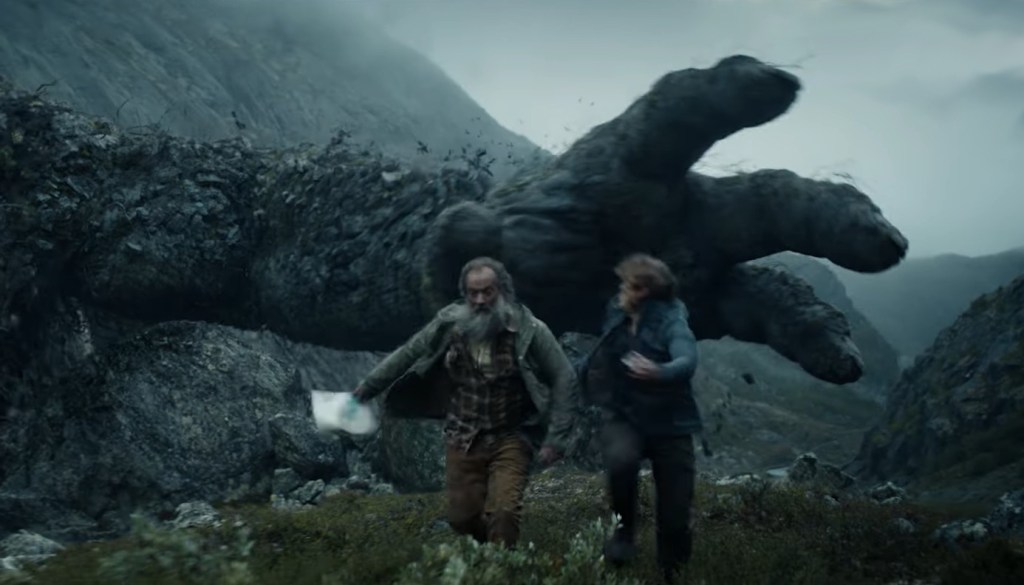
As a Netflix production, Troll clearly benefitted from a generous budget. The visual effects are impressive, with collapsing buildings, crushed tanks and crumpled helicopters all rendered convincingly. The design of the troll itself is particularly effective. Its bulbous, pitted nose made of stone feels lifted straight from Nordic fairytale illustrations and its swishing tail and immense physicality give it real presence. The film also builds tension well by delaying the full reveal of the creature, making its eventual appearance more impactful.

A sequel, Troll 2, has recently arrived on Netflix and, judging by the trailer, appears to lean further into spectacle, promising something closer to a Scandinavian Kong X Godzilla.

Ultimately, Troll had the potential to offer a more distinctly European twist on the creature feature, but it settles into familiar Hollywood rhythms. While it is an entertaining and visually impressive watch, it is not particularly groundbreaking in narrative terms, despite quite literally breaking a great deal of ground along the way. The folklore influence and the sheer physical presence of the troll still make it worth the journey.
★★★ (3/5)
 Rhiann’s Reels