

In one sentence: After the Hunt is a character-driven drama that explores ethics and power dynamics in the wake of a sexual assault allegation.
After the Hunt recently arrived on Amazon Prime. I should preface this review by admitting that Luca Guadagnino’s films have never quite been to my taste. The most enjoyable for me was the Hockney-inspired A Bigger Splash. I often find his filmmaking stylish to the point of distraction, with aesthetics overshadowing the story rather than enriching it. Even so, the premise of this psychological drama intrigued me and the cast of Julia Roberts, Andrew Garfield and rising star, Ayo Edebiri, is undeniably excellent. Unfortunately, this film has not encouraged me to revisit Guadagnino’s work with any greater enthusiasm.
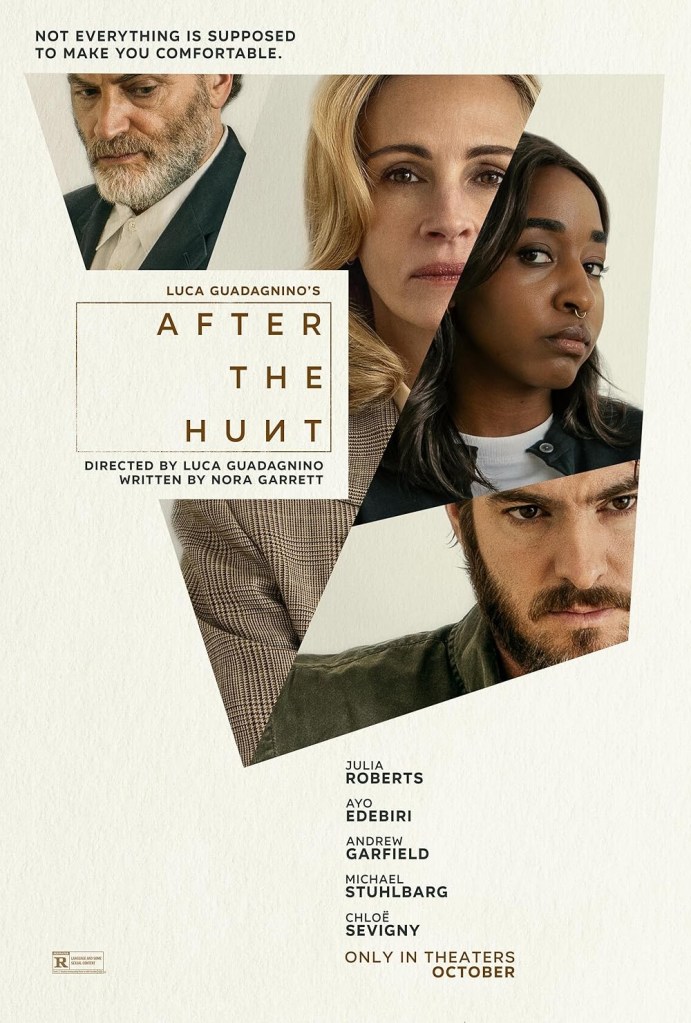
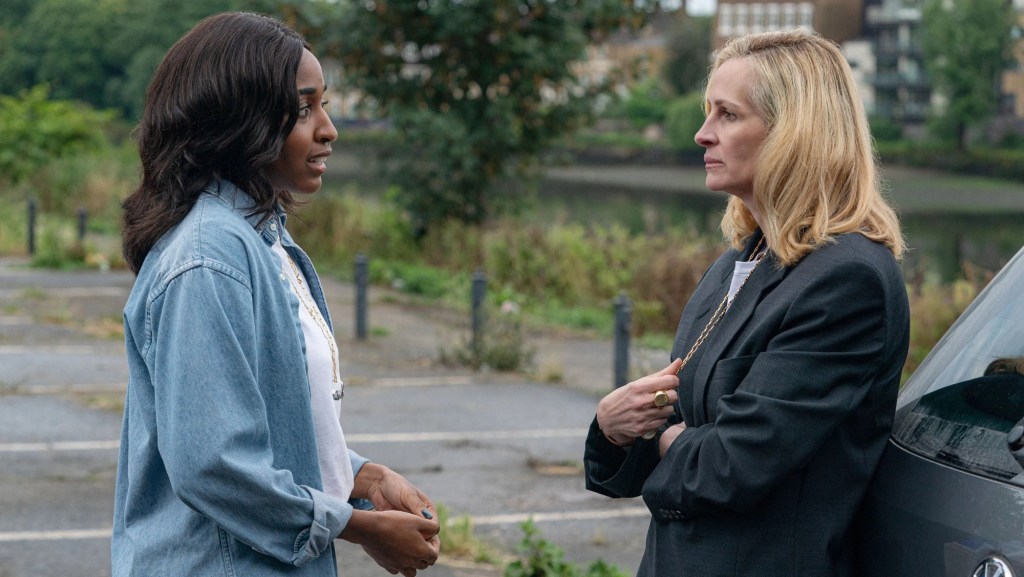
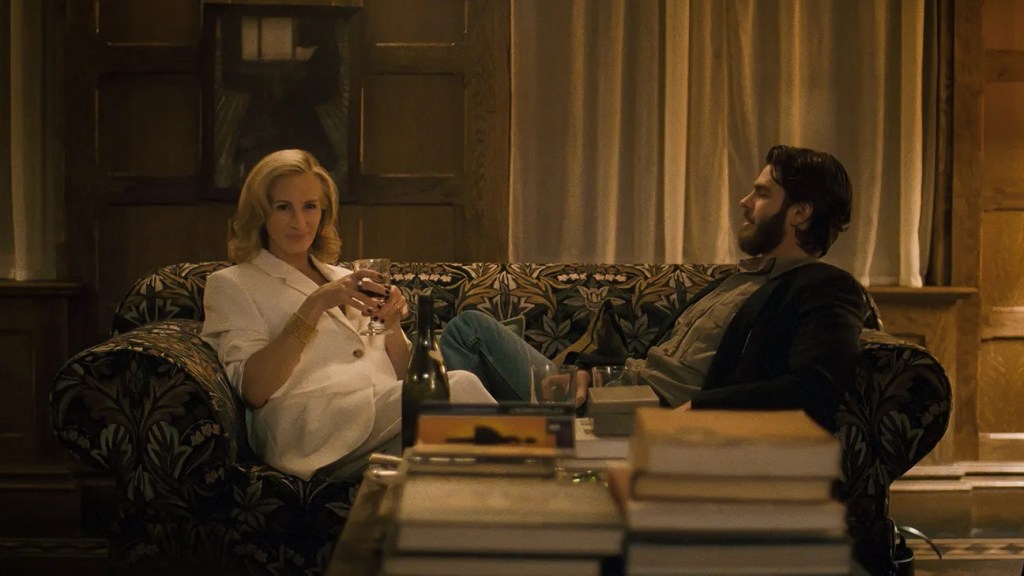
Set on an Ivy League college campus, the film follows Alma (Roberts) and Hank (Garfield), Yale Professors who host their brightest students for wine-soaked intellectual debates. Both are vying for tenure, Alma is guarded and sharp, while Hank’s behaviour occasionally crosses professional boundaries (this becomes clear when he touches the knee of his star pupil, Maggie (Edebiri)). The next day, Maggie appears at Alma’s door, drenched and visibly shaken and reports that Hank sexually assaulted her. Alma’s reaction is far more complicated than viewers might expect. What follows aims to be a psychological thriller, yet the film’s leaden pacing and muted grey palette make it difficult to stay engaged.
The title is inspired by an Otto von Bismarck quote: “People never lie so much as after a hunt, during a war, or before an election.” It is undeniably clever, capturing both the characters’ slipperiness with the truth and the societal impulse toward modern ‘hunts’ like cancel culture. Guadagnino clearly hopes viewers will wrestle with the film’s ethical and moral questions. While the story has stayed with me, I am not convinced this is a film for the wider public. I suspect many may switch it off early, not because of the cast, who deliver strong and nuanced performances, but because of the film’s overall style and pacing. Guadagnino’s choice to use a persistent ticking sound that often drowns out the dialogue is particularly divisive. Its purpose becomes clear by the end but I found the effect more distracting than compelling.
There is a distinctly European sensibility to the film’s structure and tone. This is not a story that offers clarity or catharsis. Instead, it leaves viewers suspended in ambiguity, which will be rewarding for some and deeply frustrating for others. The film addresses sensitive topics with intentional opacity, a choice that may raise questions about how ambiguity functions when dealing with issues of power, consent and credibility. Guadagnino also employs Brechtian techniques, including breaking the fourth wall. The moment Hank directly addresses the camera and the later audible “cut!” at the end of the film, deliberately pull the audience out of the narrative and force reflection.

The film is populated with flawed, deeply human characters whose choices are often questionable. It offers no easy answers and leaves its audience with so much uncertainty that some may feel unrewarded for the time invested. The grey colour palette and slow pacing contribute to an overall heaviness that even its outstanding actors cannot fully elevate. Devoted Guadagnino fans may find much to like here. For me, as someone who has never connected strongly with his style, After the Hunt has not changed my mind.
★★½ (2.5/5)
 Rhiann’s Reels