
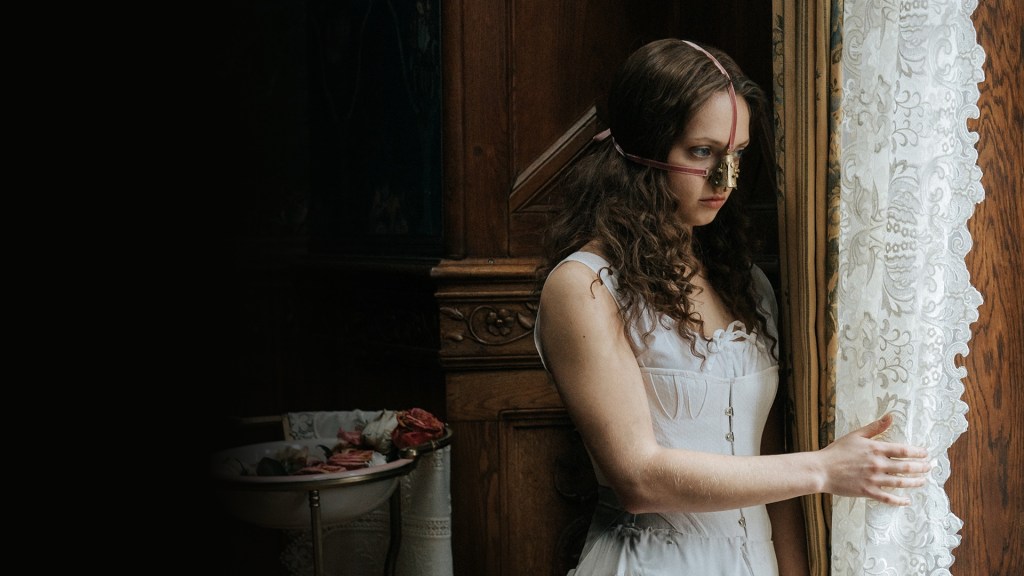
In one sentence: The Ugly Stepsister is a reimagined Cinderella story that delves into beauty standards and unrealistic expectations we have on ourselves and others.
We all know Cinderella, or at least we think we do. The story has been told, retold, animated, modernised and Disneyfied so many times that it feels impossible to find a new angle. Yet The Ugly Stepsister, a Norwegian reimagining, offers something genuinely fresh. It is a brutal and unsettling commentary on beauty standards and envy.
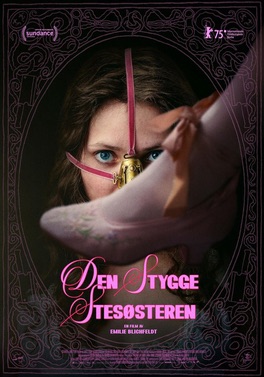
Rather than following Cinderella herself, the film centres on Elvira (Lea Myren), the awkward, overlooked stepsister to the beautiful Agnes (Thea Sofie Loch Næss), the film’s Cinderella figure. When Elvira, her mother and sister move into Agnes’ lavish home following the parents’ marriage, the familiar narrative unfolds. Agnes’s father (Ralph Carlsson) dies, the stepmother (Ane Dahl Torp) assumes control and it is revealed that the household is financially ruined. What follows is far darker than any Disney fairytale. In a desperate attempt to secure a future, Elvira is subjected to brutal beauty procedures without even the mercy of anaesthetic, all in the hope she might attract the Prince Julian at his upcoming bride-selection ball.

The film forces us to confront the brutal lengths women go to in pursuit of beauty and how society rewards and punishes them for it. The surgery scenes are wince-inducing and reminiscent of David Cronenberg movies. The extremity, contrasted with modern synth music, reveals something depressingly familiar as nowadays we see post-rhinoplasty bruises and facial surgery swellings all over social media, celebrated as self-improvement. The film simply removes the gloss and shows the violence underneath.

It also reminds us how dark traditional fairytales truly were before they were softened for children. This version resurrects the original cruelty, including the cutting of toes to fit the slipper, the humiliation and the desperation. It recalls the wicked queen in Snow White forced to dance in burning iron shoes or Sleeping Beauty awakening to find she has given birth while unconscious. The film insists we remember that stories we call magical were once warnings about vanity, power and desire.
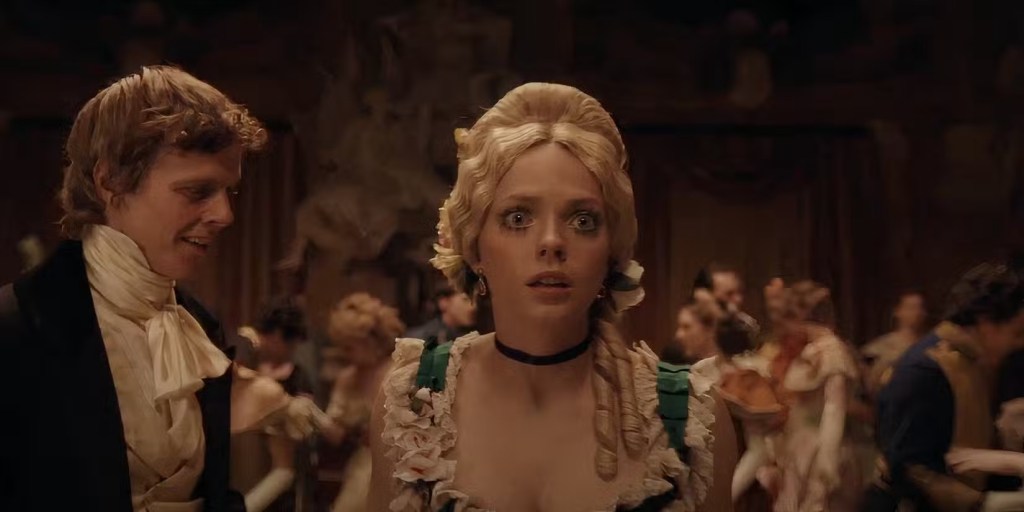
Throughout the film we journey with Elvira from pity, to something close to understanding, to horror. She is manipulated, belittled and consumed by the belief that she is not enough. Her interactions, particularly with the merciless ballet instructor and the insufferable prince, show the psychological damage done when beauty becomes worth. The movie grants humanity to a character long treated as a cartoon villain and Myren’s acting and physicality chart the slow, tragic unravelling of a young woman who believes beauty is the only way to be valued.

The Ugly Stepsister fits neatly into the current wave of body horror exploring beauty and identity such as The Substance and A Different Man, but the fairytale framing gives it a distinct edge. It is shocking, but has something to say. My only reservation is one of longevity. How far can cinema push this conversation before shock becomes the only message?
★★★★ (4/5)
 Rhiann’s Reels