
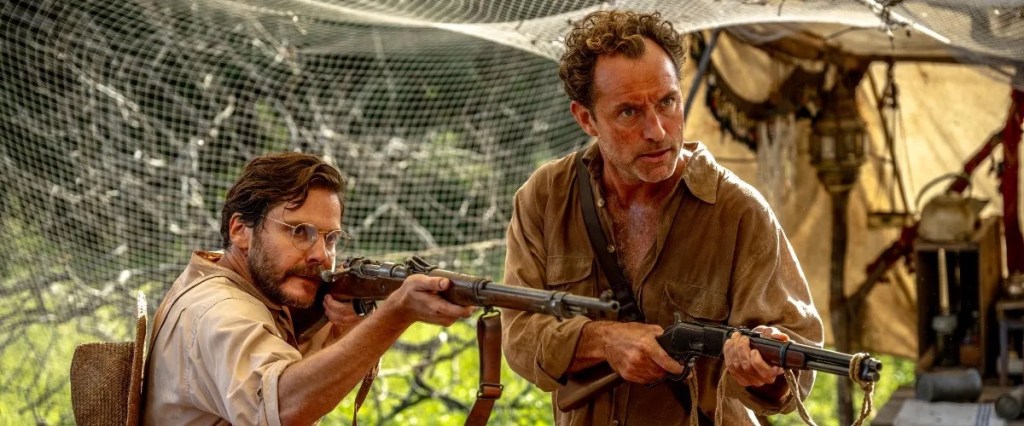
In one sentence: Eden depicts an attempt to build a utopian community on a largely uninhabitable remote island and the tensions that emerge.
Ron Howard’s latest film, Eden, is a psychological thriller inspired by true events. It tells the remarkable story of a group of idealists who flee post WWI Germany and the rise of the Nazis to start a new life on the remote island of Floreana in the Galápagos.
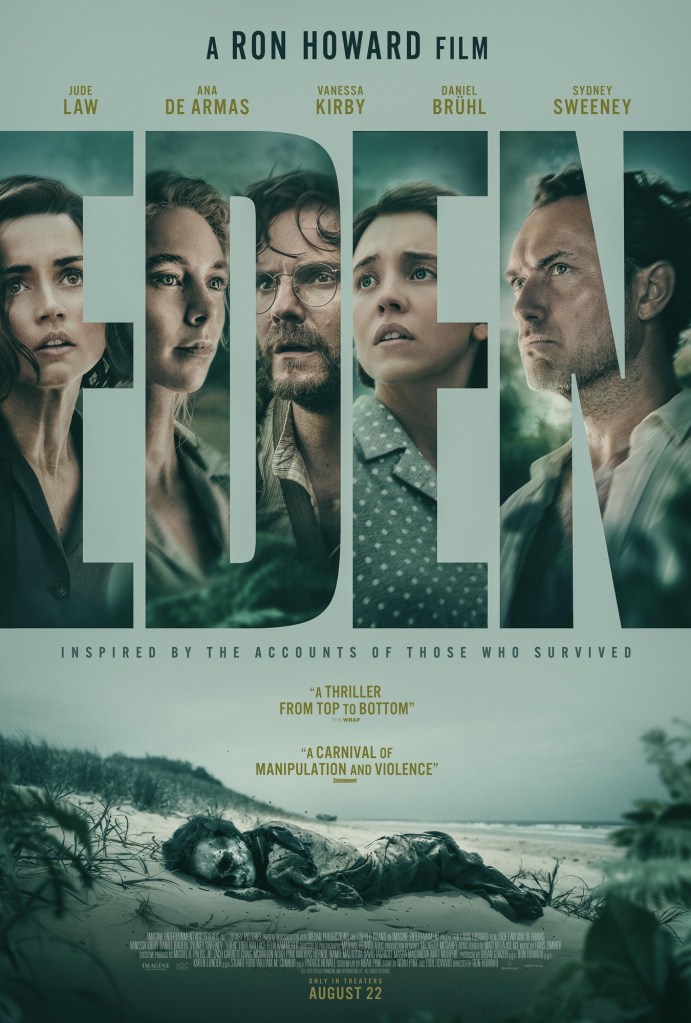
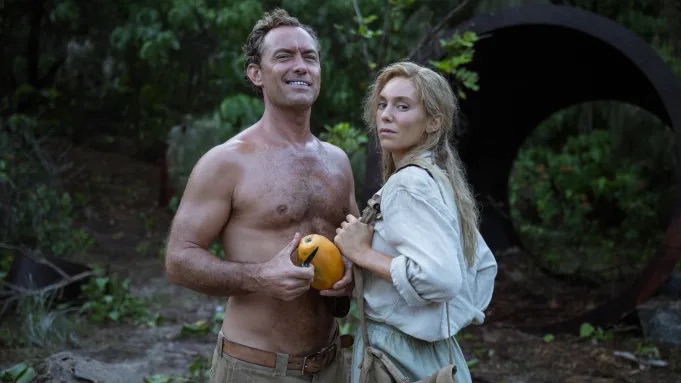
We follow the Wittmer family, Heinz (Daniel Brühl), his wife Margret (Sydney Sweeney), and Heinz’s teenage son, Harry (Jonathan Tittel), as they arrive with high hopes of meeting Dr. Friedrich Ritter (Jude Law), a philosopher who removed all his teeth to avoid infection, and his lover, Dore (Vanessa Kirby). The couple’s idyllic letters from the island, published in German newspapers, had inspired others to seek their own utopia. For the Wittmers, the decision is also deeply personal as Harry suffers from tuberculosis, and without the means for a sanitarium stay, the family sees the Galápagos as a chance for healing.

Their reception, however, is far from welcoming. Ritter and Dore, who have carved out a fragile existence on the island, are wary of outsiders and warn that the land is nearly uninhabitable, with scarce fresh water and dangerous wildlife, including rabid dogs. The Wittmers are directed to live in the damp pirate caves higher up the mountain, where they soon realise that this is anything but paradise. It reminded me of the Welsh settlers who once sailed to Patagonia in hopes of creating a ‘New Wales’, preserving their language and culture after oppression at home. Their dream, like the Wittmers’, began in hardship and near starvation before perseverance slowly brought survival.
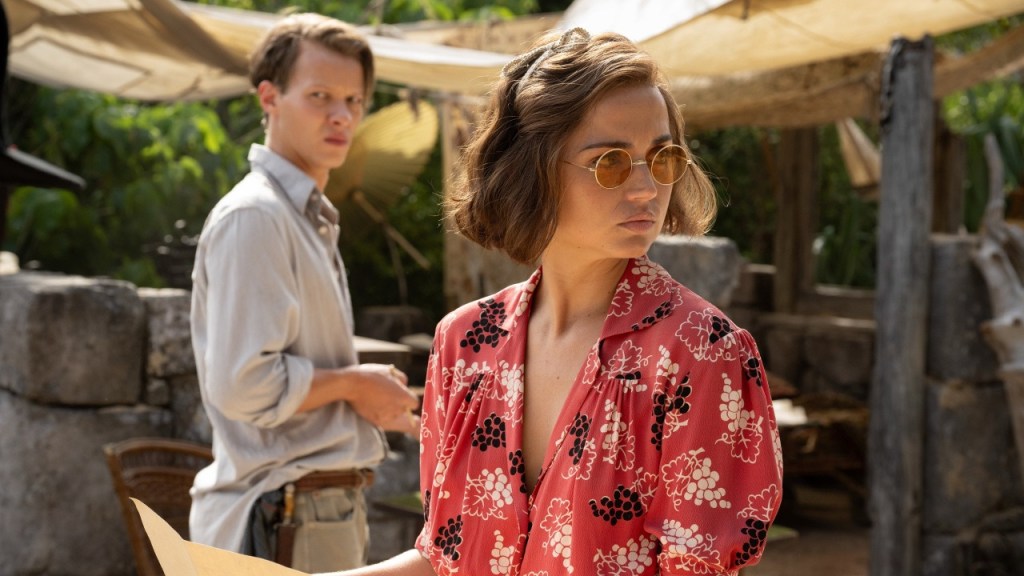
As time passes, the Wittmers begin to adapt, but when Margret falls pregnant, the question of how she will safely give birth without medical help looms large. Their fragile peace is shattered by the arrival of the flamboyant Baroness (Ana de Armas) and her three male companions (Felix Kammerer, Toby Wallace, and Ignacio Gasparini). She arrives with grand delusions of opening a luxury hotel, ‘Hacienda Paradiso’, a vision completely at odds with the island’s harsh reality. The Baroness’ vanity, sexual manipulation, and arrogance throw the community into turmoil, and their utopian dream begins to rot from within.
The story is captivating, all the more so because it is true and, as someone unfamiliar with the real events, I was completely hooked. Eden taps into a deep human fantasy; the desire to escape modern life and live simply, only to reveal how quickly isolation and ego can turn paradise into purgatory. At times, it feels like Lord of the Flies for adults, exploring what happens when civility erodes and instinct takes over.
My main frustration lies with the language choice. The Wittmers, Ritter and Dore are all German, yet they speak English in German accents. In an era where audiences have embraced subtitled films, this creative decision feels outdated. It is especially jarring given that two of the film’s German actors, Daniel Brühl and Felix Kammerer, starred in the German-language All Quiet on the Western Front, a film praised for reclaiming authenticity. Here, their naturalism contrasts sharply with the less convincing accents of others, highlighting what could have been a far richer experience in German.
Still, the acting keeps the film afloat. Daniel Brühl, as ever, brings quiet intensity and integrity to every scene, and I’ve been following his work since Good Bye, Lenin!.

Visually, the film is stunning. The cinematography captures both the beauty and brutality of the Galápagos; lush greenery, crashing waves, and wildlife that reminds us how indifferent nature can be to human ambition.
The story itself is so fascinating that. I have since learned there is a documentary, and I plan to watch it to see how closely the film aligns with reality. As with most ‘based on true events’ films, I imagine some creative liberties have been taken, but the core themes of obsession and idealism remain gripping.
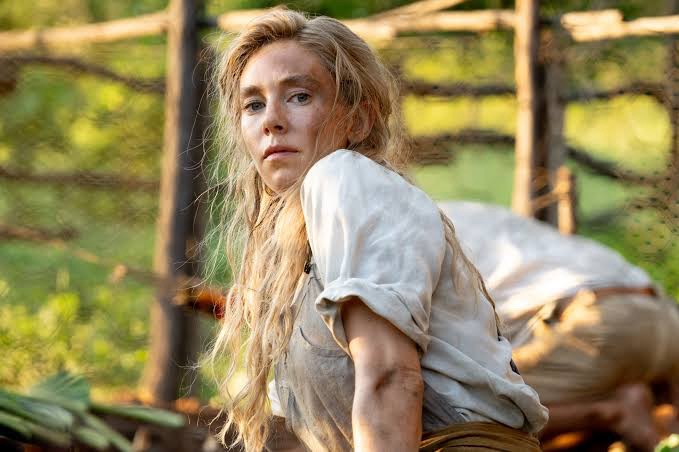
Eden is a striking and thought-provoking piece of filmmaking. Though it would have benefitted enormously from being performed in its native language, it remains an engrossing study of human nature at its best and worst, and a reminder that even in the most remote places on earth, paradise can never truly escape the flaws of the people who seek it.
★★★½ (3.5/5)
 Rhiann’s Reels